

Western communities repurpose Hurricane Melissa debris
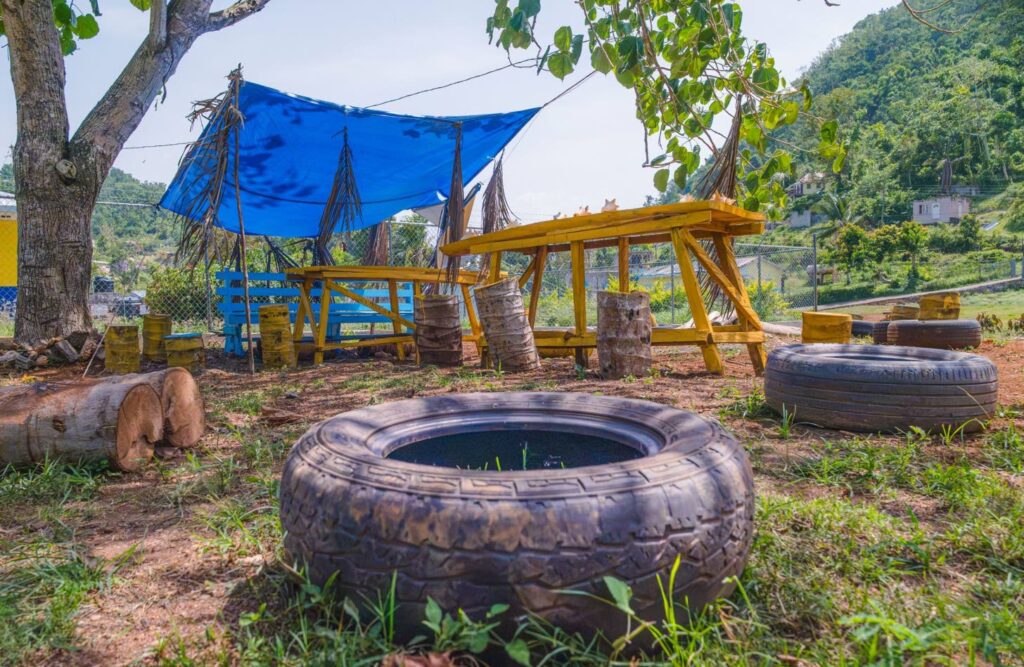
A modest recreational area created by Sawyers residents using trees, felled by Hurricane Melissa, to form picnic benches and stools, while old tyres hold the seedlings of flowers and ornamental plants.
HURRICANE Melissa trash has become valuable resources for homes and schools in two western communities devastated by Hurricane Melissa last October.
Residents of Petersfield, Westmoreland, have converted damaged chairs, fallen trees and discarded zinc into garbage bins for the community and picnic tables for the Petersfield High School, partnering with 360 Recycling Manufacturing.
In Sawyers, Trelawny, residents created picnic tables from fallen trees for a new community spot and recreational space, while lumber and zinc are being repurposed for home reconstruction in both communities.
The recycling activities form part of a major debris clean-up programme, with nearly 200 residents across four communities participating under a cash-for-work emergency employment modality.
Supported by the United Nations Development Programme (UNDP) in partnership with the Caricom Development Fund, the clean-up was coordinated on the ground by Project STAR, Project ICE Jamaica Ltd, the Sawyers Forest Management Benevolent Society, and Petersfield Galloway Benevolent Society, under UNDP’s Jamaica Resilient Recovery Initiative (JARRI).
Nearly 2,000 tonnes of combined debris has been cleared in Petersfield and Savanna-la-Mar,Westmoreland; Sawyers in Trelawny; and Salt Spring in St James, benefiting more than 19,000 residents across the four communities.
Rohan Green, principal of Petersfield High School, poses on the school compound with a trash bin created from Hurricane Melissa debris.
“This programme was about much more than removing debris. It was about restoring access, reducing risks, creating opportunities, and helping communities regain a sense of hope and control over their future,” UNDP Assistant Resident Representative Lesley Ann Ennevor stated during the closing ceremonies to publicly thank the residents.
Ennevor said the communities’ achievements stand as evidence of what can be accomplished when local organisations, donors, and development partners work together on a shared vision.
She expressed appreciation to the Caricom Development Fund for its financial support and declared that this had enabled communities like Petersfield and Sawyers to take important steps toward restoring safety, dignity, and normalcy after the hurricane.
Commissioned by UNDP for the Petersfield clean-up, 360 Recycling Manufacturing touted the benefits of recycling and called on residents to be innovative and creative.
“Once you have an idea, you can use any material to create [something new],” said Kisha Delisa Cole, administrative director and co-owner of 360 Recycling Manufacturing
“All you need is a will and a desire and that is a circular economy right there,” she stated.
Rohan Green, principal of Petersfield High School, said he was overjoyed when the team collected hurricane debris on the school compound in exchange for completed benches and garbage bins.
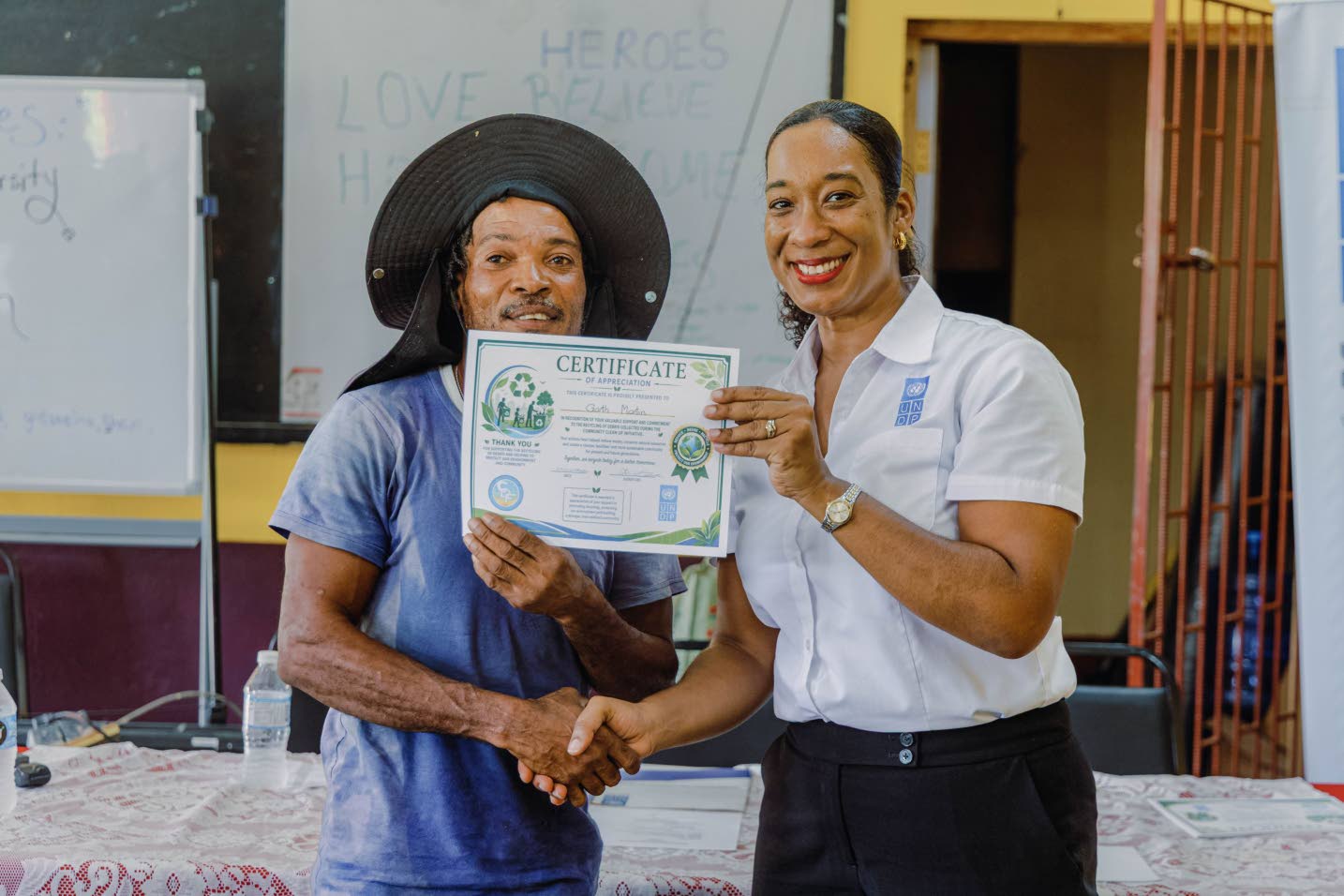
UNDP Assistant Resident Representative Lesley-Ann Ennevor gives a certificate of participation to Garth Martin, welder from Petersfield in Westmoreland, who helped recycle hurricane trash to treasure.
“Ever since those benches have been there, students have been using them daily in-between classes and lunch breaks,” said Green.
He indicated that recycled assets have helped facilitate group work while providing alternative learning spaces outside the classroom.
Petersfield meat shop owner Steve Terrelonge said, “We have learnt so much from this programme about recycling. A lot of stuff that we would have burned — because we wouldn’t know what to do with it — we learnt we can recycle, reuse and repurpose.”
He said residents learnt to make furniture from items they planned to dump, and to use discarded lumber to rebuild their houses.
“The cash-for-work programme was very beneficial to the community. We were able to bring it back to what we know it was before. [As a result] people are now able to go to the shops; access their places of worship, and collect water once again from the community catchment,” reported Christina Sinclair, administrator of the Sawyers Forest Management Benevolent Society.
UNDP launched JARRI in November 2025 with an initial investment of US$2.4 million in grants from the European Union, Australia AID, Caricom Development Fund, and UNDP’s core |resources.