

Western CNC Machines Still Power Russia’s Missile Production — UNITED24 Media
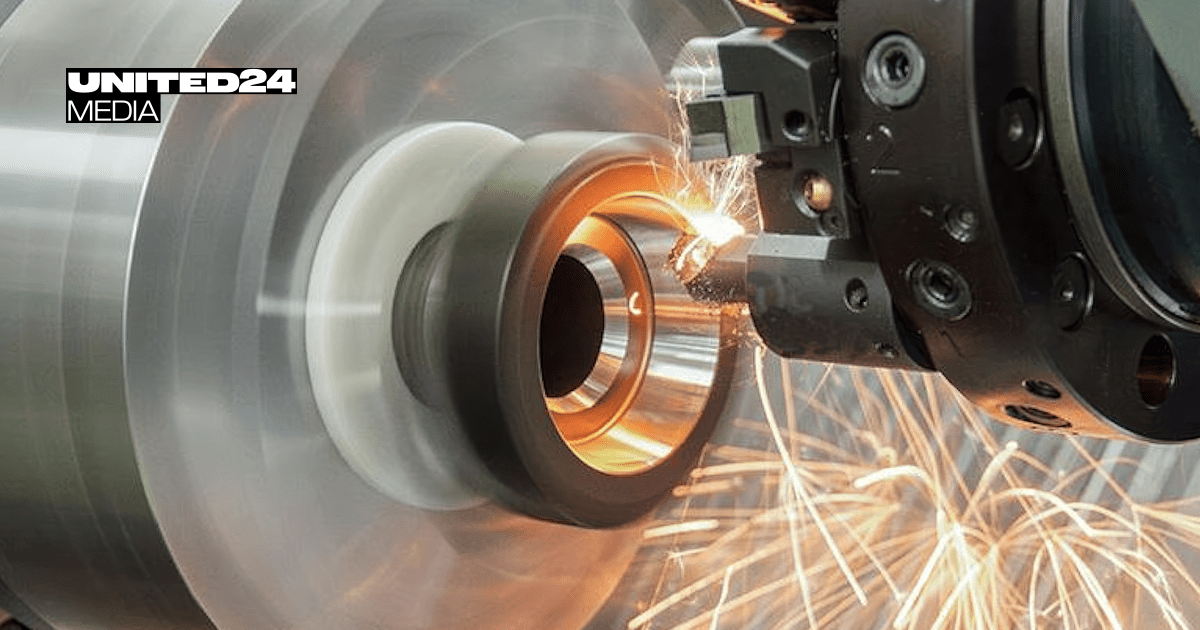
Western-made computer numerical control (CNC) machine tools were used to build Russian missiles, including the nuclear-capable Oreshnik, despite export bans meant to deny Moscow the technology, a new investigation has found.
This was reported by the analytical group iSANS in a paper published on its website on August 13.
We bring you stories from the ground. Your support keeps our team in the field.
The machinery behind Russia’s missiles
Drawing on open-source trade data and publicly available forensic analysis, the report identified around a dozen American, European, and Japanese companies whose CNC technology continued to reach Russian weapons plants through third-party supply chains.
CNC systems are automated, computer-controlled machines that cut and shape complex metal parts with high precision, and their use sharpens the accuracy, speed, and lethality of the missiles Russia fires at Ukraine.
Roughly 70% of the CNC machines in Russia are imported, and as much as 80% of all such equipment goes to the military.
A Western footprint in the Oreshnik
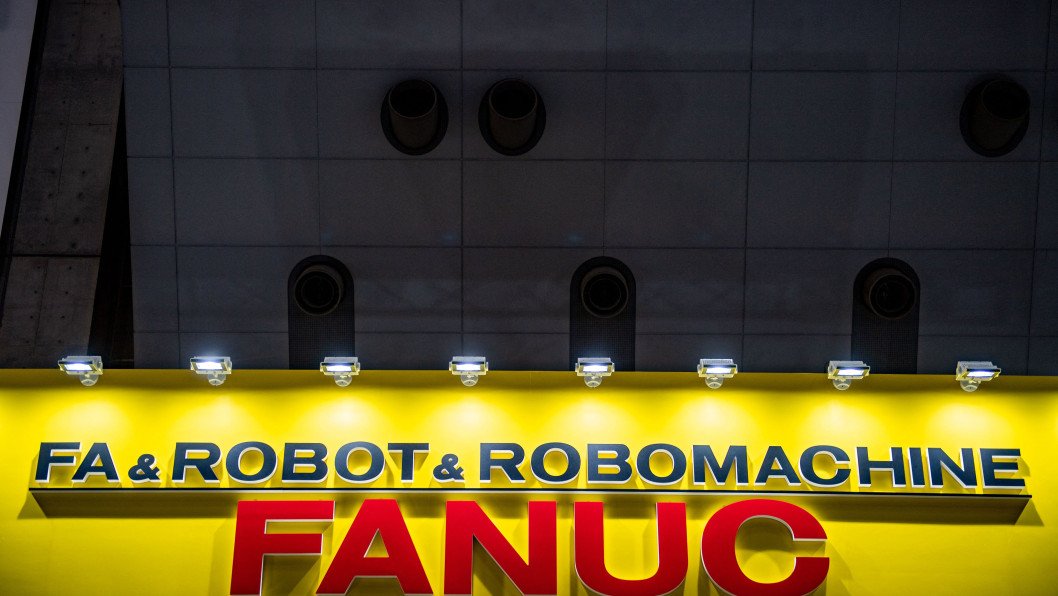
The Oreshnik’s Western footprint appeared not in the microchips found in the wreckage but in the manufacturing machinery used to build it, the report stated. A Financial Times investigation traced CNC controllers made by Germany’s Siemens and Heidenhain and Japan’s Fanuc to Chinese intermediaries that re-exported the devices to the sanctioned Moscow Institute for Thermal Technology.
The report framed these firms as targets of illicit evasion schemes rather than willing suppliers, describing components diverted through opaque third-country channels without the manufacturers’ knowledge.
Investigators at Conflict Armament Research reached the same conclusion tracking the parts. “We have successfully traced some of those components, and the last known custodians are Chinese companies,” noted Damien Spleeters, the group’s deputy director of operations.
After the missile’s first use against Ukraine in November 2024, the Russian leader, Vladimir Putin, presented it as a new hypersonic weapon traveling at ten times the speed of sound. Ukraine’s military intelligence countered that the Oreshnik was largely derived from the decades-old RS-26 Rubezh program rather than a fresh design.
Attention has since turned to the Votkinsk Machine Building plant in Udmurtia, where the Oreshnik is produced. Forensic analysis of missile debris pointed to CNC equipment from American, Czech, German, Italian, Swedish, and Japanese makers in use there, none of which has yet been listed by Washington or Brussels. The plant was damaged on February 20, 2026, by Ukrainian Flamingo FP-5 cruise missiles.
Years of loopholes
Efforts to choke off the flow date back years. Limited measures followed Russia’s 2014 attempted annexation of Crimea, and tougher packages after the 2022 full-scale invasion made procurement costlier, reinforced by US secondary sanctions.
A joint study by the Yermak-McFaul International Working Group on Russian Sanctions and the Kyiv School of Economics identified some 250 Western companies whose products appeared in Russian weapons. Those firms supplied critical components worth nearly $3 billion over the first ten months of 2023 alone.
Customs data later showed that more than 22,000 CNC machines, components, and consumables were delivered to Russia, worth $18.2 billion between January 2023 and July 2024, with EU-made components alone exceeding $1 billion.
-69d03af11a3e9f45431b68b50d18e51c.png)
Enforcement falls short
The G7 and the Global Export Controls Coalition added CNC machine tools as a distinct category to their common high-priority goods list in February 2024, and the EU widened its sanctions on Chinese suppliers in July 2025.
Enforcement has lagged. Haas Automation was fined $2.5 million for 21 sanctions violations, yet none of the CNC manufacturers whose equipment was used in Oreshnik production appear on US or EU sanctions lists.
Ukrainian President Volodymyr Zelenskyy warned in June 2025 that broader sanctions were urgently needed to stall serial production of the missile; an Oreshnik struck Kyiv region in May 2026, killing four people.
The reliance on third-country intermediaries to move restricted machinery has surfaced elsewhere in Russia’s missile supply chain. A Türkiye-based firm, Redwing Metal, co-owned by an EU national, shipped roughly $5 million in banned European industrial equipment, including CNC lathes, to Rostec-linked metallurgical plants that supply Russian missile and aircraft producers across 2023 and 2024.
-4a56a6b482ec132402c16ef6fcabf9a2.png)

Our reporters work on the frontlines to show what’s really happening in Ukraine. Your support helps them keep reporting.