

‘We don’t want to be Russia’: Rep. Stutzman says Flock cameras should be eliminated

FORT WAYNE, Ind. (WPTA) – The battle over Flock cameras that is playing out in northeast Indiana is also heading to Capitol Hill.
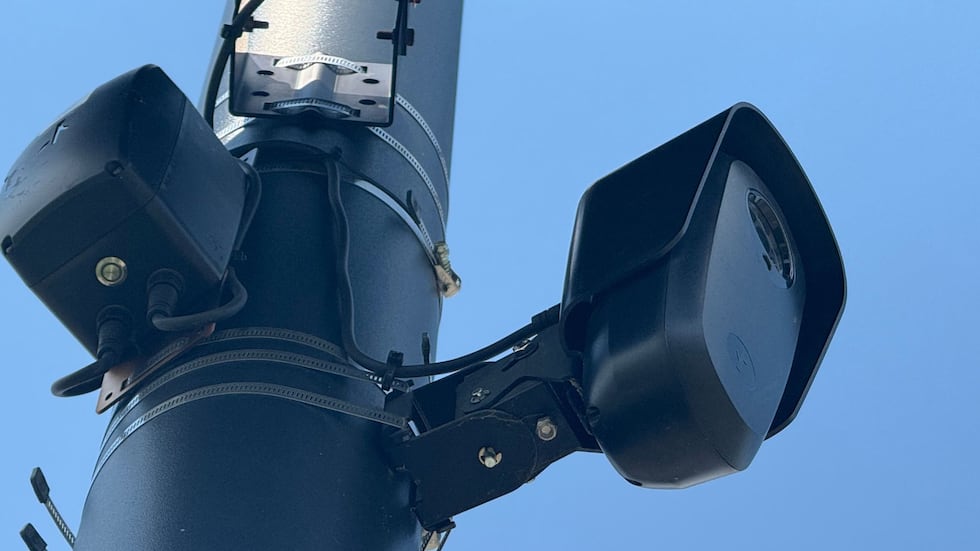
U.S. Rep. Marlin Stutzman (R-3rd District) confirmed to 21Alive that he is working on federal legislation to rein in the cameras, arguing that the network of automated license plate readers constitutes unconstitutional government surveillance.
The personal encounter that sparked skepticism
Stutzman’s opposition to the cameras didn’t originate in Washington. He says it started years ago right here at home during a drive with his wife.
After reaching their destination, a police officer approached their vehicle and informed Stutzman that their license plate registration had expired due to a mailing mix-up.
Stutzman said he was baffled over how the officer knew, since the squad car had never pulled up behind him.
“I went out and I found the police officer and I said, ‘Can you tell me, how did you know that our vehicle was without a registration?’” Stutzman said. “And then he told me about the Flock camera system, and that they can see every motorist that drives by those cameras, and it runs through a database, and they can see information on us as citizens… if there’s a warrant, if there’s a registration that’s expired.”
Stutzman said the encounter left him unsettled about the scale of data collected on drivers.
“There’s over 200-some thousand cameras across the country already,” Stutzman said. “If you take that information that they get every time you drive by one of those cameras on a highway… they have the time we drove by, our make and model vehicle, they could possibly see who’s in the car. It’s just too much information that the government has and that a third party has.”
‘We don’t want to be Russia’
While local police departments and prosecutors have praised Flock cameras as tools for solving violent crimes, hit-and-runs, and locating missing persons, Stutzman argues the technology crosses a constitutional line.
“Personally, I think the Flock camera system should be eliminated,” Stutzman said. “If people on private property want to buy that equipment and use it for that, that’s totally fine. But for the government to be setting these up alongside roadways, I think crosses the line of surveillance.”
Stutzman framed the issue around Fourth Amendment protections against unreasonable searches.
“We don’t want to be Russia. We don’t want to be a communist country where the government can watch our every move. And so that’s why I think the Flock camera system should be eliminated,” he said.
Addressing pushback from police who worry taking away cameras will make solving crimes harder, Stutzman rejected the idea that opposing surveillance means opposing law enforcement.
“Just because we’re taking away a camera system from law enforcement doesn’t mean that I don’t support law enforcement,” Stutzman said. “In fact, instead of paying for a system like that, let’s put that into salaries for more police officers.”
Trump weighs in on Flock
The debate has created unusual political alliances. In Fort Wayne, the City Council voted unanimously to defund the city’s 36 Flock cameras following pressure from both conservative and civil liberties groups. Kosciusko County commissioners also voted to drop their system.
Nationally, however, President Donald Trump recently offered a brief favorable view of the cameras.
“I sort of like them because of that, because of law enforcement, but some people don’t,” Trump told reporters aboard Air Force One. “They think it’s an infringement. I like them.”
When 21Alive asked Stutzman if his stance creates a break with the president, the congressman downplayed any personal disagreement while maintaining his position.
“Oh, no. I mean, I support the president, and he’s a big supporter of law enforcement. I’ll let him speak to his reasons for Flock cameras,” Stutzman said. “But I just think that this is a line that has been crossed. And whether you’re a Republican or Democrat, I mean, even the ACLU has come out and opposed them… A classic liberal is not a fan of government being involved in our lives, and so that’s where I think you have bipartisan support.”
Stutzman pointed out that investigators already possess powerful tools like cellular data to help catch suspects. He cited the multi-state investigation that caught the suspect in the 2022 University of Idaho student murders.
“The government has other tools available to them to find the bad guys,” Stutzman said. “Frankly, cellphones is probably one of the biggest pieces that would identify people of interest more than what Flock cameras would.”
What Congress is doing on broader AI safety
Stutzman said Congress is facing a broader challenge with artificial intelligence in general.
“You have to keep the human finger on the button to not let it get away from you,” Stutzman said, as he recalled conversations with tech executives. “Why aren’t you controlling it? You’re the one developing the technology. You have a responsibility, just like my family does as we build RVs. We have to be sure that whatever truck goes out on the road, it’s safe for the people inside that vehicle.”
Stutzman said he does not support a moratorium on AI. Instead, he highlighted the Futures Act, a bipartisan bill he carried that recently passed the House.
He said the measure is designed to help government agencies catch up and understand the technology before attempting to regulate it.
“So many government agencies just don’t understand how this new technology works. And then once they get involved in a regulatory framework, they oftentimes just slow things down and shut things down because they don’t understand it,” Stutzman said. “We should not put a moratorium on AI. We should just simply work together to be sure that it’s safe for every American.”
Copyright 2026 WPTA. All rights reserved.