

‘We are Africans first’ | Lesotho migrant workers issue urgent plea as anti-foreigner protests intensify
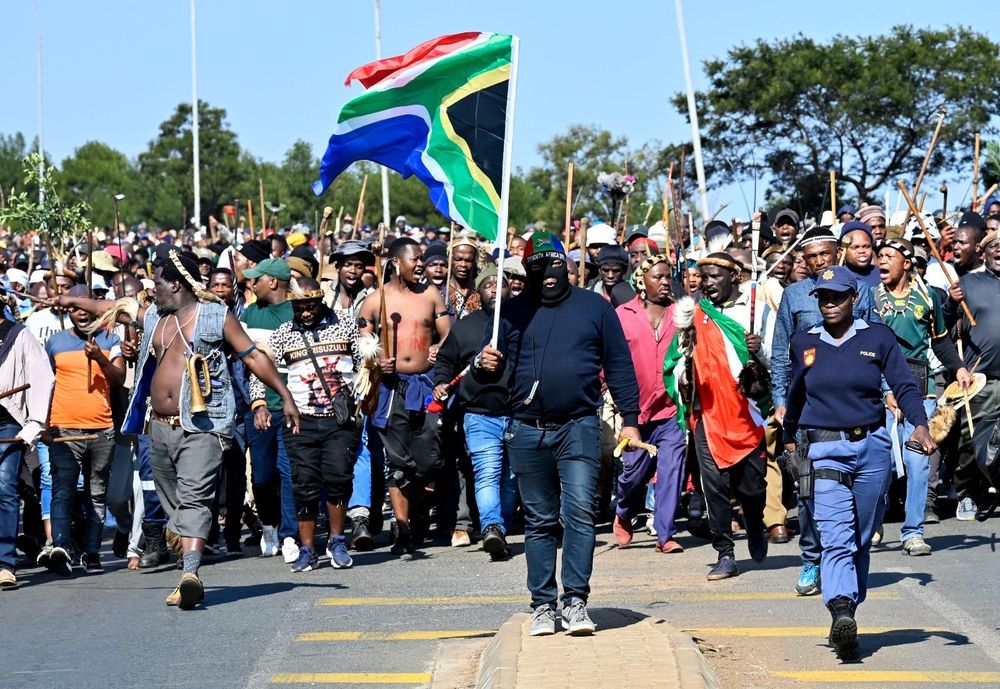
The Migrant Workers Association of Lesotho (MWA-Ls) has issued a plea for calm amid ongoing anti-foreigner protests in parts of South Africa, warning that violence against migrant-owned businesses risks repeating painful chapters from southern Africa’s past.
As demonstrations continue in parts of Gauteng and KwaZulu-Natal under the banner of ‘restoring law and order’, the organisation said what may have begun as concerns over compliance with by-laws and immigration regulations had, in many instances, descended into intimidation, mob violence and looting.
The association said it fully supports lawful enforcement by authorities but believes ordinary migrant workers and traders are becoming the targets of growing public frustration.
“We condemn in the strongest terms the targeting of individuals based on nationality, and the looting that is taking place under the guise of ‘law enforcement’. It is contradictory and unlawful to condemn ‘illegal trading’ while committing the serious crimes of theft, malicious damage to property and assault,” MWA-Ls said.
The appeal comes as March and March leader Jacinta Ngobese-Zuma addressed a media briefing in KwaZulu-Natal on Monday evening, where the organisation announced the establishment of the SA First Forum, a social justice litigation body, and the March and March Foundation, a humanitarian non-profit organisation.
During the briefing, Ngobese-Zuma also addressed the Southern African Development Community (SADC) and concerns surrounding migration, arguing that South Africa was being unfairly portrayed on the continent and internationally.
“SA right now is being labelled as xenophobic all over Africa and the world. It’s very frustrating that African leaders spend so much money coming to conferences like this, where they sit together and make themselves feel good about each other.
“SADC should achieve what it’s meant to achieve for the people. If it doesn’t, then we have to make our voices heard. I wish other African citizens would focus more on their own countries than they do on SA. Then our voices would be more impactful in civic spaces and Parliament,” she said.
Drawing on Lesotho’s own history, MWA-Ls urged South Africans not to repeat mistakes that left lasting scars on neighbouring communities.
It recalled the unrest that swept through parts of Lesotho in 1998, when foreign-owned businesses were attacked, saying the violence resulted in the loss of life, the destruction of livelihoods, and economic damage that took years to repair.
“The consequences were unbearable: loss of life, destruction of livelihoods, deep divisions, and long-term economic damage that took years to repair. We urge our brothers and sisters in SA not to walk that same road of inhumane treatment against fellow Africans,” the organisation said.
MWA-Ls also called on South African authorities, including the government, police and the military, to act decisively to protect lives and property, regardless of nationality.
The association urged political leaders and influential figures to publicly condemn violence and called for those responsible for looting and public violence to be arrested and prosecuted.
It further warned that continued lawlessness could damage SA’s international reputation, investment climate and standing as a constitutional democracy.
Pointing to protections contained in SA’s Constitution and international human rights agreements, MWA-Ls argued that the true measure of any nation is how it protects its most vulnerable residents.
The organisation said economic hardship should never be used to justify attacks on migrant workers, many of whom have built livelihoods while contributing to local economies and supporting families across borders.
“We are Africans first. Basotho and South Africans share history, families, mines, and markets. Economic challenges cannot be solved by chasing away traders. They are solved through enforcement of by-laws, fair licensing, joint inspections, and economic inclusion — not through violence,” MWA-Ls said.
IOL
Credit: Source link