

Vale report guides presidential candidates to propel Brazil as a global mining leader
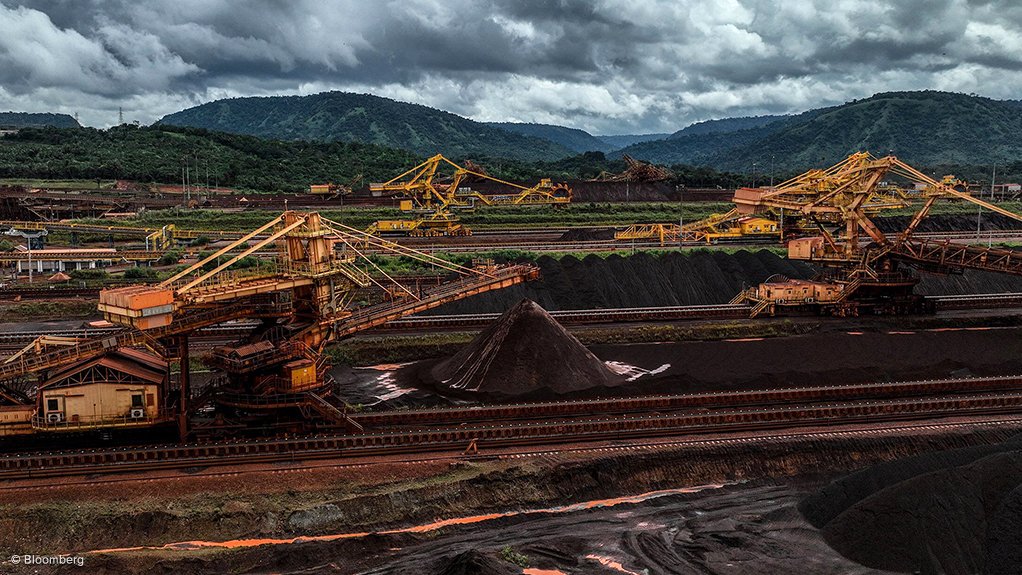
Brazilian iron-ore, copper and nickel producer Vale has launched a proposal to accelerate the growth of mining and position Brazil as a global leader in the sector, leveraging the country’s industrial and socioeconomic development.
The report ‘Unlocking the Potential of Mining in Brazil’, developed in collaboration with consultancy Accenture, will be delivered to all 2026 presidential candidates as a contribution to guiding public policies that help strengthen and modernise the fundamentals of Brazilian mining, as well as to enhance the country’s appeal for new mining projects.
“At a time when paths to boost the country’s growth are being discussed, Vale is contributing to the debate with a concrete proposal so that Brazil can seize this global window of opportunity and unlock our enormous mining potential,” says Vale CEO Gustavo Pimenta.
He adds that with a proactive agenda, mining can become a powerful platform for value sharing, generating jobs, income, economic growth and environmental protection.
The proposal includes 15 strategic initiatives, divided into four priority agendas, to leverage the potential of mining in the coming years.
The priority areas are: licensing and mining fundamentals, including geological knowledge, management of mining titles and predictability in licensing; integrated mineral chain that relates to infrastructure, energy availability, mineral processing and technological mastery throughout the chain; business environment and institutional security in respect of regulatory, institutional, financial and tax aspects; as well as shared value, relating to social and environmental value for communities and territories.
Having been commissioned by Vale, the survey produced by Accenture gathers independent data on the Brazilian mineral sector and projects gains in growth, income and competitiveness for the country resulting from the expansion of domestic mineral production.
The sector’s contribution to tax revenue, which totalled nearly R$750-billion over the past decade, is expected to rise to R$1.3-trillion in the next cycle, between 2026 and 2035, expanding positive social impact and contributing to the balance of public accounts. If converted into public investment, this amount is equivalent to the creation of 23.1-million full-time school places, 17.2-million daycare places, 478 000 km of paved roads or 870 000 hospital beds.
Vale points out that only 28% of Brazilian territory has been geologically mapped at a scale adequate to guide investment decisions in mineral exploration, which limits the identification of new exploratory frontiers in the country.
The survey projects that, with a coordinated agenda among government, the private sector and society, Brazil’s yearly mineral production could jump from about R$300-billion currently to up to R$535-billion in 2035.
In the scenario considered by the report, the sector’s total impact on employment — currently around three-million — could contribute to reaching up to 5.3-million direct, indirect and induced jobs in the country over the same period.
The study further estimates that essential minerals produced in Brazil for electric vehicles, solar panels and wind turbines could help avoid between 1.6 and 2 gigatonnes of CO2-equivalent emissions a year worldwide by 2050. This volume is comparable to nearly all of Brazil’s current yearly emissions.