

US Exception Fuel Exports Bring Black Market and Widening Inequality to Cuba — BigGo Finance
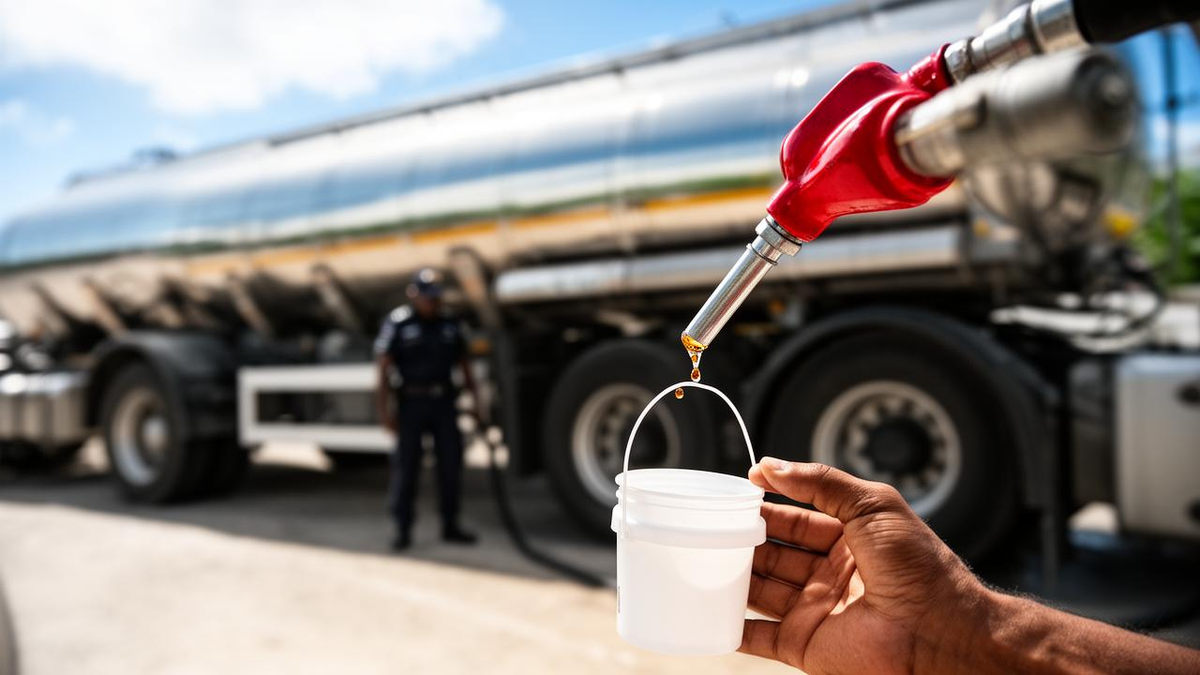
More than six decades after the Castro revolution, capitalist dynamics have suddenly begun spreading through Cuba’s state-controlled energy sector. Amid the strict US oil embargo against Cuba, an exception provision exists that permits fuel exports to private enterprises, and this has spawned a chaotic black market—allowing private transactions to penetrate an energy sector that the state has tightly controlled since the revolution.
Exports from Venezuela and Mexico, Cuba’s traditional oil suppliers, came to an abrupt halt after US President Trump ordered the detention of Venezuelan President Maduro in January and removed him from power. The US Coast Guard patrols waters off Cuba, and sanctions and warnings have made many tanker operators hesitant to even set sail.
The embargo has dealt a severe blow to critical state-run services including the healthcare system, public transportation, and schools. Yet under a US Commerce Department exception, small quantities of gasoline and diesel have flowed to private restaurants, retail stores, and taxi operators. This is believed to be the first time US-origin fuel has entered Cuba in any meaningful way since the Castro government nationalized refineries after the revolution. Reuters was unable to identify the US companies shipping fuel to Cuba, and there is no indication that major oil trading houses are involved.
Some of the imported fuel is being resold on the black market, allowing those who can afford it to secure fuel for vehicles and home generators. Beyond mitigating the collapse of public transportation and rolling blackouts, it also powers household pumps that help sustain a water supply system on the verge of dysfunction. While the exception provides a measure of relief, it is simultaneously widening income inequality.
On a July afternoon, Amarilis Sánchez, 53, waited for hours at a bus stop in the capital Havana. After celebrating her daughter’s birthday, she felt there was little chance a bus would arrive to take her home. Ismael Coutiño, one of dozens of taxi drivers across the street, said he could take her—but the fare was 1,000 pesos, 500 times the standard 2-peso bus fare. Behind this is the soaring price of gasoline and diesel on the black market. Sánchez, who has no steady job and could never afford such an amount, said she would wait until nightfall, and if no bus came, she would stay at her daughter’s home and try again the next day.
Black-market dealings and the rapid spread of social media advertising
US-origin fuel imports between February and May totaled 900,000 barrels—equivalent to only about nine days of Cuba’s total demand. Yet Reuters visits to black-market distribution points and licensed wholesalers, along with interviews with business operators, economists, diplomatic sources, and sanctions experts, revealed that even this volume is driving significant change.
On the night of the 9th of this month, the national power grid collapsed just before 11 p.m., plunging Havana into darkness—yet some restaurants and shops remained lit, thanks to generators running on imported fuel.
The resale market is also expanding rapidly. At a convenience store in central Havana, soft drinks, beer, and crackers lined the shelves while customers played billiards near the entrance. In the back, however, more than a dozen 20-liter gasoline containers were stacked, selling at $5 per liter—approximately $19 per gallon. In a nearby apartment building, a man advertising gasoline sales on Facebook was stockpiling fuel in his room, fully aware of the risks of fire, explosion, and toxic fumes. WhatsApp group chats dedicated to illegal fuel sales have also proliferated.
Black-market prices surged this spring to extreme levels of $10 per liter, or roughly $38 per gallon. They have since moderated somewhat as import volumes increased.
Against this backdrop, the Cuban government in February authorized private enterprises to import fuel for their own use for the first time, in a bid to avert economic paralysis from the oil blockade. In June, Cuba’s legislature approved a comprehensive economic reform package opening the energy sector to private and foreign investors. While the reforms have not yet been fully implemented, by the end of July approximately 200 Cuban companies had obtained licenses to operate as fuel wholesalers to other private enterprises.
One company’s social media advertisement generated considerable buzz. It featured a model known as the ex-girlfriend of a famous Cuban reggaeton singer walking through a warehouse lined with large diesel containers, set to Daddy Yankee’s hit song “Gasolina.” According to a spokesperson for the company behind the ad, it deals exclusively with registered private enterprises and sells 940-liter tanks at $2.50 per liter.
More significantly, Cuba has approved its first foreign investment venture to import and sell fuel on the island. Prime Minister Marrero disclosed this in late July, though the company’s name has not been made public.
Cuban law prohibits the resale of imported fuel without special authorization. While the reforms suggest that private companies may eventually operate some of the state oil company’s distinctive red-and-green gas stations, retail sales are not yet permitted. According to Oniel Díaz, founder of the Havana-based consultancy AUGE, some state-run gas stations are storing US-origin fuel, but refueling is limited to vehicles registered with specific private enterprises.
Cuban authorities did not respond to requests for comment. US State Department spokesperson Tommy Pigott said private enterprises, non-governmental organizations, and diplomatic missions are importing fuel primarily from the United States. He did not address the impact of US policy on the black market or high prices.
Widening inequality and lack of oversight
With the average monthly salary of Cuban government workers at roughly $10—about 6,700 pesos—imported fuel remains out of reach for the vast majority of the island’s 9 million people. Meanwhile, some fuel is being sold openly on the black market.
Fuel sold openly on the black market violates Cuban law and also carries compliance risks under US export regulations, which stipulate that fuel must be intended for private-sector use and must not fall into the hands of the Cuban government.
“The exception looks good on paper as a system, but there is no mechanism to monitor whether the rules are actually being followed,” said Jorge Piñón, a Cuba energy expert at the University of Texas at Austin and former oil industry executive.
Reuters found no evidence of fuel diversion in this process, nor any evidence that fuel reached Cuban government officials or US-sanctioned entities.
According to Díaz, other countries including Mexico and Panama have also exported small quantities of fuel to Cuba’s private sector in recent months.
Currently, US-origin fuel destined for Cuban private enterprises must pass through port facilities and storage tanks controlled by Cuban state agencies that are under US sanctions. Díaz said private companies sign service contracts with these agencies to use state infrastructure, paying approximately $0.11 per liter. Reuters could not confirm any evidence of fuel diversion in this process.
Still, the complexity of the sanctions framework has made many large US companies hesitant to enter the Cuba fuel shipping business.
The Cuban government intends to continue deregulation and promotion of private investment, but how far the reforms will go remains uncertain. Mayra Espina, a sociologist specializing in poverty issues, said that small-volume imports of expensive US fuel cannot compensate for the fuel supplies lost under the Trump-era embargo.
Espina acknowledged that “at minimum, a complete collapse of state functions has been avoided,” but noted that for the majority of Cubans who depend on public services, the situation is “further widening and entrenching inequality.”