

UNSC votes to renew sanctions on South Sudan for 1 year, adopting resolution 2821; Pakistan abstains
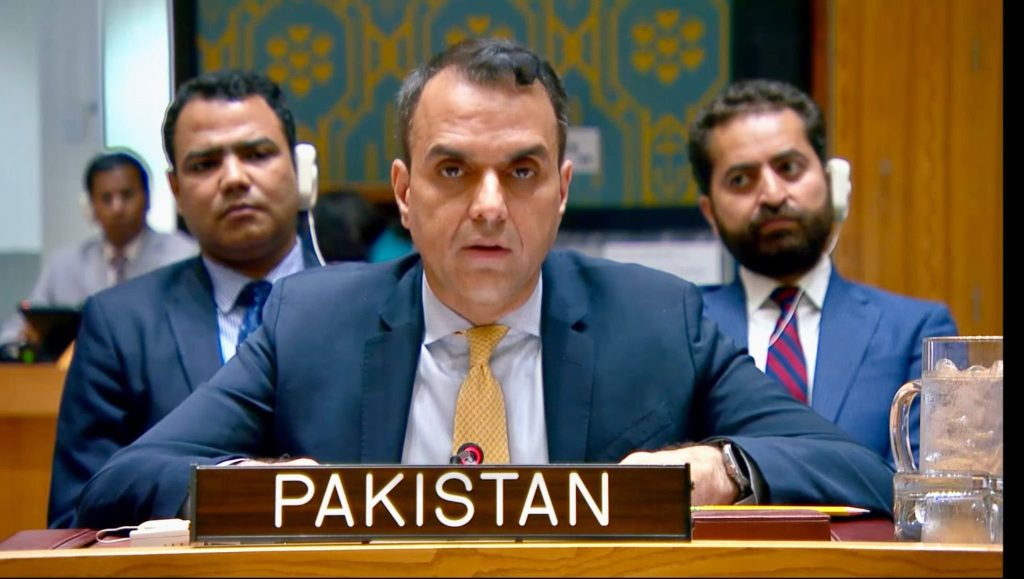
By Iftikhar Ali
UNITED NATIONS, May 30 (APP): With Pakistan abstaining, the UN Security Council Friday extended for one year the sanctions imposed on South Sudan, including asset freezes, travel bans and an arms embargo — amid concerns expressed by some speakers that the African position on the issue is being overlooked and that sanctions are hindering progress towards lasting peace.
Nine of the 15 Council members voted in favour, none against, with six abstentions (Pakistan, China, Russia, Democratic Republic of the Congo, Liberia, and Somalia).
Along with renewing those measures until 31 May 2027, the Council also extended the mandate of the Panel of Experts assisting the 2206 South Sudan Sanctions Committee until 1 July 2027.
The United States drafted the text and led negotiations on it, with no substantive changes from the previous resolution 2781 (2025).
Earlier this year, the Council was warned that South Sudan risks relapsing into full-scale civil war.
Explaining his vote, Pakistan’s Deputy Permanent Representative, Ambassador Usman Jadoon, said that Islamabad had consistently abstained because sanctions “should be used judiciously, reviewed periodically and should not become open-ended or punitive in nature”.
“Their purpose should be to support political solutions and stabilization efforts, the Pakistani envoy said, adding, “We also note the African Union’s position against continued sanctions on South Sudan.”
The deteriorating political and security situation raises important questions regarding the effectiveness of the current sanctions regime, Ambassador Jadoon said.
South Sudan, the world’s newest country, gained independence in 2011, prompting the establishment of a UN peacekeeping mission to support stability. However, fighting between rival factions erupted in its capital Juba and quickly spread nationwide in 2013, triggering a major political and security crisis. A 2015 peace agreement collapsed soon after it was signed, but a Revitalized Agreement on the Resolution of the Conflict in the Republic of South Sudan — signed in 2018 — led to the formation of a Transitional Government. Yet, violence and political tensions persist.
Progress on implementing the 2018 Revitalized Agreement — particularly its five key benchmarks — remains stalled.
According to the Secretary-General’s latest report on the key benchmarks the period from 2025 to 2026 has been the most difficult since the agreement was signed, marked by stagnation and troubling reversals.
In Friday’s decision, the Council requested the Secretary-General, in close consultation with the United Nations Mission in South Sudan (UNMISS) and the Panel of Experts, “to conduct, no later than 15 April 2027, an assessment of progress achieved on the key benchmarks established in paragraph 2 of resolution 2577 (2021); including recommendations on appropriate updates to the benchmarks”. It also requested South Sudanese authorities to report, by the same date, to the Sanctions Committee on the progress achieved on the key benchmarks.
In his remarks, Ambassador Jadoon, went on to say, “Lasting peace in South Sudan will be advanced through sustained political engagement, implementation of the Revitalized Agreement,” and that “We will continue to engage constructively with all partners in support of durable peace and stability in South Sudan.”
United States’ Ambassador Jennifer Locette, while welcoming the mandate renewal, voiced disappointment over the lack of progress on benchmarks and deterioration of the political and security situation in South Sudan, due to a lack of political will by President Salva Kiir and other South Sudanese leaders.
She urged them to return to direct dialogue, calling it “farcical” to suggest dialogue is occurring when one of the signatories to the 2018 peace agreement is under house arrest and on trial.
The Council cannot accept obstruction of the peace process, the US envoy said.
She called on the transitional Government to deliver all steps to restore peace by declaring a national ceasefire, releasing detainees, renouncing the use of violence for political purposes and using public revenue appropriately to support South Sudan’s citizens.