

United States’ green card backlog tops 1.2 million
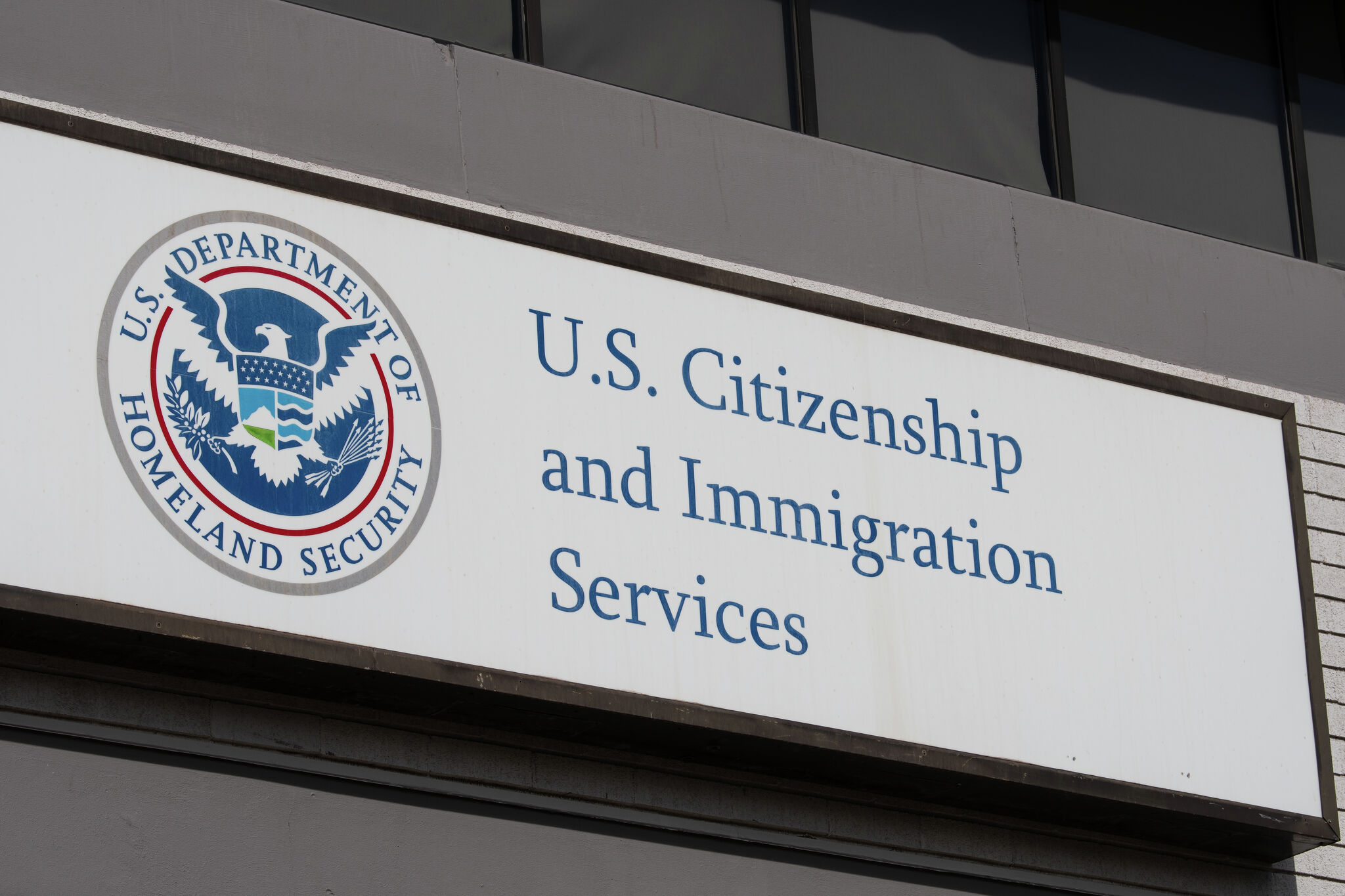

An exterior sign and official seal identify the U.S. Citizenship and Immigration Services. A new report by the National Foundation for American Policy analyzing U.S. Citizenship and Immigration Services data found that the green card backlog has surpassed 1.2 million people.
For someone from China applying this year, getting a U.S. employment-based green card could take an estimated 25 years. For an Indian national, the estimated wait is up to 179 years.
Those extraordinary delays are the result of a backlog that has surpassed 1.2 million people, according to a new report by the National Foundation for American Policy analyzing U.S. Citizenship and Immigration Services data.
The backlog for these green cards, which offer permanent residence to skilled foreign workers, has swollen over the years as demand outstrips statutory limits. Federal immigration law caps the number of employment-based green cards that can be issued each year to about 140,000, with no more than 7% awarded to nationals of any one country in a given year.
Article continues below this ad
As a result, people who were born in countries where there is a high demand for U.S. employment-based green cards face decades-long waits.
For advocates on both sides of the immigration debate, the long wait times are evidence of a system badly in need of reform. Immigration advocates have called for increasing the annual cap, while those opposed to the employment-based immigration system have called for a moratorium on applications or an outright ban on employment-based green cards.
The debate arrives amid a broader immigration crackdown under President Donald Trump that has extended beyond illegal immigration to legal pathways as well.
The report estimated wait times for different kinds of green cards. The longest waits were for EB-2, the second-preference category for workers with advanced degrees or “exceptional ability.”
Article continues below this ad
The wait times for EB-1 green cards, the first-preference category, which is reserved for individuals who can prove they have “extraordinary ability,” are much shorter, at around 4 to 5 years for Indian nationals and 5 years for Chinese nationals.
Skilled workers who comprise the third-preference category, EB-3, would expect to wait about 38 years if they were born in India and 7 years if they were born in China.
Advocates for skilled legal immigration argue that the lack of a realistic timeline for people seeking permanent U.S. residence creates hardship for immigrant families and makes it difficult for U.S. employers to hire and retain foreign-born workers.
“Many Americans don’t realize how challenging it can be to immigrate legally to the United States, even for the most highly skilled and innovative people in the country,” said Stuart Anderson, executive director of the National Foundation for American Policy. “These are people who want to become Americans and are willing to wait years for the chance.”
Most employment-based green card applicants are seeking to transition from temporary H-1B work visas, the majority of which go to people in computer-related jobs.
Article continues below this ad
While someone is waiting for a pending green card application, they remain in what lawyers and immigrants call “H-1B limbo,” tethered to the strict criteria of their H-1B visa status. They must remain in a qualifying specialty occupation with an employer as their sponsor.
Laid-off H-1B workers have only 60 days to find a new job or leave the country, causing anxiety for many at a time when the federal government has sought to limit H-1B workers. The Trump administration announced plans to pursue a new $103,000 administrative fee for H-1B visa applications after a federal judge struck down a similar fee proposal.
Those opposed to skilled legal immigration say the enormous backlog is a symptom of a system that they say favors foreign workers over American ones, which they argue is damaging at a time of weakness in the domestic tech labor market. Computer engineering graduates had an unemployment rate of almost 8% in 2024, the second-highest among college majors tracked by the Federal Reserve Bank of New York, while tech layoffs in 2026 have already surpassed the total for all of last year.
Kevin Lynn, executive director of the D.C.-based Institute for Sound Policy, a self-described “America First” advocacy group, said he’s opposed to the H-1B visa system, arguing it allows companies to hire foreign workers for less than American workers. Lynn also founded a group called U.S. Tech Workers in 2018 intended to “combat the impacts of outsourcing American jobs.”
Article continues below this ad
The H-1B visa requires companies to pay H-1B workers a “prevailing wage,” a government estimate of comparable wages for workers in a particular region and occupation. But critics said the minimum salary is set below market rate and employers can get around it because the system allows them to use alternative sources for wage data if they meet certain requirements
“We don’t need these tech workers,” he said. “These employment visa programs that have led to this logjam have negatively impacted American innovation and inventiveness…If you don’t want to be in that backlog, don’t come to the United States, don’t participate. That’s a choice someone makes.”