

Analysis: Why Putin Chose the Kurils Now – and What It Means for Ukraine
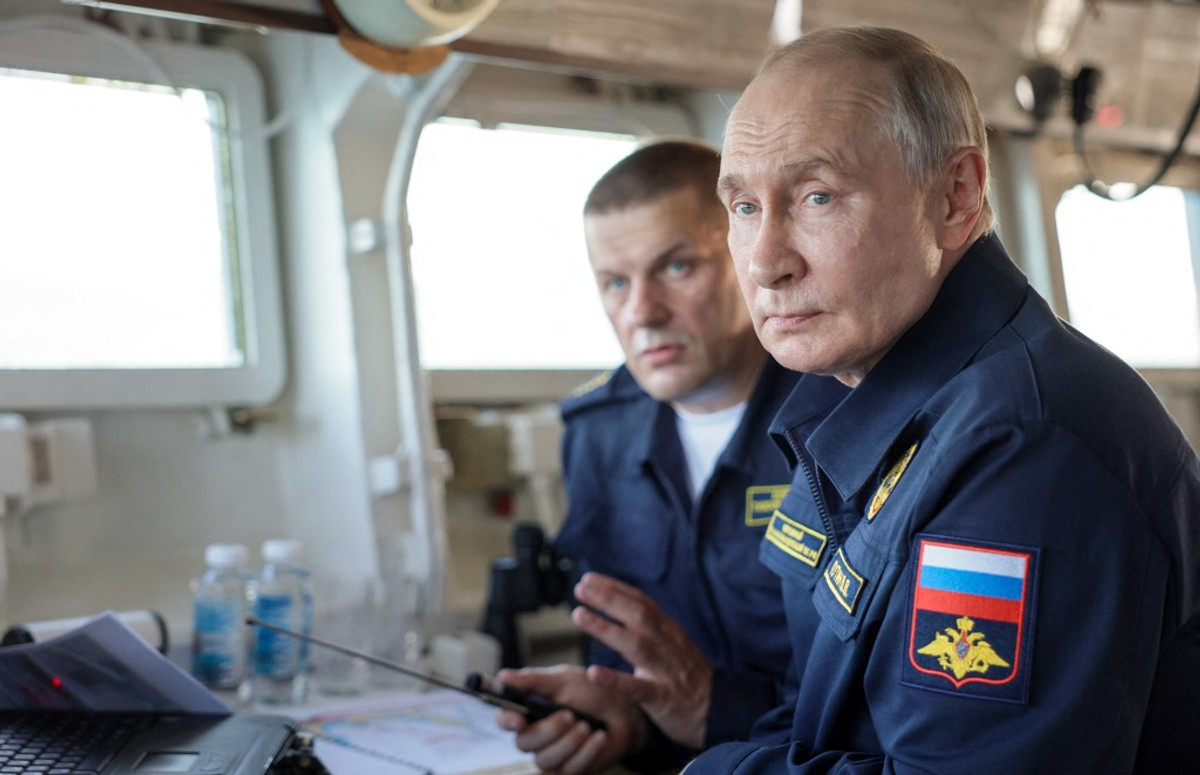
Relations between Moscow and Tokyo have sharply deteriorated since Russia’s full-scale invasion of Ukraine in 2022.
Japan joined Western sanctions and became one of Kyiv’s key Asian supporters. Moscow, in turn, suspended peace-treaty talks and programs allowing former Japanese residents to visit the disputed islands Tokyo calls its Northern Territories.
JOIN US ON TELEGRAM
Follow our coverage of the war on the @Kyivpost_official.
Yet Japan had continued trying to preserve limited diplomatic channels.
“Even under such circumstances, Japan has made every possible effort,” Prime Minister Sanae Takaichi said after Vladimir Putin visited Etorofu – known in Russia as Iturup – on Aug. 13.
She called the trip “absolutely unacceptable,” saying it further damaged Japanese public attitudes toward Russia and made restoring relations more difficult.
Foreign Minister Toshimitsu Motegi reinforced that stance by summoning Russian Ambassador Nikolai Nozdrev and lodging a strong protest.
Putin’s visit was his first to the disputed Kuril chain in more than 25 years in power.
The question is why he went now – and what the visit says about Russia’s increasingly global confrontation with the West.\
Why now?
Japan’s new government under Takaichi has embraced a more assertive defense policy, while its 2026 Defense White Paper describes Russia’s military posture, its cooperation with China and North Korea, and the possibility of an Ukraine-style conflict in East Asia as serious security concerns.
Other Topics of Interest
Ukraine Sanctions 13 Vessels, 39 Entities Over Stolen Grain Exports
The package targets ships carrying looted Ukrainian grain under multiple foreign flags, including Russian, Panamanian and Belizean.
Tokyo explicitly argues that European and Indo-Pacific security are now interconnected.
Putin’s visit came just two days before Japan marks the anniversary of its surrender in World War II – a potent symbol in a dispute rooted in the Soviet seizure of the islands at the end of the war.
It also followed major Russian Pacific Fleet exercises.
At the same time, North Korea launched another ballistic missile toward the Sea of Japan ahead of US-South Korean military drills.
There is no evidence the events were operationally coordinated. But together they highlighted the pressure Japan increasingly faces from Russia, China and North Korea.
A line Putin had previously avoided crossing
The four southern islands have remained disputed since 1945, preventing Russia and Japan from signing a formal peace treaty.
But Putin himself had never visited them.
Former Russian President Dmitry Medvedev went there in 2010, and other senior Russian officials followed. Putin stayed away even while cultivating relations with former Japanese Prime Minister Shinzo Abe and discussing a possible settlement.
By setting foot on Etorofu, Putin signaled that Moscow now values projecting strength more than preserving room for negotiations, abandoning diplomatic constraints observed even by Soviet leaders.
Ukraine’s war reaches the Pacific
The trip also showed how Moscow increasingly treats its confrontation with the West as a multi-theater struggle.
Japan has provided billions of dollars in financial, humanitarian and reconstruction assistance to Ukraine and joined G7 sanctions against Russia.
By raising tensions in the Pacific, Moscow forces Tokyo to divide its attention between supporting Ukraine and confronting security threats closer to home.
Putin also threatened retaliation if European states seize Russian commercial ships, warning that Moscow could respond “wherever” it deemed appropriate – potentially extending Ukraine war-related maritime confrontation into the Pacific.
Russia, China and North Korea
Japan is also watching the deepening relationship between Moscow, Beijing and Pyongyang.
Hours after Putin’s Kuril visit, Russian and Chinese diplomats defended the post-World War II territorial order, effectively reinforcing Beijing’s alignment with Moscow’s view of post-WWII borders.
North Korea, meanwhile, has gained battlefield experience through its participation in Russia’s war against Ukraine and has strengthened military ties with Moscow.
The Kremlin does not need a formal alliance with Beijing and Pyongyang. China pressures Taiwan and US power in the Pacific, North Korea targets Seoul, Tokyo and Washington, while Russia remains focused on Ukraine.
Their interests differ, but their actions increasingly reinforce one another. Putin’s Kuril visit, following Pacific naval drills and amid a North Korean missile test, underscored how Russia’s war is becoming part of a wider challenge to the Western-led order.
What did Putin achieve?
First, he further undermined any near-term prospect of restarting territorial negotiations with Japan.
Second, he demonstrated that Russia can create pressure on Ukraine’s partners far beyond Europe.
Third, he tested how Washington and its Asian allies respond when Moscow escalates in a region where US military resources are already stretched across several security challenges.
But the strategy may also backfire.
Japan is rapidly moving toward its goal of raising defense spending to 2% of GDP – a historic shift from its post-WWII security constraints, accelerated in part by lessons from Russia’s invasion of Ukraine.
Tokyo’s defense doctrine increasingly treats Russia’s invasion of Ukraine as a warning for Asia: allowing borders to be changed by force in Europe could encourage similar attempts elsewhere.
Putin traveled to Etorofu to demonstrate Russian strength and the permanence of Moscow’s territorial claims.
Instead, he may have reinforced Japan’s conclusion that Russia’s war against Ukraine, North Korea’s growing military power and pressure from China cannot be treated as separate threats.
For Tokyo, they are becoming part of the same security problem.