

UN rights body warns South Sudan elections could fuel violence
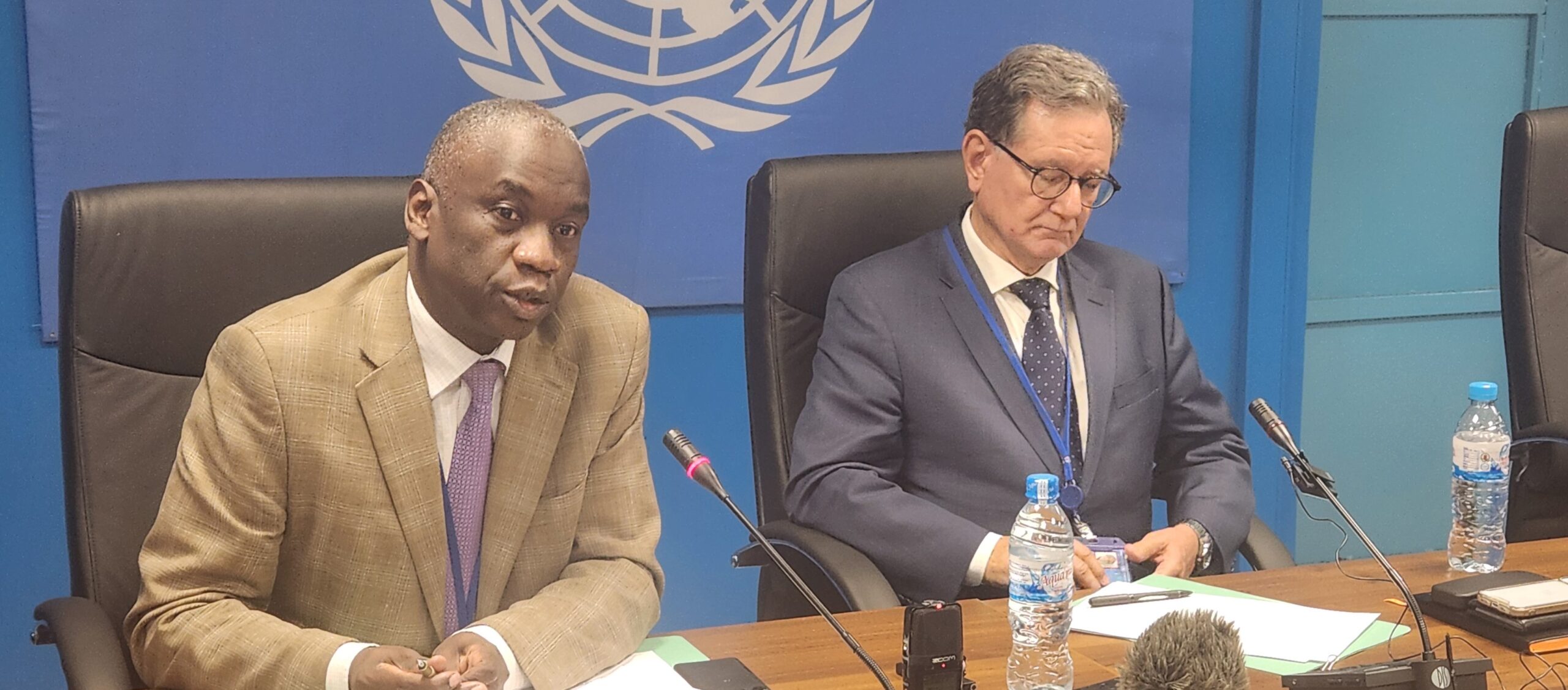
The UN Commission on Human Rights in South Sudan has warned that the country’s planned December elections could trigger further political confrontation and armed violence unless adequate security, political and human rights safeguards are put in place.
The Commission also called for all political adversaries, including supporters of detained First Vice President Riek Machar, to be brought into genuine and inclusive dialogue.
Speaking at a press conference in Juba on Thursday after the Commission’s 14th visit to South Sudan, Commissioner Barney Afako said the country is approaching the elections amid renewed violence, deep political mistrust, shrinking civic space and weakened institutions.
The Commission supports South Sudanese citizens’ right to elect their leaders, Afako said, noting that they had waited 15 years to exercise that right since independence.
But he stressed that the Commission’s concern is not with elections themselves, but with the conditions under which they would be held.
“Our concern is with the conditions for elections,” Afako said.
He warned that elections without adequate safeguards and genuine political dialogue could become an “arena for political confrontation and armed violence”, with the risk of atrocity crimes.
Election Risks
The Commission said elections must allow South Sudanese to vote freely and safely through a properly prepared and adequately resourced process capable of promoting stability.
It identified several minimum safeguards, including a genuine cessation of hostilities, adequate civic and political space, an independent and properly funded electoral institution, credible mechanisms for resolving electoral disputes, and measures to prevent hate speech and incitement to violence.
Political Dialogue
Afako said elections alone would not resolve South Sudan’s political crisis and urged the government to invest in genuine and inclusive dialogue before, during and after the polls.
He said the process should include political adversaries, including the SPLM-IO led by First Vice President Riek Machar.
“Dialogue only makes sense when it’s between adversaries,” he said.
Political differences, he added, should be addressed through dialogue rather than military action or purely judicial responses.
Afako urged leaders to consider whether decisions surrounding the elections were creating conditions for stability or instead laying the foundations for further division.
The Commission also called on regional and international partners to continue supporting South Sudan during the transition.
Funding Concerns
The Commission described the electoral process as “grossly underfunded” and said the timetable was highly ambitious.
Commissioner Carlos Castresana said the country had roughly 100 days to complete a large amount of electoral planning and logistical work, while electoral institutions had only a fraction of the resources they needed.
The Commission also highlighted the importance of a credible voters’ list, which is expected to be completed by 22 October.
It warned that poorly conducted voter registration could leave citizens feeling excluded and create further grievances around the elections.
Security Challenges
Castresana said parts of the country remain affected by violence and that electoral officials could be unable to reach some contested areas. Residents in those areas could also be prevented from voting.
He said the Commission had not received clear answers on how such situations would be addressed.
“If up to half the states of South Sudan are experiencing violence, there needs to be a strategy and some deep thinking about what to do in those circumstances,” Castresana said.
He warned against a situation in which some parts of the country are able to exercise their democratic rights while others are excluded, saying this could create a “democratic deficit” and new grievances.
Impunity Fuels Violence
Castresana said the human rights situation had not fundamentally changed during the decade the Commission had monitored South Sudan.
Civilians continue to be killed and displaced, he said, while women and girls face sexual violence, children are recruited and political opponents are subjected to arbitrary detention and abusive prosecutions.
The Commission said its latest assessment found that impunity and the capture of state institutions by elites remain major drivers of conflict and human rights violations.
“Where perpetrators are not held accountable, violence becomes an invitation to be repeated,” Castresana said.
The Commission said it had documented violations that may amount to war crimes and, in some cases, crimes against humanity.
These include unlawful killings, attacks on civilians and civilian infrastructure, unlawful or indiscriminate aerial bombardments, conflict-related sexual violence and forced recruitment.
It said recent allegations of attacks on civilian infrastructure, including health facilities, as well as reported killings in Jonglei State and possible mass graves, require prompt, independent and impartial investigations.
Oil Funds
The Commission also criticised South Sudan’s management of public resources and questioned what had happened to billions of dollars committed under the government’s oil-for-roads programme.
Castresana said the programme had largely disappeared from public scrutiny despite the large sums allocated to it.
“The question remains, where did the money go? And who is responsible for it?” he asked.
He said the government had failed to implement recommendations in the Commission’s previous report on corruption.
The Commission said public financial management is now in a “deeply degraded state”, citing weak budgetary processes, ineffective oversight and opaque management of oil and non-oil revenues.
It also raised concerns about government employees going for prolonged periods without adequate salaries. Some workers, it said, had reportedly received digital credits that they could not withdraw because they were not backed by cash deposits.
Humanitarian Crisis
The Commission linked corruption and weak public financial management to South Sudan’s worsening humanitarian crisis.
It said donors spent more than $2bn on food security and nearly $600m on nutrition between 2021 and 2025, while government spending on relevant food-security ministries amounted to only about $17m.
Castresana said the imbalance is unsustainable, particularly as humanitarian needs continued to rise while international funding is becoming increasingly constrained.
“The population cannot be expected indefinitely to rely on humanitarian assistance to receive services that should be provided by the State,” he said.
The Commission said national resources should instead be directed towards health, education, justice, food security and other basic services.
Justice System
The Commission also criticised weaknesses in South Sudan’s justice system, particularly outside Juba and other major centres.
Castresana said the problem extends beyond individual courts or prosecutors and reflects broader weaknesses in law enforcement, prosecution, the judiciary and the prison system.
He said there had been insufficient efforts to establish an independent judiciary supported by independent investigators and prosecutors and an effective prison system.
Many areas outside Juba and other major centres lack judges, courts, police stations, prosecutors’ offices and prisons, leaving communities with limited access to formal justice, he said.
In some areas, authorities rely on mobile and special courts supported by UNMISS and UNDP, while elsewhere communities have few alternatives to traditional justice mechanisms.
Castresana warns that traditional justice can be particularly problematic for women dealing with serious crimes such as sexual violence.
“If there is not a mechanism reliable and efficient to interpose between the criminal and the citizen, everything will be resolved by violence and corruption,” he said.
Hybrid Court
The Commission renewed its call for South Sudan to establish the Hybrid Court for South Sudan and operationalise other transitional justice mechanisms provided for under the 2018 peace agreement.
It said the Truth, Reconciliation and Healing Commission and the Compensation and Reparation Authority had made some progress towards establishment, but must be adequately funded, independent and protected from political interference.
The African Union has provided the government with a list of selected commissioners for the Truth Commission, the Commission said, urging authorities to submit the names to Parliament for vetting without unnecessary delay.
Castresana says the Hybrid Court has become increasingly urgent given continuing serious violations.
He said it should not be viewed as an external mechanism imposed on South Sudan, but as a way of strengthening the country’s justice system through cooperation between South Sudanese and international judges and prosecutors.
Machar Trial
The Commission also addressed the detention and prosecution of political opponents, including Machar.
It said political disputes should not be turned into criminal prosecutions as a substitute for political dialogue.
Detainees should either be released or promptly brought before an independent and impartial court in proceedings that meet international human rights standards, including due process and transparency, it said.
Castresana stressed that the Commission is not arguing that Machar could not be held responsible for crimes.
Being a signatory to the peace agreement doesn’t provide immunity, he said, adding that anyone could be held responsible for international crimes if there is sufficient evidence establishing individual responsibility.
The Commission’s concern, he said, is whether the guarantees of a fair trial are currently in place, including the independence of the tribunal, the right to a full defence and sufficient evidence linking an individual’s conduct to the alleged crimes.
Castresana said those guarantees are not currently present in Machar’s case.
Political Failure
Afako said renewed violence across South Sudan should not be treated simply as a series of localised security incidents.
Civilians continue to be killed and displaced and deprived of their homes, livelihoods and access to basic services, while humanitarian operations have been blocked or disrupted, he said.
Humanitarian workers also face serious security risks, while UN peacekeepers have recently come under attack and been killed.
“The return of violence is a political failure first before it is a security failure,” Afako said.
He argued that political solutions must therefore come before purely security-based responses.
Incomplete security-sector reform, weak accountability mechanisms and the failure to implement key provisions of the 2018 peace agreement had contributed to renewed conflict and lawlessness, he said.
Sexual Violence
During the Commission’s visit to Bor, its chairperson, Yasmin Sooka, met government officials, humanitarian actors and survivors of recent fighting in northern Jonglei State.
Although Ms Sooka did not attend Thursday’s press conference, the Commission said its team heard deeply distressing accounts from survivors.
Women reportedly described brutal sexual violence as they fled the fighting, while some survivors said they had been separated from parents, spouses or children and were struggling to rebuild their lives with little or no assistance.
The Commission said some survivors remain without access to basic healthcare, including sexual and reproductive health services, despite urgent and long-standing needs.
Many are now living in displacement sites where their immediate priorities are finding food and shelter.
The Commission called for urgent protection, humanitarian assistance, healthcare and access to justice for survivors.
Election Opportunity
The Commission says South Sudan has an opportunity to use the electoral process as a pathway towards democratic renewal rather than further division.
Afako urged political leaders to treat the elections as an opportunity to renew commitments to the peace agreement and address the country’s underlying governance, security, economic and humanitarian challenges.
He said any future government would continue to face major challenges after the elections, including armed groups, civilian possession of weapons, insecurity, corruption, humanitarian needs, displacement and weak public institutions.
The Commission urged voters to demand clear commitments from political leaders on what they would do after the elections, particularly on security, the economy, humanitarian affairs and opportunities for young people.
It says South Sudan does not lack agreements, institutions or roadmaps, but needs the political will to implement them and hold perpetrators accountable.
Afako said the elections should ultimately provide an opportunity for renewal rather than become another source of division.
“The forthcoming elections can become part of a peaceful democratic transition, but only if the institutions surrounding them are credible, inclusive, and capable of protecting rights,” the Commission said.