

Ukraine Hits Russia’s Top-5 Oil Refinery as Fuel Shortages Spread Across Country
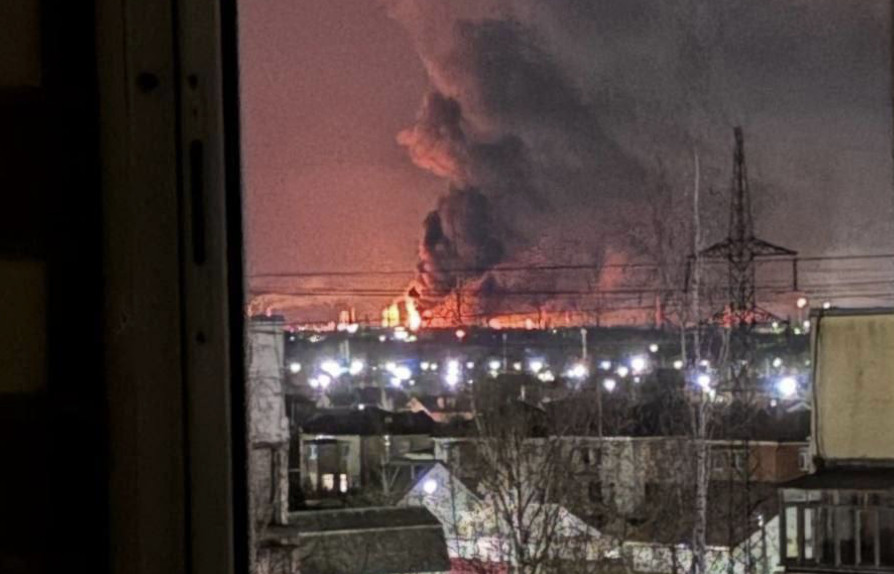
Ukrainian drones struck Russia’s Yaroslavl Oblast overnight on Aug. 6, reportedly hitting one of the country’s largest oil refineries, local officials and Russian media reported.
Oblast governor Mikhail Yevrayev confirmed the drone attack but did not disclose the extent of the damage. He said only that authorities had restricted traffic from Yaroslavl toward Moscow “for security reasons.”
JOIN US ON TELEGRAM
Follow our coverage of the war on the @Kyivpost_official.
Videos shared by local residents on social media showed explosions and two columns of smoke rising over the city. According to the Astra outlet, one of the fires broke out at the Slavneft-YANOS oil refinery.
The facility is among Russia’s top-five largest refineries and can process up to 15 million metric tons of crude oil annually. It is the main refining asset of Slavneft, a company jointly controlled by Russian state energy giants Rosneft and Gazprom, which together own 99.7% of its shares.
The Yaroslavl refinery has repeatedly been targeted by Ukrainian drone strikes. In 2026 alone, it was attacked six times – on July 16 and 6, May 22 and 8, April 26, and March 28. Previous strikes forced the plant to temporarily halt operations.
Ukraine has significantly expanded its campaign against Russia’s oil infrastructure this year, targeting refineries that supply fuel for both civilian consumption and the Russian military.
Ongoing fuel crisis
Russia has been grappling with a nationwide fuel shortage after Ukraine targeted all major refineries in the country in recent months.
Other Topics of Interest
Russian Strike on Dnipropetrovsk Region Injures 1, Cuts Power for 55,000
Russia struck the Dnipropetrovsk region nearly 50 times across five districts, damaging civilian infrastructure and causing mass power outages.
By early July, the Ukrainian General Staff estimated that 43 percent of Russia’s refining capacity was knocked offline, while later monitoring data suggest it slumped to its lowest level in 21 years, at 3.91 million barrels per day.
Car queues could be seen across the country – particularly in Siberian regions – outside gas stations amid nationally imposed fuel rationing, with law enforcement and teachers deployed in some cases to quell occasional disputes.
As a result of the crisis, Russia – the world’s third-largest fossil fuel producer – has banned exports of gasoline starting in April, of jet fuel starting June 1, and of diesel starting July 8, while importing gasoline from India, Kazakhstan and Belarus.
But the total imports likely fall short of the estimated 3 million tons per month of consumption in Russia.
Reuters, citing “one of the sources with knowledge of the matter,” reported in mid-July that nearly 40% of Russia’s refining capacity is unlikely to return in the next two months even if no new Ukrainian strikes are recorded.