

Uganda Ebola Outbreak: Risks to Coffee Trade and Smallholder Farmers
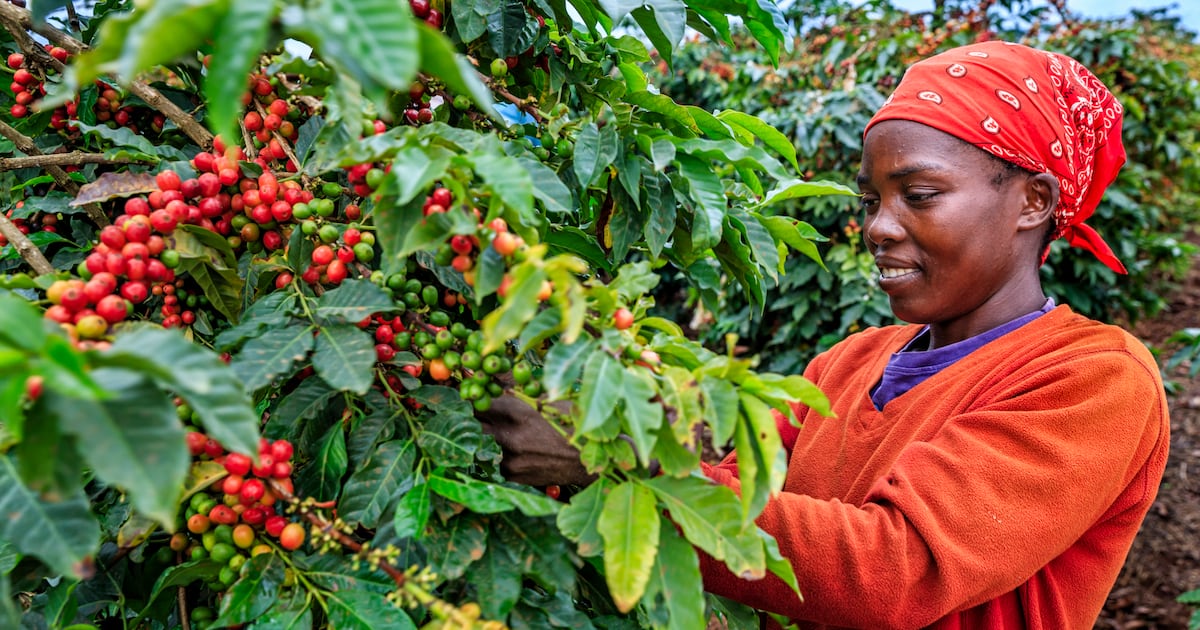
Uganda is Africa’s top coffee exporter and the sixth largest globally. The country is forecast to produce around 7.2 million bags this year, with most of that (around 6.8 million) destined for export, according to USDA Foreign Agricultural Service projections.
Coffee is thus Uganda’s most important export crop, and its industry is growing steadily, driven by relatively stable and high coffee prices and production expansion. That’s why disruptions to trade – be it due to geopolitical tensions squeezing inputs or disease outbreaks closing borders – are a major source of economic uncertainty for the African country’s smallholder farmers.
The ongoing Ebola outbreak is already posing a serious threat to livelihoods in the region. Uganda’s government shut its western border with the Democratic Republic of Congo in a bid to minimise spillover risk.
There’s a logic to this – neighbouring countries that share a land border with an outbreak-stricken country are at a higher risk for further spread. But global health and migration bodies including the World Health Organisation (WHO) point out that border closures may in fact be counterproductive.
Tedros Adhanom Ghebreyesus, WHO’s director-general, welcomed border screenings imposed by Uganda but warned against a total shutdown of movement and trade.
This is because the economic impact of such measures can be swift and long-lasting, with farmers and growers’ income taking a hit even when risks further down the supply chain remain limited.
Lessons from COVID-19
According to research carried out by scholars Evans S. Osabuohien, Alhassan Karakara, and Abdul Malik Iddrisu, Ugandan farmers faced significant income pressures during the COVID-19 pandemic (see ‘sources’ below to access the study).
The effects of government restrictions on workers were widespread and severe, the authors noted, with farmers facing both economic and food security risks.
Smallholder dominate supply
Smallholder farms dominate Uganda’s coffee sector, accounting for about 90 percent of total production. Medium and largescale estates contribute the remaining 10 percent. Source: USDA
In an interview with this publication, Alhassan Karakara, Associate Professor and Head of the Department of Applied Economics at the School of Economics at the University of Cape Coast (UCC) in Ghana, said restrictions imposed in Uganda to contain the Ebola outbreak mirror the situation during the pandemic.
“These measures – border closures, restricted movement, closure of some markets – do not differ significantly from what we saw during COVID-19.”
The effect of these containment measures is significant on farm households, he added.
“Firstly, border closures and market shutdowns mean difficulty in accessing inputs; and secondly, difficulty in pushing farm produce to the market.
“Border closures would mean that fertiliser and other farm inputs can no longer cross into the country for farmers to access. This will translate into lower productivity of farm produce and therefore, lower incomes for farmers.”
Even if the measures are temporary, their impact may still be harmful, especially to smallholder farmers that aren’t economically resilient, he added.
“Temporary measures, such as restricted movement, could immediately affect the output of farmers. The time and labour farmers could spend on farm activities would be reduced – this could result in a loss of income.
“In the long term, farmers could be indebted due to the short-term losses emanating from the containment measures. Many farmers in Uganda are smallholders and hence lack the capacity and resilience to withstand such shocks.”
And Ugandan farmers are already facing the economic burden of input price hikes and fertiliser shortage caused by the Gulf conflict. The Ebola outbreak in neighbouring Congo creates another pressure point.
“Farm households are vulnerable to compounded shocks, given that agriculture itself has its risk factors,” said Karakara. “A compounded disease outbreak means that farmers can no longer engage in farming, because most agricultural activities in Uganda are labour-intensive, requiring labour engagement at every stage.”
Barriers to agricultural labour have direct implications for crop production, including coffee. As prices remain elevated, constraints on productivity risk further complicating supply dynamics.
“Farmers will face difficulty in getting their inputs, such as fertilisers and other farm inputs – at times, complete inaccessibility to these inputs. This will greatly affect the productivity of farm outputs,” Abdul-Wakeel Karakara added.
Since Uganda’s border closure came into force, more organisations voiced their opposition. “Viruses do not stop at borders, and neither should our response,” said Ugochi Daniels, deputy-director general for operations at the International Organisation for Migration.
“When borders close, people often continue moving through informal routes, where health screening and surveillance are limited. The most effective response is coordinated action that keeps mobility visible, safe and monitored.”
Risk to coffee trade
But has Uganda’s border restrictions impacted coffee trade?
According to Neumann Kaffee Gruppe (NKG), one of the leading green coffee exporters in Uganda and the Central African region, the situation hasn’t caused disruption further along the supply chain.
“As NKG, we can say that the situation currently does not affect us,” a company spokesperson said. “The purchase and sale of coffee, as well as exports, have not been impacted.”
In fact, Uganda’s coffee sector is relatively resilient to shocks. During the pandemic for example, the value and quantity of exports in 2020 did not materially differ from previous years, according to an International Growth Centre study. This is because global coffee demand is fairly inelastic and contracts are signed months in advance of sale, making the industry less vulnerable to short- and medium-term shocks.
The immediate risk lies more in currency depreciation funding the containment measures. Multiple organisations and governments, including the WHO and the World Bank Group, have pledged resources to support response efforts.
Much remains uncertain. Vaccines targeting the dominant strain are only being developed now, with WHO warning it could take up to nine months before they are ready for roll-out.
What’s clear though is that previous disease outbreaks have brought economic hardship onto smallholder farmers – and as the crisis drags on, the impact on agriculture in the region will come into sharper focus.
Sources:
Osabuohien, E.S., Karakara, A.AW. & Iddrisu, A.M. COVID-19 pandemic, household welfare and diversification strategies of smallholder farmers in Uganda. Discov Sustain 5, 303 (2024). https://doi.org/10.1007/s43621-024-00507-9
Credit: Source link