

U.S. Forest Service: History, Multiple Use & Roadless Rule
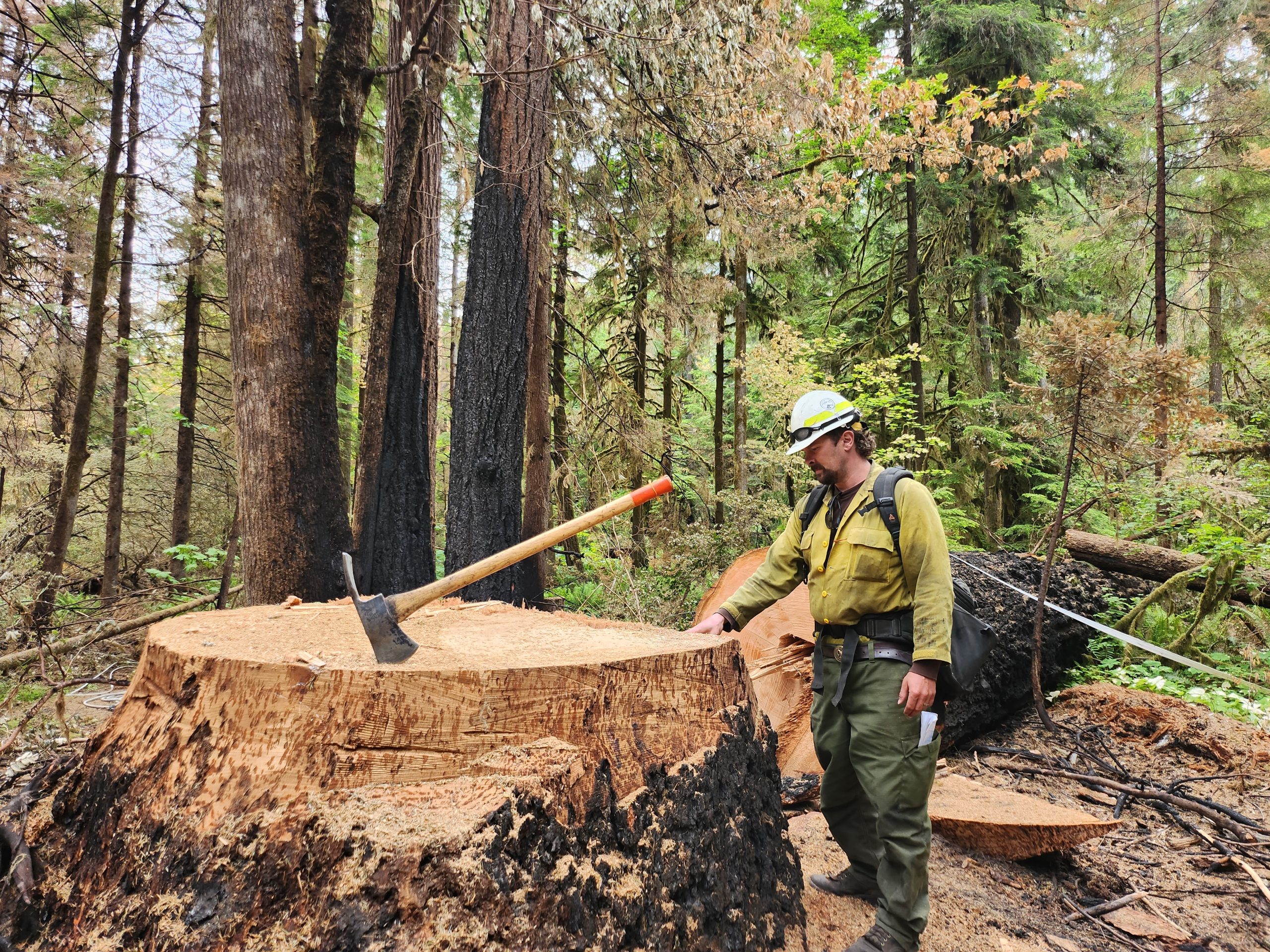
Summary: Rooted in Gifford Pinchot’s “wise-use” philosophy and statutory multiple-use mandates, the U.S. Forest Service is legally required to balance timber production with the management of 193.1 million acres of vital public hunting and fishing grounds.
This article covering the history of the U.S. Forest Service is the second in our series on the four federal-land-management agencies featured in The Sportsmen’s Advocate: the Bureau of Land Management, Forest Service, Park Service, and Fish and Wildlife Service. The Forest Service manages our 154 National Forests and 20 National Grasslands, comprising 193.1 million acres of land. It has given us Smokey Bear and an estimated 3 billion board feet of timber a year. It also oversees approximately 220,000 miles of fishable streams and 10 million acres of fishable lakes. The Forest Service manages 26 million acres of land in the eastern United States—more than the other three land management agencies oversee in the eastern United States combined—which makes it the most diverse system of public hunting land in the country.
How Did the Civil War and Expansion Impact American Forests?
A War-Torn Nation Decimates its Forests In an 1864 speech, Abraham Lincoln said, “War, at the best, is terrible, and this war of ours, in its magnitude and in its duration, is one of the most terrible.” He was right. But one of the often-overlooked terrible consequences of the Civil War was its impact on our forests. The Union and Confederate armies consumed an estimated 400,000 acres of forest annually just for firewood. They left their mark on the landscape. As Union Army Captain Theodore Dodge wrote: “Woods which, when we came [to Virginia], were so thick that we could not get through them any way are now entirely cleared.”
It didn’t stop when the Civil War ended—it got worse during Reconstruction, when everything had to be rebuilt. This was especially true in the areas impacted by the scorched-earth tactics that General Sherman deployed in the “March to the Sea.” And the West saw an influx of people who were happy to leave their war-torn homes behind in search of something new. That required a whole new infrastructure. The nation’s railroad system tripled in size after the war, including the completion of the transcontinental railroad in 1869. And by 1879, the nation was using 6.84 billion cubic feet of timber a year.
This was unsustainable. In 1877, Secretary of the Interior Carl Schurz wrote to Congress that “if we go on at the present rate, the supply of timber in the United States will, in less than twenty years, fall considerably short of our home necessities,” and the deforestation would increase “freshets and inundations,” dry up springs, and turn “fertile agricultural districts into barren wastes.” He called on Congress to act.
What Led to the Forest Reserve Act of 1891?
Schurz wasn’t the only person urging for action. Many were concerned about our timber supply and the flooding that came after clearing forests. In 1876, the American Association for the Advancement of Science urged President Grant to create a Forestry Commission. President Grant didn’t create such a commission, but Congress appropriated $2,000 to the Department of Agriculture to employ “some man of approved attainments” to research and prepare a report on forestry matters. These reports lead to the creation of the Division of Forestry in 1886, and the Forest Reserve Act of 1891, which authorized the President to set aside public lands as “forest reserves” to protect timber and watersheds.
The Forest Reserve Act sparked action. For years, people had been trying to convince Congress to expand Yellowstone National Park to no avail. But with this new statute, President Harrison created the Yellowstone Timber Land Reserve, reserving the same 1.2 million acres proposed to expand the Park as the first forest reserve. The Harrison Administration would go on to reserve another 14 forest reserves, comprising another 13.1 million acres, before leaving office.
Who Was Gifford Pinchot and What Was His Conservation Philosophy?
“The Father of American Forestry” Gilford Pinchot was born into a wealthy Connecticut family in 1865. He had a lifelong passion for spending time in the woods. His father recognized that and suggested that he become a forester. But when he entered Yale in 1885, there were no forestry programs in the United States. After graduation, Pinchot enrolled in the French National School of Forestry. He studied there for a year and toured some forests in Germany and Switzerland before returning home in 1892, just as the United States was forming its National Forest Policy. He also noticed the deforestation that many others did: When I came home [from France] not a single acre of … timberland was under systematic forest management anywhere on the most richly timbered of all continents…. When the [1890s] began, the common word for forests was “inexhaustible.” To waste timber was a virtue and not a crime. There would always be plenty of timber.
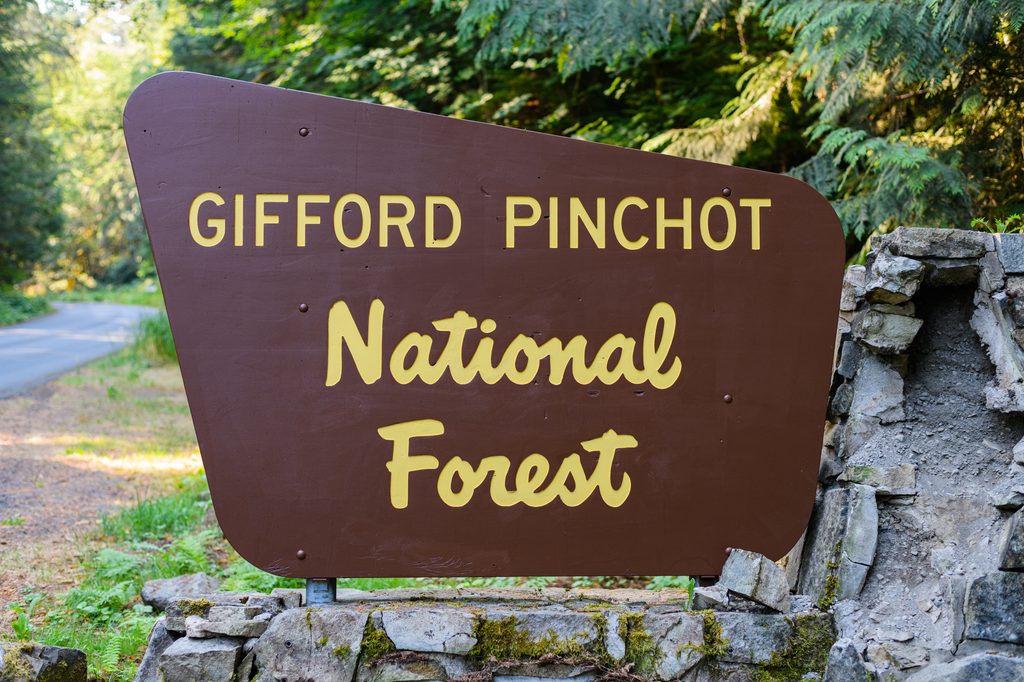
Although he recognized the waste, Pinchot was not a strict preservationist. He would later write that “Without natural resources life itself is impossible” and therefore “the conservation of natural resources is the fundamental material problem.”
He immediately put his wise-use conservation philosophy to work in managing George Vanderbilt’s Biltmore Estate in North Carolina, where he gained a reputation for creating forest management plans. His reputation earned him the role of Secretary of the 1896 National Forest Commission, which surveyed western lands and recommended adding 21.3 million acres of land to the National Forest Reserves.
Pinchot, and many others, recognized that the Forest Reserve Act was monumental in authorizing the creation of forest reserves, but it had serious flaws: “[The Act] did not even set up a form of administration. It gave the Reserves no protection, and they had none.”
Congress had been debating rectifying legislation since 1892, and in 1897 passed the Forest Service Organic Administration Act. The Organic Act allowed for the creation of forests for three purposes: improving and protecting the forest, securing good water conditions, and furnishing a continuous supply of timber. This broad mandate triggered debate. Preservationists like John Muir emphasized the protection of the forest, while Pinchot focused more on securing the timber supply. Pinchot’s influence would ultimately win.
How Was the U.S. Forest Service Officially Created?
Pinchot would become Chief of the Department of Agriculture’s Division of Forestry. The Department of Agriculture did not have any forests at this time because the Forest Reserves were managed by the Department of Interior. But the assassination of William Mckinley elevated Pinchot’s close friend Teddy Roosevelt to the White House. Roosevelt supported restructuring the Forest Reserves. He signed the Transfer Act of 1905 into law, which transferred the Forest Reserves from the Department of Interior to the Department of Agriculture, and created the U.S. Forest Service, of which Pinchot was promptly appointed Chief.
When he took charge of the Forest Service in 1905, there were 60 forest reserves covering 56 million acres. When he left in 1910, there were 150 covering 172 million acres. He also changed their names from Forest Reserves to National Forests. But his most important contribution was creating “wise-use” conservation—using resources in a way that is sustainable over the long term. For that, he is referred to as the “Father of American Forestry.”
How Did World War II and the Postwar Boom Impact Timber Production?
Another War, Another Era of Deforestation During the early portion of the 20th Century, the Forest System provided about 5 percent of the nation’s timber; the other 95 percent came from private lands. As the Fourth Circuit Court of Appeals put it, from 1905-1940 “the Forest Service regarded itself as a custodian and protector of the forests rather than a prime producer, and consistent with this role the Service faithfully carried out the provisions of the Organic Act with respect to selective timber cutting.”
It was also during this time frame that the Forest Service started acquiring and conserving Grasslands to combat the Dust Bowl. Things were going well. But as Lincoln said, wars of great magnitude and duration are terrible. Lincoln, however, probably couldn’t have imagined the magnitude of World War II or the amount of timber that Franklin D. Roosevelt’s “Arsenal of Democracy” would require.
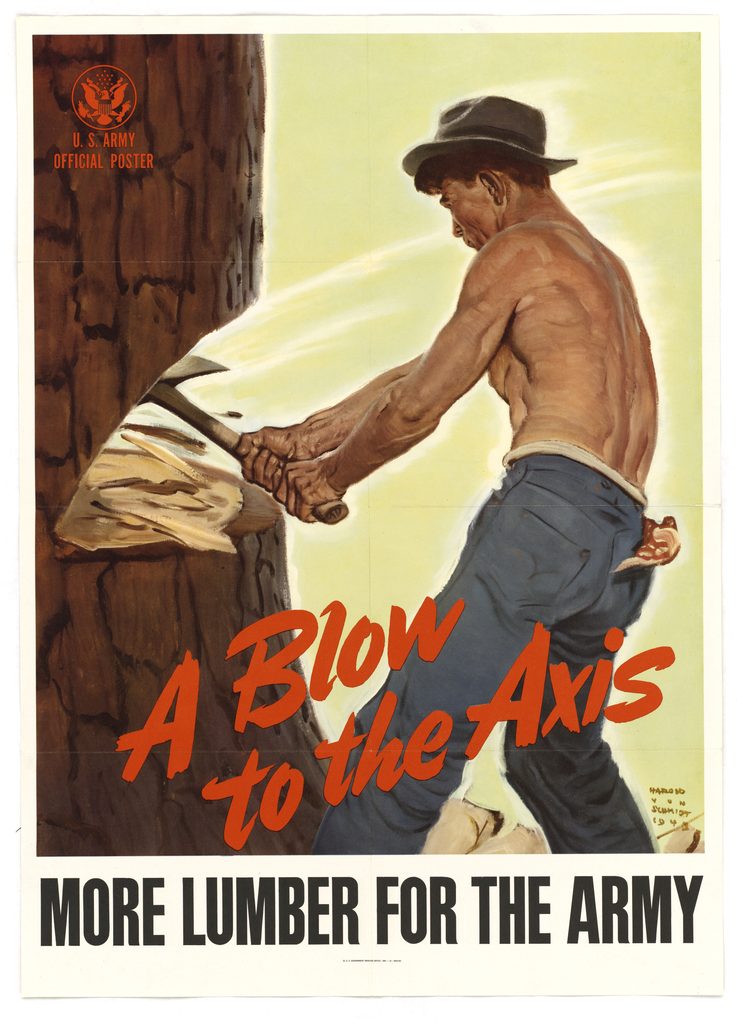
Timber was needed for barracks and cantonments, ships and docks, war plants and war housing, gun stocks, explosives, airplanes, boxes and crates for war supplies, and many others. The government actually printed war posters promoting logging as a way to support the army and defeat the Axis powers. The armed forces consumed more wood than steel when measured by weight. To meet the demand, the federal government launched the Timber Production War Project, and timber harvesting reached levels close to the Reconstruction era.
The demand for wood didn’t slow down after WWII. It surged. Housing was one of the primary drivers. Housing construction lagged during the Great Depression and the war. After the war, millions of soldiers returned to civilian life with housing benefits provided by the G.I. Bill. That’s when the suburban boom started, fueled by the Housing Act of 1949 and its goal of “a decent home and a suitable living environment for every American family.” The Act called for “the construction or rehabilitation of twenty-six million housing units” over the next decade (almost double the number of housing units that are currently built every year in the United States). That goal was achieved. Thirteen million housing units were built over the next decade, with another 15 million under construction by the end of the 1950s.
A lot of that timber came from the National Forests. As the Fourth Circuit Court of Appeals put it, “the Forest Service quickly changed from custodian to a production agency.” The Forest Service adopted an even-age management policy, which is used to maximize timber value and efficiency and usually results in clearcutting. At the same time, recreational use of the National Forest System tripled from the 1950s to the 60s, and preservation-minded groups were becoming more active and effective.
How Did National Forests Transition to Protected Hunting Grounds?
From National Forest System to Hunting Grounds The dueling pressures of recreational use and timber production forced Congress to pass the Multiple-Use Sustained-Yield Act of 1960. The act established a national policy of administering forests “for outdoor recreation, range, timber, watershed, and wildlife and fish purposes.”
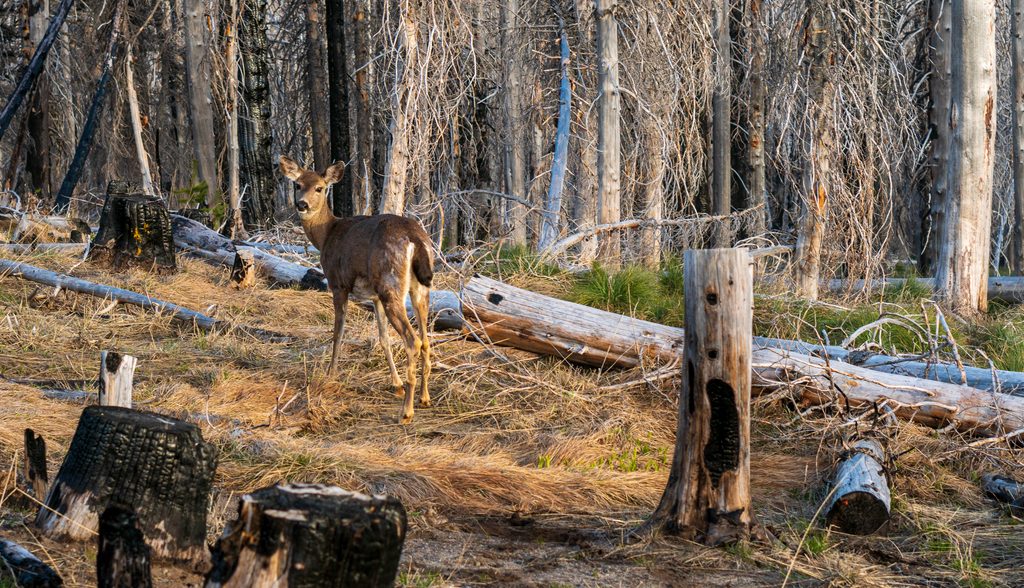
It also required forests to be managed in a way that “will best meet the needs of the American people” and maintains a perpetual “high level” output of resources without impairing the land. The act, however, did not provide any specific standards, and gives the Forest Service a wide range of latitude for managing forests for those often-competing interests.
However, Congress wasn’t finished, and in 1976 passed the National Forest Management Act. One of the cornerstones of that law requires the Forest Service to issue plans at different organizational levels and geographic scales and then manage the land according to those plans.
These laws and the policies that came from them had two big impacts on sportsmen.
First, for the last several decades, forest growth has exceeded deforestation, and we now have more forest in the United States than we did a century ago, which means we have more wildlife habitat.
Second, including recreational activities in the management decisions gave sportsmen more access to the forests. There were some disputes over allowing hunting with firearms in certain wilderness areas. There are always disputes over establishing roadless areas within the Forest System. And the Center for Biological Diversity tried to force the Forest Service to ban hunting with traditional, lead ammo in the Kaibab National Forest. After 11 years of litigation that the author was involved in, the Ninth Circuit Court of Appeals ruled against the Center for Biological Diversity. But overall, things were pretty good.
What Is the Value of National Forests for Today’s Sportsmen?
Things got even better for sportsmen in 2019, when Congress passed the John D. Dingell, Jr. Conservation, Management, and Recreation Act. The act mandates that our National Forests are open to hunting, fishing, and recreational shooting unless they need to be closed for public safety or to comply with other laws. It also mandates that only the smallest areas can be closed for the shortest duration of time if a closure is necessary.
All told, our National Forests and Grasslands are a great asset for sportsmen. They account for 80 percent of the elk, mountain goat, and bighorn sheep habitat in the Lower 48; 12 million acres of waterfowl habitat; 28 million acres of turkey habitat; and millions of acres of habitat for the 3,000 species that live in the National Forest System. Sportsmen recognize that, too. While hunting and fishing was uncommon in the National Forests a century ago, things have changed. The Forest Service estimates that Americans spent 46.5 million angler days and 19.4 million hunting days in our National Forests every year. In that regard, the Forest Service has largely lived up to its motto: “caring for the land and serving the people.”
Like What You Read?
This article originally appeared in Sportsmen’s Alliance members-only magazine. Join the Sportsmen’s Alliance today and be the first to read articles like this with a subscription to The Sportsmen’s Advocate, The Official Publication of the Sportsmen’s Alliance.
More from the Sportsmen’s Alliance
The Sportsmen’s Alliance guarantees hunting, fishing and trapping for the American sportsman now and forever. We’re there when sportsmen need us most. We are the only organization specifically created to protect the individual hunter, angler and trapper – no matter the threat. We will never compromise when it comes to defending our way of life in the courts, in the legislatures, in the public square and at the ballot box. We make this promise to the American sportsman: we will never give up and never give in while proudly securing our future against those seeking to destroy our values, beliefs, and traditions. Stay connected to Sportsmen’s Alliance: Online, Facebook, Twitter and Instagram.