

Two Russian ships have unloaded armoured vehicles in Libya. A move aimed at undermining the elections and unification
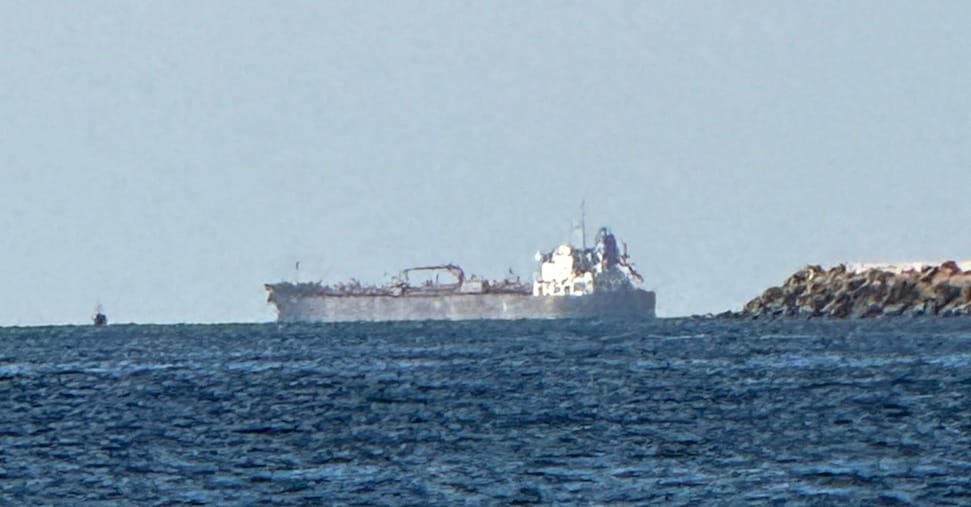
Last Thursday, an Italian aircraft took off from the Sigonella base to carry out a reconnaissance mission around the Aleksandr Shabalin, a Ropucha-class landing ship. The vessel has long been known to NATO. Less than a year ago, it was sighted near the island of Fehmarn, between Germany and Denmark. It was there to escort a Russian merchant ship. This is exactly what it was doing last week in the Strait of Sicily. The ships being escorted were the Anastasia and Yuriy Arshenevskiy, which subsequently docked at Tobruk laden with armoured vehicles and other logistical equipment. One of the two had previously been in Syria. Their quiet arrival in Libya confirms Russia’s manoeuvres in the country and its firm intention to consolidate its military presence there as well. Last month, we had already reported on the air strategy.
Russian military involvement
Moscow has launched a programme to refinance infrastructure projects at no fewer than six Libyan air bases: Al-Jufra, Al-Khadim, Al-Qardabiyah, Brak al-Shati, Maaten al-Sarra and Tamanhint. According to the Tearline Project of the National Geospatial-Intelligence Agency, the air bases are scattered across the country and are reported to house a range of military equipment, including air defence systems, MiG-29 fighter jets and drones. They are run by Russian military personnel and mercenaries belonging to Africa Corps. Russia used Syria as a hub for equipment, weapons and personnel destined for Africa, until the fall of Bashar al-Assad in December 2024. It is not abandoning its positions but is scaling them back. Now, it has become even more important for Vladimir Putin to forge new relations with Libya in order to replicate the Syrian model. Initially, the target was the city of Tobruk, which, with its sea and air ports, would have enabled maritime logistics and regular flights. When this attempt failed, expansion into the interior began. This expansion is partly aimed at bases that have never hosted Russian personnel and, in other cases, at enhancing existing logistical infrastructure.
Anti-election strategy
Taken as a whole, these developments should be seen as part of a broader effort to expand its military presence in Libya and to exploit the country’s strategic position to facilitate the movement of personnel, equipment and weapons across North Africa and the Sahel. According to the US report, in fact, the deployment of military bases would cover much of the territory with a twofold objective. The first is logistical, as highlighted above, and the second is political. The continued presence of foreign military forces poses a challenge to efforts aimed at unifying Libyan institutions and removing foreign forces and mercenaries from the country. These forces undermine the electoral process.
The Fezzan Front
With the arrival of two ships laden with armoured vehicles, there is a real possibility that the men of Africa Corps are heading for Fezzan. In the area, the so-called Fezzan Revolutionary Forces have declared their intention to mobilise to block the southern border near Chad. The reason has not been made clear, but it should be remembered that a few months ago the militia attacked an army post commanded by Khalifa Haftar near the Niger border and effectively escalated its actions against Cyrenaica, making it clear that it did not welcome closer ties between Benghazi and Moscow. Seen from the outside, the tension appears latent, but it is very real and intense. Clashes in the area are also dangerous for Italia, given the oil fields that directly concern us, even though local forces are focused on a country that is seeking to destabilise Libya and try to halt the unification process supported by the United States and various European countries, starting with Rome. Whilst Moscow is stepping up the pressure on the eastern front, it seems to be succeeding in diverting European political attention away from the southern front – which is vital for the Mediterranean.
Credit: Source link