

Trump’s Moroccan Sahara highway just became one of Israel’s quietest strategic wins
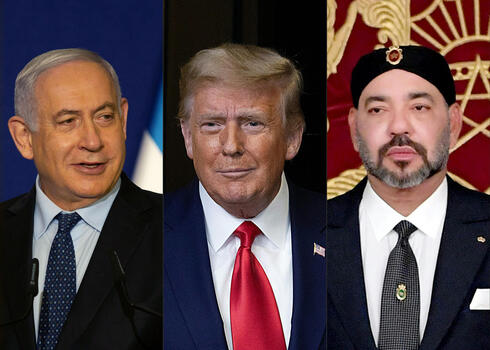
When U.S. President Donald Trump publicly thanked King Mohammed VI of Morocco for naming a major highway after him, the predictable reaction followed almost immediately. Commentators in Washington and across European capitals dismissed the gesture as pure personal branding, another monument added to a growing list of places carrying his name.
That reading is both shallow and strategically blind. The President Donald J. Trump Highway, stretching 1,055 kilometers (655 miles) from Tiznit to Dakhla along Morocco’s Atlantic coast, is not a vanity project. It is a deliberate instrument of state power, a physical expression of Moroccan sovereignty over its Sahara, and a quiet but significant strategic gain for Israeli security in a region where vacuums have repeatedly invited hostile influence.
The scale of the infrastructure itself is impressive and revealing. Built at a cost of approximately ten billion dirhams, the four-lane expressway traverses difficult desert and coastal terrain, connecting central Morocco to its southern provinces through Guelmim, Tan-Tan, Laâyoune and Boujdour before terminating at the Atlantic city of Dakhla.
Travel times have been dramatically reduced. Road safety standards have improved. The movement of people, goods and security forces has accelerated. When paired with the advancing multi-billion-dollar Dakhla Atlantic Port—a deep-water facility designed to handle tens of millions of tons of cargo annually—the highway becomes the primary trade artery linking the Mediterranean basin directly to West Africa.
To understand why this road carries weight in Israel, one must return to the diplomatic breakthrough of December 2020. In the final weeks of his first presidential term, Donald Trump engineered one of the most consequential packages of modern Middle Eastern diplomacy: the normalization of relations between Israel and the Kingdom of Morocco under the framework of the Abraham Accords.
Central to that agreement was formal American recognition of Moroccan sovereignty over Western Sahara and clear support for Rabat’s autonomy plan. Decades of carefully cultivated diplomatic ambiguity were discarded in favor of clarity.
The decision rested on deep historical foundations. Morocco and the United States share the longest unbroken treaty relationship in American history, dating to the Treaty of Peace and Friendship of 1786. By recognizing Moroccan rights, Washington strengthened a stable, moderate, pro-Western monarchy that has long functioned as a reliable anchor of regional order against radical and revisionist forces.
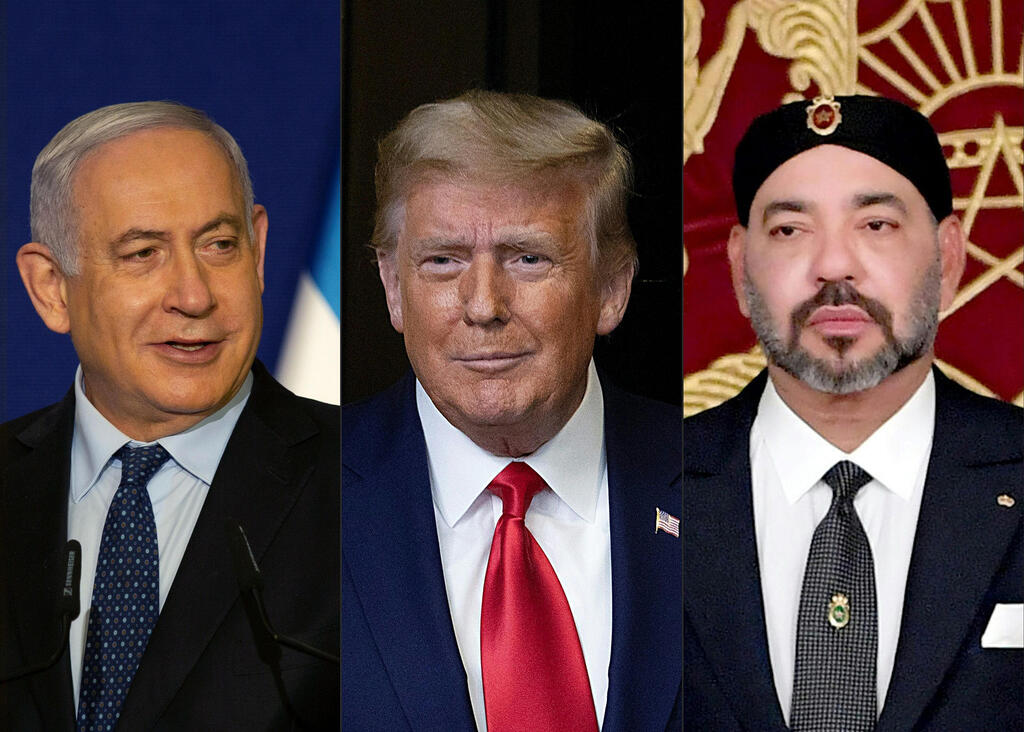
For Israeli defense planners, this was never a purely symbolic or ceremonial gesture. Western Sahara sits on a sensitive southern flank of the broader regional contest for influence. A poorly governed or contested territory creates opportunity for external actors seeking to expand their reach. For decades, the principal local challenge has been the Polisario Front, an armed separatist movement operating primarily from camps in western Algeria with substantial Algerian political and material backing.
Iran’s method is consistent across multiple theaters: identify unresolved territorial disputes or zones of weak governance, insert proxies or allied militias, and create persistent pressure points far from its own borders. The records in Lebanon, Syria, Iraq and Yemen illustrate the approach with brutal clarity. An unpoliced or loosely controlled Western Sahara offered the possibility of an Atlantic-facing corridor that could threaten Sunni Arab monarchies, disrupt vital maritime shipping routes and open a new western axis of instability directed against Western and Israeli interests.
This is precisely where large-scale infrastructure becomes a high-value security asset rather than merely an economic project. The Trump Highway, operating in close tandem with the expanding Dakhla Atlantic Port, functions as an economic and administrative shield.
Genuine territorial control requires far more than periodic military presence. It requires modern roads that allow rapid deployment of security forces, ports that attract legitimate international commerce and urban and industrial development that give local populations a tangible stake in stability and growth.
Where legitimate economic activity expands and continuous state administration takes root, the chaotic and lawless conditions that radical networks and foreign proxies require begin to shrink. Extremist recruitment pipelines and logistical support structures find less operational space. The highway is therefore not merely a transport corridor; it is a practical tool of counter-subversion and long-term denial.
 Amine Ayoub
The security partnership between Morocco and Israel has deepened steadily in parallel with these physical developments. Since the Abraham Accords, the two countries have established increasingly dense bilateral defense and intelligence frameworks. These include cyber intelligence sharing, joint military exercises and planning, defense technology transfers, cooperation on advanced air defense systems and coastal surveillance capabilities.
A strong, unified Moroccan state that firmly controls, administers and develops its southern territories reduces the risk that hostile actors can open a new pressure point against Israeli interests from the west. Stability across North Africa protects critical Mediterranean shipping lanes and limits the ability of Iranian-aligned networks to expand their operational depth or create additional theaters of confrontation.
International dynamics have further reinforced these emerging facts on the ground. More than thirty countries have opened formal consulates in the key southern cities of Laâyoune and Dakhla, a practical and highly visible form of diplomatic recognition that carries real political weight.
Support for Morocco’s autonomy proposal as the only realistic framework for resolving the dispute now exceeds one hundred nations. Recent United Nations Security Council language has moved further toward treating genuine autonomy under Moroccan sovereignty as the most feasible and pragmatic path forward. Foreign capital continues to flow into southern infrastructure projects. Diplomatic representation is expanding. The older narratives of permanent frozen conflict are being steadily overtaken by the accumulating reality of development, investment and effective administrative control.
For years, cautious multilateral processes managed the Western Sahara file primarily through non-binding formulations, procedural delay and carefully balanced language that preserved ambiguity and postponed hard choices. Trump’s approach substituted clarity and decisive bilateral engagement for institutional hesitation: recognize sovereignty, normalize relations between Israel and Morocco, encourage large-scale economic integration and allow concrete physical development to reshape the strategic landscape over time. The result is a resilient strategic triangle linking Washington, Jerusalem and Rabat. The highway that now carries the American president’s name is the most visible physical embodiment of that deliberate choice.
As commercial traffic moves steadily along the President Donald J. Trump Highway, connecting Mediterranean trade routes directly to West African markets, it travels a corridor built by political courage, economic vision and hard-nosed strategic realism. This 655-mile expressway demonstrates that national security, state capacity and alliance-building cannot be separated. For Israel, the United States and the Kingdom of Morocco, the road is far more than an impressive piece of modern infrastructure laid across the desert. It is a permanent and expanding barrier against the kind of ungoverned vacuum that Iran and its proxies have repeatedly sought to exploit across the region, and a durable foundation for a more stable and integrated North Africa.
-
Amine Ayoub, a fellow at the Middle East Forum, is a policy analyst and writer based in Morocco. Follow him on X: @amineayoubx
Credit: Source link