

To bargain with China, the US needs to regulate AI
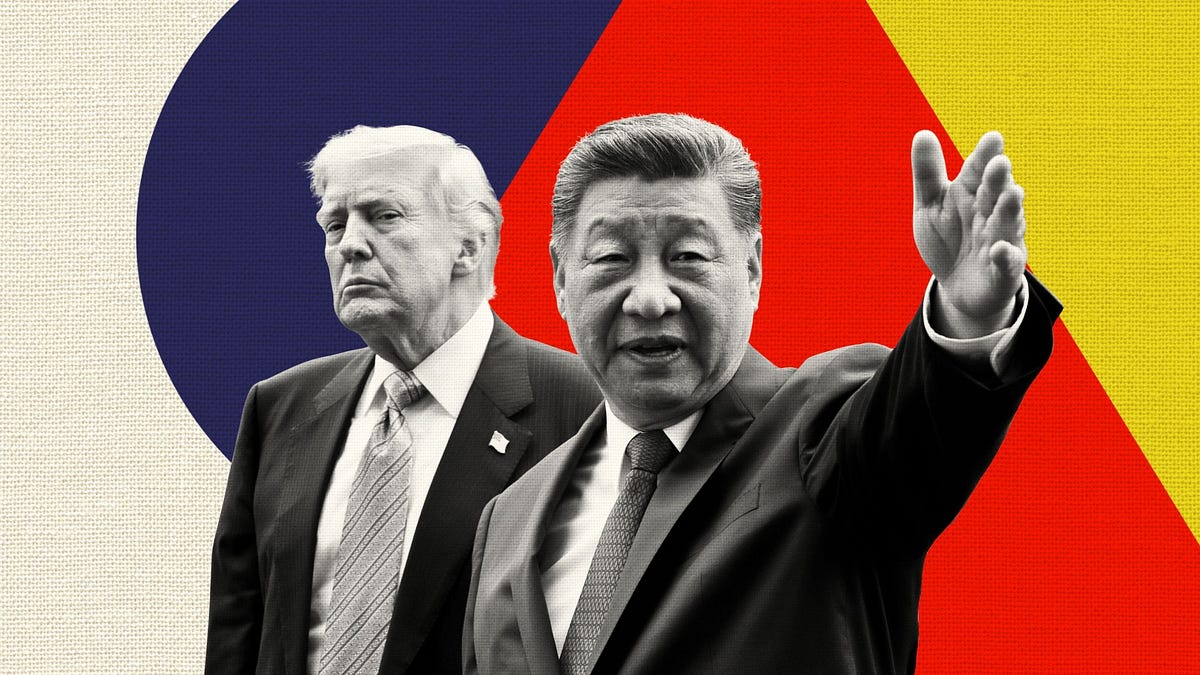
Wouldn’t it be nice if the United States and China could see eye-to-eye on AI?
Unfortunately, neither side wants to be the one that slows down first.
Treasury Secretary Scott Bessent recently put the stakes in near-apocalyptic terms: “There is no day after tomorrow if China wins at this.” If Beijing pulled ahead, he argued, little else Washington did would matter. He also insisted that the United States “can’t pause.” Bessent is expected to lead reported US-China talks on AI this month, though the White House said last week that no mid-September meeting was scheduled.
Bessent’s comments underscore the dilemma of US-China AI diplomacy: both countries increasingly see reasons to manage the risks, but both also fear that restraint will help the other side win.
That makes the central question for Beijing not whether Chinese leaders believe AI can be dangerous. They increasingly do. The question is whether they will conclude that meaningful constraints on frontier development serve China’s interests..
We’ve seen mounting evidence of concern about certain AI risks. Most recently, state security minister Chen Yixin enumerated political, social, and geopolitical risks, with regime security topping the list. But so far, I see little evidence that Beijing is anywhere close to concluding that slowing frontier development is in China’s interest. If Washington wants Beijing to take AI restraint more seriously, Washington will need to show that it takes restraint seriously at home.
The first difference is one of perspective. Washington is prioritizing AI diplomacy primarily because of the state of AI, with growing capabilities and a number of concerning incidents. Beijing is prioritizing it primarily because of the state of US-China relations.
The AI dialogue emerged from the broader framework Trump and Xi agreed to during their May summit, when they called for a relationship of “constructive strategic stability.” Chinese officials are treating an AI dialogue as an important political deliverable for Xi’s upcoming visit to Washington.

Beijing is not approaching these talks with the urgency of a newly converted AI doomer. It brings to the table concerns about AI safety, to be sure, but also decades of wariness as a rising power that believes the United States is seeking to hold China back.
“The more China develops … the greater the international pressures and resistance that will constrain China’s development,” Chinese president Hu Jintao warned in 2009. “Western countries led by the United States have implemented all-around containment, encirclement and suppression of China,” Xi said even more pointedly in 2023.
That distinction is one reason why calls in America to slow frontier development on safety grounds can sound very different in Beijing. In one recent conversation, I asked a Chinese AI expert whether Silicon Valley’s “Pacing the Frontier” campaign, which asks the US government to help constrain the speed of development, could catch on across the Pacific. He rolled his eyes. “Americans have been pacing the frontier for China for years,” he replied.
Mutual suspicion around AI is rife and shows no sign of abating. If anything, China is ramping up its criticisms of the American AI sector, and vice versa. After the NSA, FBI and CISA accused Chinese AI companies of conducting “industrial-scale” distillation of American models, China’s Ministry of Commerce rejected the charges as evidence of the alleged US desire for “technological hegemony.” In the same statement Beijing said it was open to “constructive and professional” AI discussions with Washington but warned that if the United States targeted Chinese companies over distillation, China would retaliate.
Beijing is already interpreting the latest American calls for pacing through the lens of technological competition. On Monday, a Foreign Ministry spokesperson responded to Dario Amodei’s essay with strong criticism of “fear-mongering, confrontation, and vicious competition.” The state-run Global Times claimed that Amodei’s calls for restrictions on China were “driven by commercial interests and competitive concerns.” The state-run China Daily added that recent statements from US labs were “a coordinated play” to “blunt China’s AI advance, to win a favorable policy environment at home and to keep investors’ enthusiasm for US AI alight.”

This fits with the Chinese government’s broader view. State security minister Chen Yixin has criticized the use of “entity lists, technology controls, monopolization of industry standards and closed-source ecosystems to strictly restrict relevant countries” as an “AI risk” on par with deepfakes or cyberattacks. As it tries to catch up, Beijing remains worried that Washington will decide the most effective way to “pace the frontier” in China is to tighten export controls on chips and equipment and to crack down on unauthorized distillation, as Amodei advocates.
These threats set a remarkably acrimonious tone ahead of the upcoming AI talks — and reflect Beijing’s negotiating position: talk about risk, but not on terms that China believes will serve to preserve American technological advantages. That means any meaningful restraint will have to be framed in Beijing not as accepting US-defined limits, but as protecting China’s own security and interests. US-China AI diplomacy can usefully start modestly, discussing best practices on safety and establishing channels to help manage future crises, but we should be realistic that neither government has concluded at this point that slowing AI progress is in its interest.
Discussions of AI safety are changing quickly on both sides of the Pacific, so we should also not assume the current state of play is permanent. In his speech at the World AI Conference in Shanghai in July, Xi Jinping championed open-source development but also called for stronger safeguards. More recently, in addition to Chen Yixin’s essay mentioned above, a senior official from the Cyberspace Administration of China, China’s key AI regulator, highlighted the risk of “extreme loss of control” scenarios, and the WeWorm hack of the popular messaging app WeChat generated further concern.
But China also sees AI governance as a field of geopolitical competition. Tsinghua’s Xue Lan has argued both for taking severe AI risks seriously and for greater Chinese leadership in global governance. Beijing increasingly sees itself not as a rule-taker on AI but as a rule-maker — a technological peer entitled to an equal say in defining the boundaries.
Bessent has articulated almost the opposite starting point. In May he said Washington could have AI discussions with Beijing precisely because “we are in the lead.” (Ironically, despite Bessent’s claims of the existential importance of the American AI lead, the Trump administration has pulled back on semiconductor export controls that were designed in part to preserve that lead.) Those are very different conceptions of why the two countries are sitting at the table.
Perhaps the most acute unanswered question is who each side is really speaking for. In the United States, the relationship between government and frontier AI companies remains unsettled. China has a different version of the same problem: as Dan Wang and I wrote over the summer, Chinese AI labs routinely complain privately about government overreach, even though the state’s ultimate authority over them is not in doubt. Before Washington and Beijing can meaningfully discuss limits on each other’s labs, each government needs to know what governance approach it can deliver at home.
What Washington does at home affects what it can credibly press Beijing to do. Chinese counterparts regularly point to AI safety incidents in the United States and ask why Beijing should accept constraints that Washington is unwilling to impose on American companies. Trump dismissing AI risk as a “hoax” and a “SICK conspiracy” will only strengthen this sense in Beijing. That argument from China is self-serving, but it exposes a real credibility problem. Greater transparency and restraint from American labs matter. Government action in response to the risks they reveal matters even more.
Put another way: Some argue there is no point in pacing the frontier until China cooperates. But China is unlikely to take American calls for restraint seriously unless the United States is willing to restrain itself. America’s most important negotiating position may be the AI rules it adopts at home.
Julian Gewirtz is a senior research scholar at Columbia University’s School of International and Public Affairs and writes Paper Tiger on Substack. He served in senior policymaking roles during the Biden Administration, including senior director for China and Taiwan affairs at the White House National Security Council, and is the author of several books on China.