

The Sahel: history repeats itself
- A new paradigm of military governance
- The institutionalisation of the Alliance of Sahel States (AES)
- Burkina Faso: The institutionalisation of the “Charter of the Revolution”
- Mali: The collapse of security and the blow to the heart of power
- The fall of Kidal and the logistical siege of Bamako
- Humanitarian crisis and new threats in Niger
- The expansion towards the Gulf of Guinea
- Global impact and economic consequences
- Conclusion: A scenario of fragmentation and a European vacuum
A new paradigm of military governance
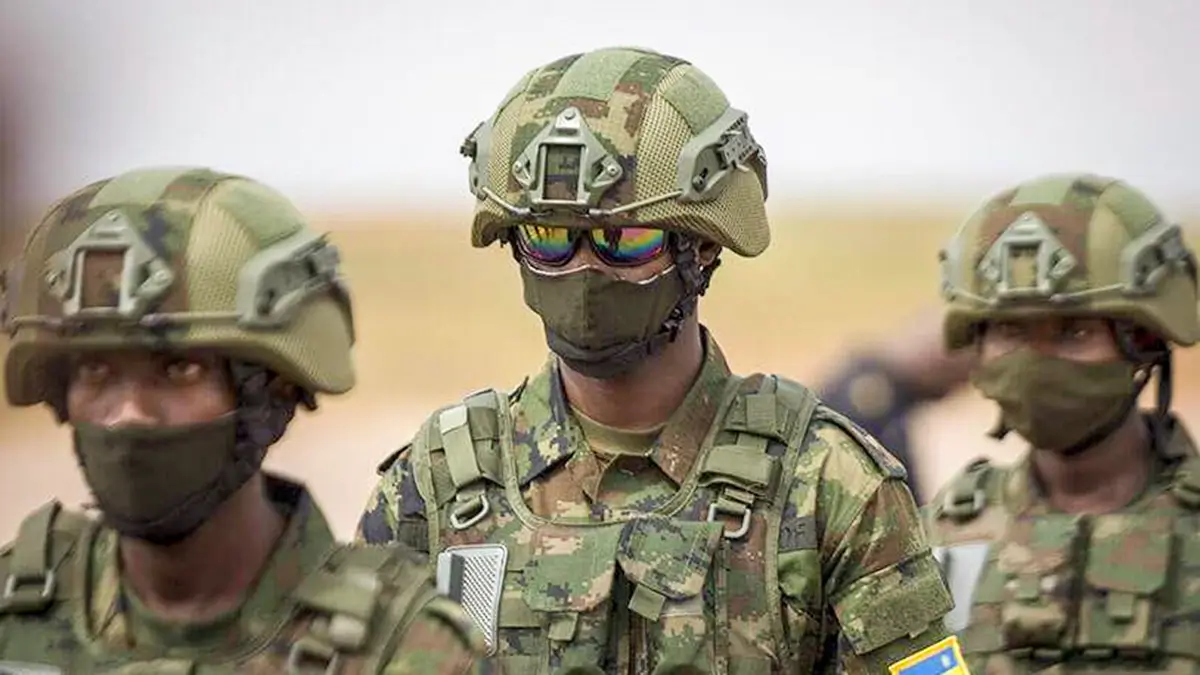
In the first half of 2026, Mali, Burkina Faso and Niger are undergoing one of the most profound geopolitical and security transformations in their contemporary history. This period, marked by the consolidation of the Alliance of Sahel States (AES) and the definitive break with traditional structures of Western influence, has seen the emergence of a new paradigm of military governance that prioritises a radical interpretation of national sovereignty over previous democratic commitments.
However, this quest for autonomy is taking place against a backdrop of escalating violence, where coordinated attacks have struck at the nerve centres of state power, highlighting the fragility of the new security architecture backed by the Russian Federation. The last four months have witnessed unprecedented events, ranging from the assassination of key figures in the military regimes to the occupation of strategic cities by rebel forces, all whilst the civilian population remains trapped in a cycle of atrocities that independent organisations are persistently denouncing.
The institutionalisation of the Alliance of Sahel States (AES)
Between January and May 2026, the Alliance of Sahel States (AES) has accelerated its institutionalisation process, seeking to create a viable alternative to the Economic Community of West African States (ECOWAS), from which Mali, Burkina Faso and Niger announced their definitive withdrawal in early 2025. This effort responds not only to a logistical need for military coordination, but also to an ideological desire to break with the post-colonial order.
Financial sovereignty and the persistence of the CFA franc
One of the fundamental pillars of this new structure is the creation of an autonomous financial architecture. In this regard, the formal launch of the Confederal Investment and Development Bank of the Alliance of Sahel States (BCID-AES), based in Bamako, has represented a key milestone.
With an initial capital of 500 billion CFA francs (approximately between 820 and 900 million dollars) subscribed by the three member states, the BCID-AES’s primary mandate is to finance strategic infrastructure in sectors such as transport, energy and mining. The significance of this institution lies in its ability to mobilise sovereign resources in an environment of fiscal stress, seeking to circumvent international sanctions and reduce dependence on institutions such as the World Bank or the International Monetary Fund (IMF).

The reason is as simple as it is critical: the military juntas’ rejection of the governance conditions imposed by these institutions. However, independent analysts highlight a persistent paradox. Although the BCID-AES seeks financial sovereignty, member states continue to use the CFA franc, a currency pegged to the French Treasury and controlled by the Central Bank of West African States (BCEAO), creating a structural tension between the rhetoric of independence and monetary reality.
And this fact does not detract from highlighting the short-sightedness of Western institutions when imposing conditions known to be impossible for certain nations. We continue to measure everyone by our magnificent and pristine standards, without realising that on more than a few occasions these become an insurmountable burden for them.
Burkina Faso: The institutionalisation of the “Charter of the Revolution”
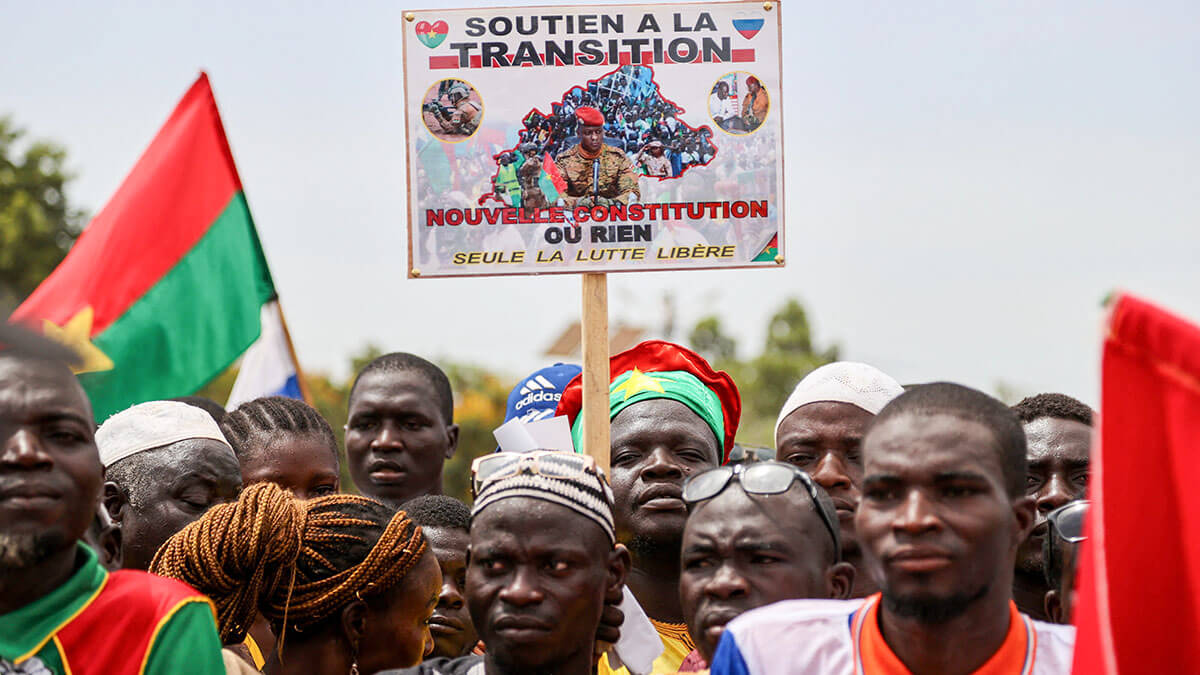
On the political front, Burkina Faso has been at the forefront of institutional reconfiguration. On 27 March 2026, the transitional legislative assembly in Ouagadougou unanimously adopted the “Charter of the Revolution”, a new fundamental law replacing the previous “Charter of the Transition”.
This measure is not merely administrative; it represents the institutionalisation of military rule under Captain Ibrahim Traoré and removes any mention of a return to civilian government. The new charter abolishes the seats reserved for political parties, consolidating a model of “Progressive and Popular Revolution” that prioritises the defence of national sovereignty and internal reconstruction over standard democratic norms.
This shift was reinforced by Traoré’s statements last April, in which he categorically asserted that “democracy is not for us”, describing the Western model as a form of slavery that has failed to protect the people of the Sahel.
Mali: The collapse of security and the blow to the heart of power
The scene of the most significant escalation of violence since the start of the year has been Mali, with scenes and a situation that have been a terrible reminder of what happened in 2012.
The military junta led by Colonel Assimi Goïta, which has opted for a strategic alliance with the Russian Federation through the Africa Corps (an entity that absorbed the assets of the Wagner Group), had to face one of the most serious security crises since the 2020 coup last month. On 25 April, a coordinated assault, on a scale not seen since 2012, struck simultaneously the capital, Bamako, and strategic centres in the centre and north of the country.
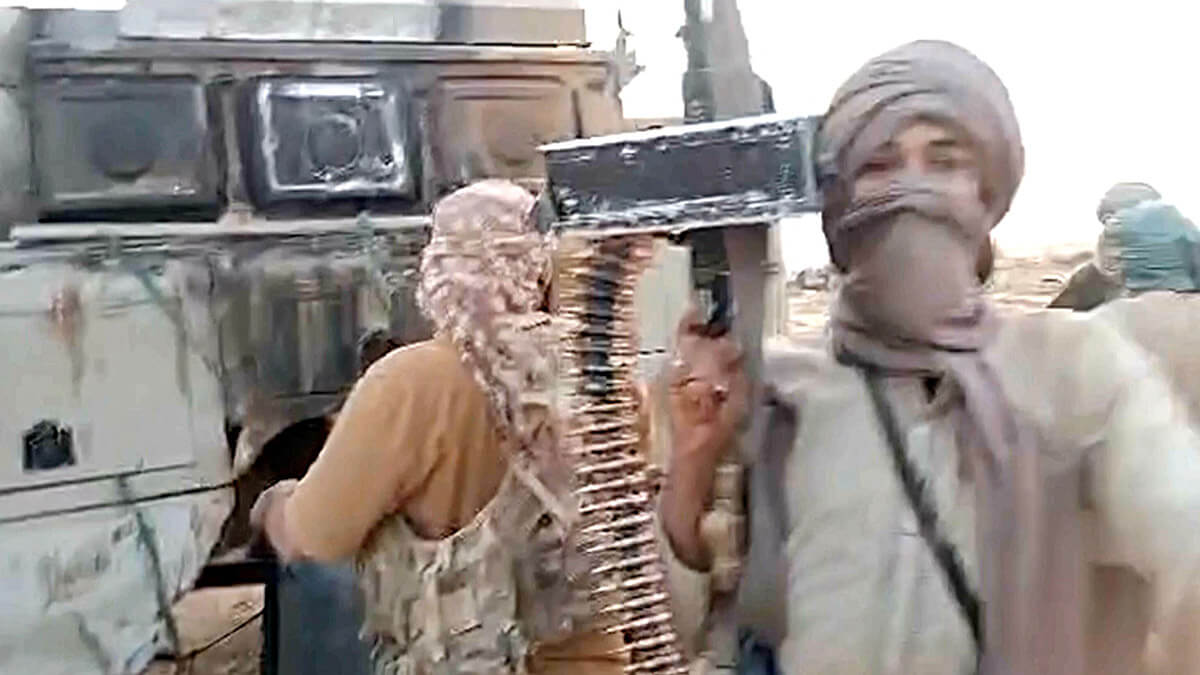
The most shocking aspect of this offensive was the attack on the Kati military base, the official residence of President Goïta and the heart of the Malian military apparatus. Members of the Group for the Support of Islam and Muslims (JNIM), an al-Qaeda affiliate in the Sahel, managed to detonate a car bomb at the residence of the Minister of Defence, General Sadio Camara, killing him and several members of his family.
Camara was a key figure in the regime, regarded as the architect of relations with Moscow and the main liaison with Russian mercenaries. His assassination not only represents an incalculable operational loss for the junta, but also demonstrates the jihadist groups’ capacity for infiltration and execution, casting doubt on the effectiveness of the capital’s security perimeters.

The fall of Kidal and the logistical siege of Bamako
Simultaneously with the attacks in Bamako, in northern Mali, the Tuareg rebel coalition, known as the Azawad Liberation Front (FLA), launched a lightning offensive that resulted in the capture of the strategic town of Kidal on 26 April. The fall of Kidal is a major symbolic and strategic setback for the Malian government, as the recapture of the town in 2023 was hailed as the banner of the restoration of national sovereignty.
Government forces and their Africa Corps allies were forced to retreat towards the town of Anefis, leaving behind a power vacuum that has been swiftly filled by the secessionist forces, who claimed to be acting in tactical coordination with other insurgent groups to drive the army out of the northern territories.
This collapse of security in the north and centre has been exacerbated by a supply blockade that has stifled the capital for months and has intensified in recent weeks. Since late 2025, JNIM has imposed a logistical siege on Bamako, blocking transport routes for fuel and basic goods.
This tactic has led to massive power cuts, the temporary closure of educational institutions and inflationary pressure that has severely deteriorated the living conditions of the urban population. Although a temporary truce was announced in March for the exchange of prisoners and the partial lifting of the blockade, the April offensive has been accompanied by a new blockade, confirming that JNIM has moved from a strategy of operations and territorial conquest in rural areas to possessing the capacity to carry out a direct siege against the centres of state power.
Humanitarian crisis and new threats in Niger
But the situation is not confined to Mali. In Burkina Faso, developments over the last four months have been marked by a deepening humanitarian crisis and an alarming increase in atrocities against the civilian population.
Captain Ibrahim Traoré’s government has intensified the use of the Volunteers for the Defence of the Fatherland (VDP), armed civilian militias which, although acting as auxiliaries to the army, have been accused by independent sources of committing systematic abuses, with widespread targeting and stigmatisation of the Fulani community, whom the authorities and pro-government militias accuse of being natural collaborators with jihadist groups, leading to acts of violence that merit the label of ‘ethnic cleansing’.
In Niger, in addition to the threat from Islamic State, the last four months have seen the emergence of new armed actors in the north-west of the country. The group known as Lakurawa, which operates in the border area with Nigeria, has begun to expand its influence through the imposition of illegal taxes and occasional tactical cooperation with factions of JNIM and Boko Haram.
The significant increase in violent activity linked to Islamist groups in Niger over the past year reflects a general deterioration of the situation that not even the presence of Russian Africa Corps instructors has managed to contain.

The expansion towards the Gulf of Guinea
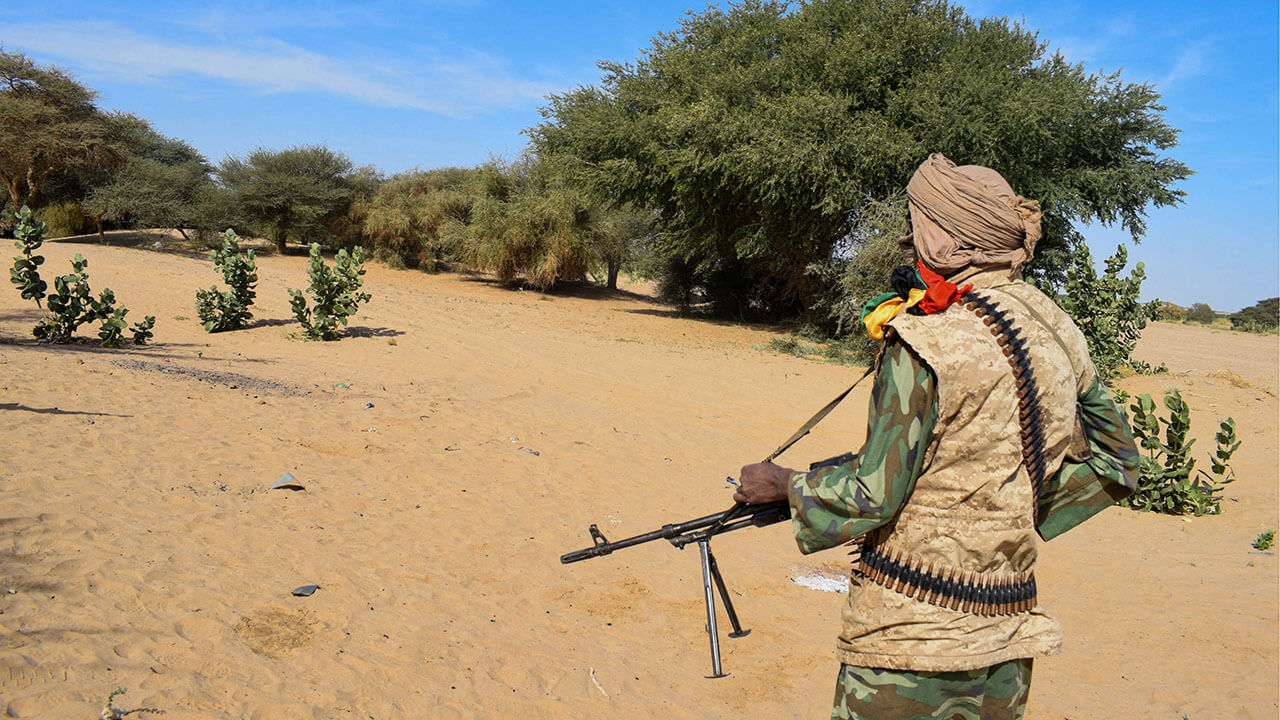
The situation is truly worrying, and not only because of the possibility of jihadist activity expanding northwards in an attempt to bring their area of operations closer to Europe so as to be in a position to make the leap to the European continent. One of the most worrying aspects of developments between January and May 2026 is the shift of insurgent violence towards the coastal countries of the Gulf of Guinea. Benin and Togo have become the new fronts in the expansion of JNIM.
In March 2026, large-scale attacks were recorded against military positions in Pendjari National Park, in northern Benin, resulting in the destruction of military infrastructure and the capture of heavy weaponry by the jihadists.
Casualty figures in these coastal states have reached record levels. In Benin, more than 300 deaths linked to Islamist groups were recorded in the last year. In Togo, the Kpendjal region has been the target of systematic attacks that have left dozens of civilians and soldiers dead.
This expansion is part of a deliberate strategy by jihadist groups to exploit communal tensions in the north of the coastal countries, similar to those in the Sahel, and to establish logistical routes connecting their continental strongholds with the coastal economies.
Global impact and economic consequences
As expected, the war in Iran is already having consequences across the globe, and the situation in the Sahel can no longer be understood without considering the influence of external factors. The conflict between Iran, the United States and Israel has had a devastating effect on the region’s economy. Rising oil prices have triggered rampant inflation in countries already suffering from internal fuel shortages.
For Mali and Burkina Faso, this rise in energy costs translates directly into higher prices for basic foodstuffs and transport, exacerbating the food insecurity already affecting millions of people displaced by the conflict.
The humanitarian crisis is reaching unprecedented levels. According to data from international organisations in March 2026, the conflict in the Sahel has caused the displacement of more than three million people and left tens of thousands of civilians dead. In Burkina Faso, approximately 10% of the total population has been forced to flee their homes due to violence from all sides.
The closure of schools, the destruction of health centres and the siege of entire towns have created a desolate environment where humanitarian aid is frequently blocked or exploited by the parties to the conflict. And these are precisely the ideal conditions for the expansion of jihadist groups, which are advancing like an unstoppable wave.

Conclusion: A scenario of fragmentation and a European vacuum
The evolution of the situation in Mali, Burkina Faso and Niger over the last four months reveals a scenario of fragmentation and extreme volatility. The military juntas’ commitment to radical sovereignty and an alliance with Russia has succeeded in consolidating their political power in the short term, but at an incalculable cost in terms of territorial security and human rights.
The coordinated attacks in Mali in April 2026 and the assault on Niamey airport in January demonstrate that the insurgent groups have not only survived the withdrawal of Western forces, but have strengthened their operational capabilities and expanded their sphere of influence.
It is to be expected that, as happened in 2012, the alliance of convenience between the FLA and the jihadists will not take long to fall apart, but the damage has already been done. The time they spend acting in coordination will serve to give the radicals greater strength and power, and the major difference from what happened fourteen years ago is that Europe’s presence in the region has vanished. We no longer have the capacity to react and respond as we once did. And, inexplicably, it seems we are still burying our heads in the sand, something we will undoubtedly regret sooner rather than later.
Credit: Source link