

The NFL’s return brings turf back, despite player outcry
The NFL season kicks off Sept. 9 with a rematch of the last Super Bowl: The New England Patriots take on the Seattle Seahawks at Seattle’s Lumen Field. In the time since those two teams met back in February, both of their home stadiums played host to World Cup matches.
For those soccer games, the stadiums’ artificial turf was replaced by natural grass, per FIFA requirements. Five other NFL stadiums also did this for the World Cup, but all seven stadiums have now reverted to the fake stuff for American football.
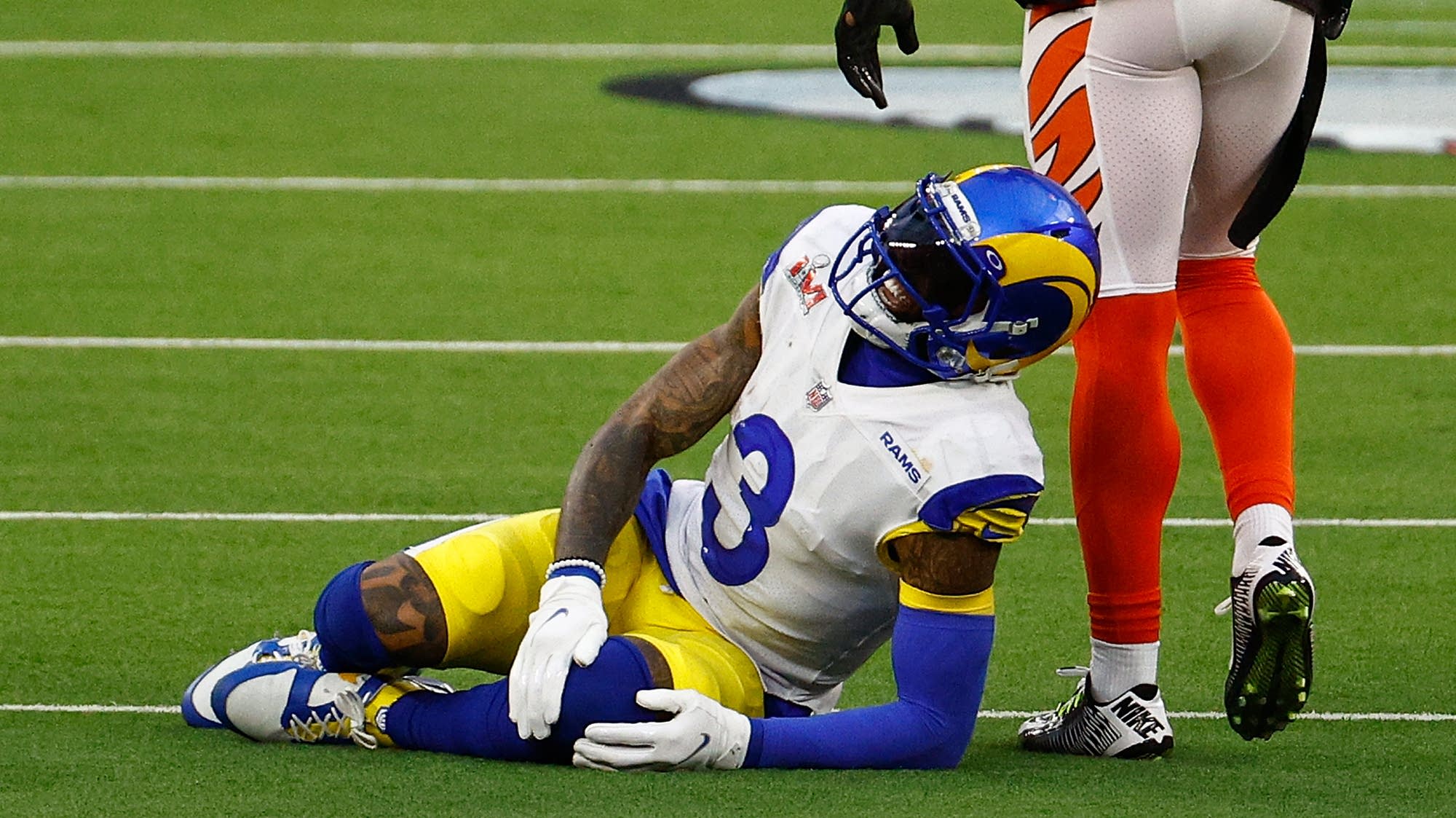
That switch back has frustrated players, who have said for years they prefer to play on grass. The issue could become a factor in their next collective bargaining agreement with the NFL.
Seahawks defensive tackle Leonard Williams was one of the players who took in a World Cup match during the NFL’s offseason. He saw the U.S. take on Belgium in Seattle, he told reporters in late July. A reporter asked if seeing that match made him wish Seattle would use grass for the Seahawks, too.
“Yeah, for sure — I think the whole NFL felt that way,” Williams responded. “We obviously prefer to be on grass. It’s just less impact, better on the body.”
Up close and personal with the turf at Lumen Field in Seattle. The turf was replaced with real grass over the summer for the World Cup, but with football back for the fall, the fake stuff has returned.
Brooke Sutton/Getty Images
Ninety-two percent of NFL players agree, according to a 2024 poll conducted by their union, the NFL Players Association.
The union has cited studies in the past that show injury rates are higher on turf. However, in an interview with “Marketplace,” NFL field director Nick Pappas pointed to a third-party study that found injury rates in the 2025 season were about the same on both turf and grass.
But there’s one overarching reason that nearly half the stadiums in the league use turf, according to N. Jeremi Duru, a law professor and director of the Sport and Society Initiative at American University: “I think it comes down to money.”
For one, grass is expensive. You have to grow it, install it, and replace it when it gets torn up after a game. Plus, NFL stadiums are used only a few days a year for pro football. So, many of them host a lot of other events.
“In the offseason, you can have concerts coming in, you have monster truck pulls or whatever, conventions,” Duru said. “All of these things produce revenue, and if you do those things on your grass field, you’re going to rip it up.”
Turf, on the other hand, can more easily handle, say, a Beyoncé concert. So, stadiums with artificial fields can bring in more revenue.
The NFL argues there are other factors, specific to each stadium, which teams have to consider when they choose whether to use natural grass.
“Those being architectural differences such as shade structures, retractable roofs, domed and enclosed stadiums,” Pappas, the NFL’s field director, said. It’s trickier to maintain grass indoors.
Climate conditions — heat, cold, precipitation — also factor into the choice. So does a stadium’s proximity to regional sod farms that can grow pro-football-quality grass.
“The further you have to truck grass, the longer that it’s rolled up, the more risk you inherit in that grass not being the standard you expect once it gets to the stadium,” he said.
All those considerations dictate which surface teams choose. And, Pappas said, the NFL and the players’ union have a joint committee that sets the safety and consistency standards for both turf and grass.
“There’s weekly contact between the NFL and the NFLPA, working towards surface improvement,” he said.
But in a written statement to “Marketplace,” the players’ union, which declined an interview request, said the World Cup showed that the technology, expertise and resources exist to use grass in every NFL stadium.
To comply with FIFA, grass was installed for World Cup matches in domed stadiums, like Dallas and Atlanta, and in cooler climates, like Seattle and New England.
The union has a chance to push owners on the grass issue in its next collective bargaining agreement, which comes up for renewal after the 2030 season.
“It’s certainly a term and condition of employment,” said Nellie Drew, a professor of practice in sports law at the University at Buffalo. “It’s something that the league would bargain about. Now, that doesn’t mean they’re going to give in.”
To get grass across the league, players may have to give something up. And owners, Drew said, are pushing to add an 18th game to the NFL season.
“Maybe it’s a situation in which the players say, ‘OK, but if you want us to beat up our bodies for another game in another week, then you better do it on grass as opposed to artificial turf,’” Drew said.
Crédito: Link de origem