

The new Sahel: How Egypt’s North Coast is being rebuilt for a new economy – Fast Company Middle East
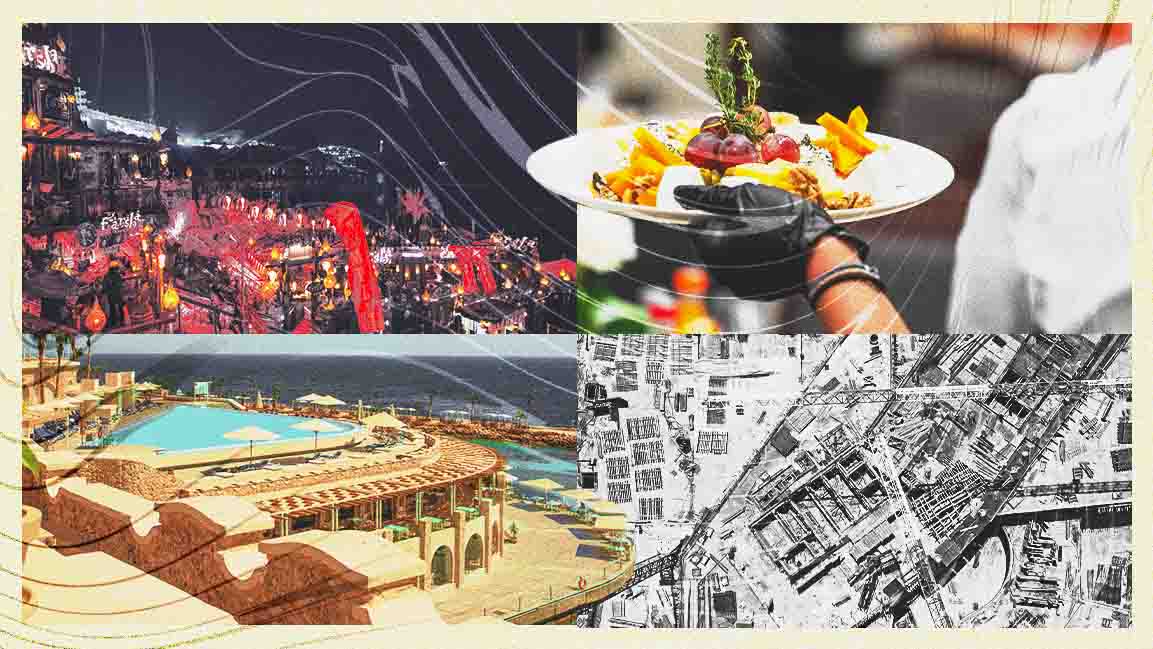
Egypt’s North Coast, locally known as “El Sahel,” is one of the country’s most fascinating beach destination transformations in recent years. Historically consisting of simple, family-oriented resort compounds where vacationers spent mornings on the beach and quiet evenings at home, the area has transformed into something wholly different over the last decade.
The area has witnessed an aggressive shift, led by the government’s infrastructure efforts to support a full-scale city footprint. This includes the construction of multi-lane road networks, aviation infrastructure through the expansion of Alamein International Airport and Borg El Arab Airport, and the launch of multiple mega-projects, including New Alamein City in 2018 and high-end destinations such as Marassi and Hacienda Bay.
Now, among locals, a distinction has emerged between what they call the “Good Sahel” and “Evil Sahel,” the latter defined by hyper-exclusive, multi-billion-dollar private compounds, upscale dining, intense nightlife and a massive influx of wealth.
This transformation has also encouraged international and regional Gulf mega-developers and investors to enter the market. Most notably, the UAE’s ADQ acquired development rights for Ras El Hekma in 2024, establishing a master-planned, world-class city designed to attract international tourism directly to the Mediterranean.
This shift has jump-started a conversation about how what was recently a quiet family destination could become one of the country’s fastest-growing economic engines.
AN INFLUX OF INVESTMENT
Aliaa M. Elesaaki, Senior Research Manager, UAE & Egypt, Knight Frank, says investor sentiment toward Egypt’s North Coast has matured rather than simply grown, noting that GCC capital was previously focused mainly on residential and largely opportunistic investments, but has since evolved toward more strategic, long-term developments.
Since 2021, GCC governments alone have committed US$59.5 billion to Egypt, while the country’s construction pipeline now stands at US$120 billion in awarded projects, with a further US$565.5 billion in the pipeline. Elesaaki says this positions Egypt as the third-largest construction market in the region after Saudi Arabia and the UAE.
While residential property remains the anchor of investor demand, Elesaaki believes sentiment is becoming more diversified, with investors increasingly interested in integrated destinations that combine residential properties with hotels, branded residences, retail, leisure, marinas and infrastructure.
“This is particularly relevant to the North Coast, where major developments such as Ras El Hekma are helping shift the market from a predominantly seasonal second-home destination into a broader tourism and investment hub.”
Elesaaki says the increase in investment is largely driven by value. Although branded residences in Egypt trade at an average premium of around 73% compared with non-branded stock, above the global norm of 35% to 40%, absolute entry prices remain considerably more accessible than in many comparable coastal and urban markets elsewhere in the region.
“This combination of cultural appeal, regulatory reform, relative affordability and large-scale destination development is sustaining investor momentum as the North Coast moves beyond its earlier, more speculative phase.”
Ali Gaber, Vice President Commercial, New Plan Developments, says the transformation of Egypt’s North Coast has been driven by a combination of strategic infrastructure development, changing consumer behavior and a major shift in the vision for the region.
“Large-scale infrastructure projects, including improved road networks, new cities, and enhanced connectivity, have significantly increased accessibility and positioned the North Coast as a viable year-round destination.”
He adds that real estate developers have moved beyond traditional vacation homes, introducing integrated communities that combine residential, hospitality, commercial, entertainment and lifestyle components.
“This evolution reflects a broader change in Egypt’s real estate market, where buyers are increasingly looking for quality of life, investment value, and destinations that offer a complete experience rather than just seasonal usage.”
Gaber says investor sentiment toward the North Coast has shifted from viewing it as a seasonal real estate market to recognizing it as a strategic, long-term investment opportunity.
“Local and international investors are attracted by several key factors: the scarcity of premium coastal land, Egypt’s growing tourism sector, increasing demand for second homes and luxury hospitality, and the opportunity to participate in the development of a new economic corridor.”
The market has also benefited from developers introducing international standards in design, services and community management, which has elevated the North Coast’s position and increased its appeal to a broader investor base, including Egyptians abroad and regional investors.
MORE THAN A VACATION SPOT
“The biggest misconception about Egypt’s North Coast is that it is still primarily a tourism story. It is not. What we are witnessing is the emergence of a new economic geography for Egypt, with tourism acting as the catalyst rather than the end goal. Increasingly, the future of the North Coast will be defined by how many people choose to build part of their lives there, rather than by how many people vacation there,” says Nicolas Mayer, Destinations Consulting Lead Partner, PwC Middle East .
He explains that while many coastal developments were historically designed for seasonal visits, today’s North Coast projects are increasingly integrated destinations combining hospitality, residential, retail, entertainment, business and public services. This shifts the economic model from seasonal visitor activity to year-round economic activity driven by residents, businesses and investors.
Mayer also touches on the development’s impact on employment, noting that it is still relatively early in its development journey. “Today, much of the economic impact is being generated during the development phase through construction, infrastructure delivery, engineering, professional services and extensive supply chains.”
He adds that the jobs that ultimately matter most will be those created once the destinations are operational, rather than during their construction. “As these destinations mature, employment will increasingly shift toward hospitality, entertainment, retail, healthcare, education, professional services and knowledge-intensive sectors. It is true that construction can build destinations, but only talent can build economies.”
This is particularly important for Egypt, which benefits from a large, educated and multilingual workforce. The country is increasingly recognized as a destination for offshoring and digital services, supported by a large talent base and a rapidly growing technology ecosystem.
“The real prize is therefore not simply job creation. It is creating an environment that supports increasingly higher-value jobs over the long term.”
Other than retail, hospitality, entertainment and business facilities, Gaber talks about how remote working trends and changing lifestyle preferences have accelerated demand for destinations that combine work, leisure, and quality of life.
“The improvement of infrastructure and connectivity has made it easier for residents and visitors to access and utilize the North Coast beyond the traditional summer season,” he adds.
CHALLENGES TO OVERCOME
Mayer discusses the challenges that could limit the North Coast’s year-round growth and the changes needed to overcome them.
“The challenge lies in creating a destination that people have a reason to engage with well beyond the peak season. As sunshine can indeed attract visitors, relevance is what keeps destinations alive.”
Like any emerging destination, sustaining year-round growth will depend on continued investment, diversified demand and the development of supporting infrastructure and services.
Fortunately, the North Coast already has some structural advantages. Its climate allows for a relatively long operating season by international standards, while its proximity to Europe, the GCC and surrounding regional markets provides access to multiple visitor segments throughout the year, Mayer says.
“While demand exists, the question is how diversified that demand becomes.”
The world’s most successful destinations are no longer competing purely through beaches, hotels or weather. They compete through relevance. People travel for experiences, culture, events, education, wellness, entertainment and opportunities to connect with communities.
The North Coast’s long-term success will depend on its ability to build a rich calendar of experiences that extends beyond traditional sun-and-sea tourism.
At the same time, Mayer highlights the importance of the fundamentals of year-round living, including schools, universities, healthcare facilities, mobility, digital infrastructure and public services, which can transform a destination into a functioning community. New Alamein’s focus on universities, healthcare facilities and integrated services reflects this approach.
“Destinations become resilient when they evolve from being places people visit into places people belong.”
A BRIGHT FUTURE
Elesaaki highlights the North Coast’s potential to emerge as a major Mediterranean hub, pointing to the scale of investment already underway. Ras El Hekma alone is anchored by ADQ’s US$35 billion, 170 sq km giga-project, alongside Qatari Diar’s US$29.7 billion Alam El-Roum development. Together, these represent some of the largest single private real estate commitments in the region.
“Supporting infrastructure, including the Fouka Road and a new high-speed rail line, is intended to transform what has historically been a seasonal coastal market into a year-round, internationally connected destination,” she states. “Government ambitions identifying 2028 as an important milestone for Ras El Hekma’s emergence as a global tourism hub further reinforce that direction.”
“If the current level of investment is matched by timely delivery and effective destination management, the North Coast could establish itself as a major Mediterranean tourism, hospitality and real estate hub by the end of the decade.”
Gaber similarly sees the North Coast becoming one of the Mediterranean’s most prominent destinations by 2030, combining tourism, investment, lifestyle and innovation.
“The region has all the fundamental elements required for this transformation: exceptional natural resources, strategic geographic location, government support, strong private-sector participation, and increasing demand from both local and international markets.”
Mayer, meanwhile, sees the region’s potential extending beyond tourism, with the North Coast becoming an important engine of economic diversification.
“Tourism will remain a critical component of the story, but I do not think tourism will be the defining outcome. One of the defining outcomes could be the creation of a new corridor for investment, talent attraction and economic activity that complements Egypt’s traditional centres of growth.”
He says the region’s success should ultimately be measured by the economic activity it generates. “The North Coast does not need to become the Mediterranean’s next great destination. It needs to become Egypt’s next great economic platform.”
“What makes Egypt particularly well positioned is that it brings together two advantages that are rarely found at scale in the same market. The first is extraordinary destination appeal, built on geography, climate, culture and connectivity. The second is a large, educated and increasingly globally connected workforce. Egypt’s growing role in digital services, offshoring and knowledge-intensive sectors demonstrates the strength of that human-capital proposition.”
An important measure of success, he adds, will be whether the North Coast becomes a place where people choose to build their future. “That is a much larger ambition, and ultimately a much more valuable one.”
Credit: Source link