

The Largest National Park In The United States
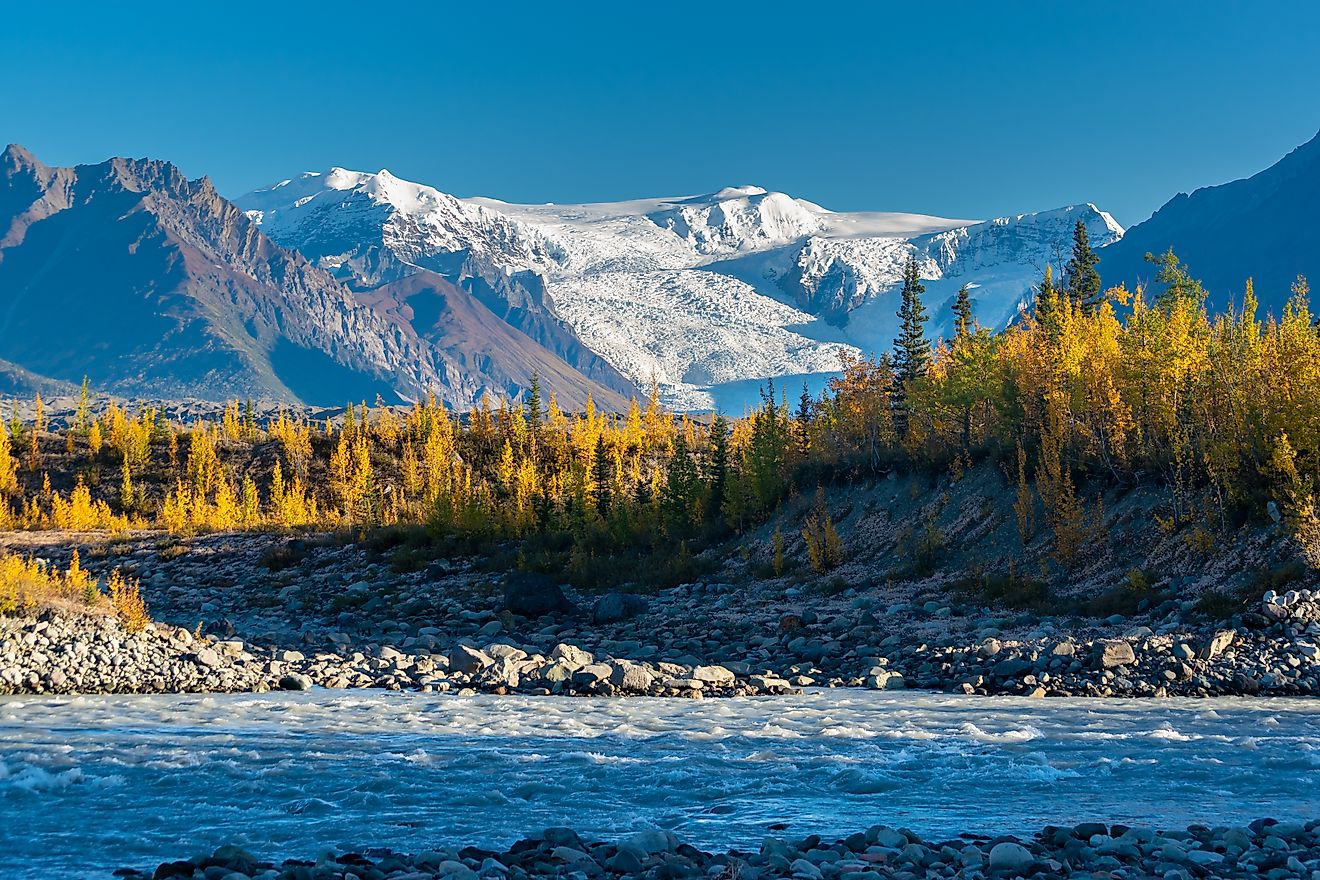
The idea of a national park often brings to mind vast, wide open spaces. However, there’s a surprising variation in size, from the mere 91 acres of Gateway Arch National Park in St. Louis to the huge expanses of millions of acres out west. Even among these impressively sized protected areas, a few stand out as the largest in the National Park System. The single biggest national park is Alaska’s Wrangell-St. Elias, with Death Valley National Park in California as the largest in the lower 48 states. Here’s a closer look at what these spacious parks have to offer.
Largest: Wrangell-St. Elias (8.3 million acres)
Wrangell-St. Elias National Park spans a vast wilderness in eastern Alaska, close to the border with the Canadian Yukon Territory. The roughly 8.3 million acres that make up the park itself are impressive enough on their own, but even more so when combined with the 4.8 million acres that make up the adjoining national preserve. That’s a combination that dramatically outsizes any other National Park Service unit, and is almost four times the size of Yellowstone National Park.
Despite the park’s size, it’s also among the least visited of the true national parks, in part due to the remoteness and relative lack of accessible amenities. Just two dirt roads lead to the park, which is hours away from Anchorage. Many visitors choose to fly or use a shuttle instead. Those who do make the trip typically do so for the remote hiking, backpacking, mountaineering, floating the park’s rivers, and even snowmobiling in the winter.
They can also explore four mountain ranges: the Alaska Range, the Wrangell Range, the Chugach Range, and the St. Elias Range. These are home to nine of America’s 16 tallest mountains. These include Mt. Wrangell, an active shield volcano, and Mt. St. Elias, the second-tallest in the United States at 18,008 feet. In addition, the park is the site of some of America’s most impressive glaciers, which cover around a third of Wrangell-St. Elias.
Alaska Runners-Up: Gates of the Arctic and Denali

It should be little surprise that America’s largest state, one that includes plenty of national parks, is also home to the second- and third-place contenders for largest parks in the National Park System. These are Gates of the Arctic National Park, at roughly 7.52 million acres, and Denali National Park, at 4.74 million acres.
As the name suggests, Gates of the Arctic sits above the Arctic Circle, preserving a breathtaking mix of unspoiled mountains, valleys, rivers, and lakes, along with their unique natural inhabitants, such as bears, wolves, moose, and more. It’s been the least-visited national park by a comfortable margin in recent years, hosting just a fraction of the visitors of other large, remote parks such as Wrangell-St. Elias. This makes sense considering visitors must fly into the park via bush plane, as no roads exist into the park, and when they arrive, they’ll find no visitor center, trails, or any amenities or services whatsoever.
Denali National Park is centered around the peak in its name, also known as Mt. McKinley, the tallest in the United States at 20,310 feet. Unlike Gates of the Arctic, Denali features one designated sightseeing road, although many visitors choose to see the park on tours rather than in private vehicles. Hiking is also a popular activity, while experienced mountain climbers can also try their luck on the park’s peaks. It’s also a more accessible spot to view some of the same impressive wildlife as at Gates of the Arctic.
Largest National Park in the Lower 48 States: Death Valley (3.4 million acres)

While Alaska dominates the list of America’s largest national parks, the biggest in the Lower 48 could hardly be more different in terms of climate. Death Valley National Park sprawls across more than 3.4 million acres of California and Nevada, making it the largest national park outside Alaska. Despite that immense size, it’s considerably more accessible than the Alaskan giants above it. Hundreds of miles of paved and unpaved roads cross the park, and several of its most famous sights can be reached directly by paved road, even for those on day trips from Las Vegas.
Of course, Death Valley is better known for extremes other than its size, namely its temperatures, elevation, and low precipitation. Badwater Basin sits 282 feet below sea level, making it the lowest point in North America. Beyond this, the park ranges from below-sea-level salt flats to snow-capped mountain peaks. The park is also the driest place in North America and holds the record for the hottest reliably recorded temperature on Earth, at 134 degrees Fahrenheit at Furnace Creek in 1913.
Those conditions produce a landscape unlike any of the enormous Alaskan parks. Visitors can walk across Badwater’s vast salt flats, explore the Mesquite Flat Sand Dunes, or take in sweeping views from spots like Zabriskie Point. Visitors must be mindful of potentially dangerous temperatures, meaning the bulk of exploration and activities should be done at night, early morning, or during the cooler winter season.
Head North and West to Explore America’s Largest National Parks
America’s national parks are spread all across the country, from the forests and lakes of Glacier National Park to the deserts of Big Bend to the balmy tropical waters of the National Park of American Samoa. However, when it comes to pure size, there’s no comparison to the expansive national parks of Alaska, particularly Wrangell-St. Elias.