

Editorial | What’s the new pact with the United States? | Commentary
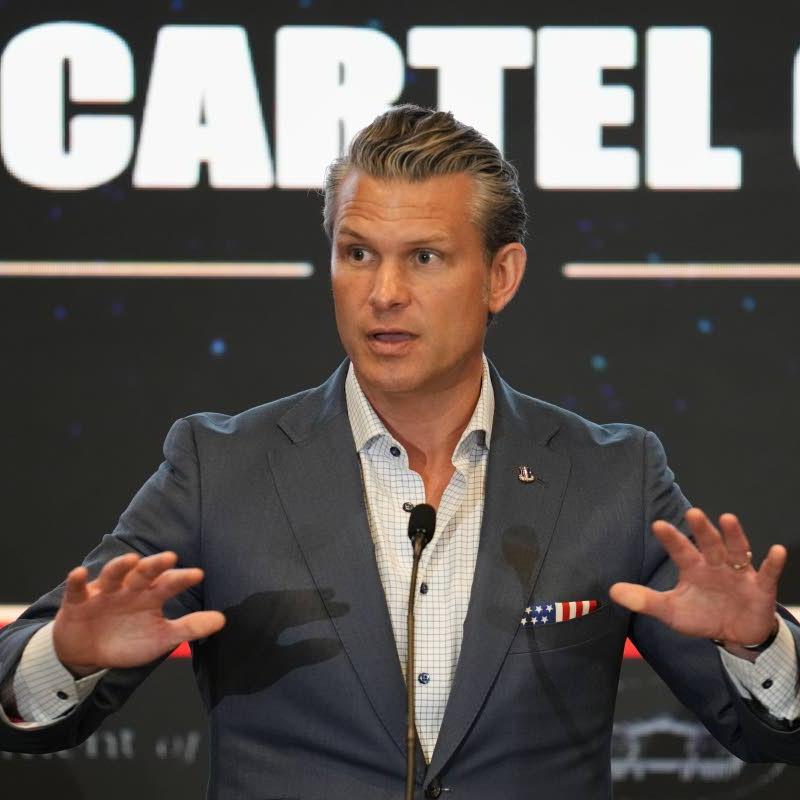
The Andrew Holness administration must provide further and better particulars on its reported “new military partnership” with the United States to fight alleged narco-terrorists in the Caribbean.
Specifically, citizens must be assured that Jamaica is not joining the United States in the extra-judicial killing of people on vessels, of whatever kind, traversing the Caribbean Sea merely because the Americans accuse them of being drug smugglers.
At the same time, The Gleaner reiterates its request for Jamaica to clarify its position on the International Criminal Court (ICC), whose treaty Kingston signed but has never ratified. Legitimate security cooperation with the United States should not translate into Jamaica disavowing the logic underpinning the ICC. This country’s Government must respectfully make that clear to the United States.
The question of Jamaica’s anti-narcotics partnership with the United States, as well as its current attitude towards the Rome Statute, is relevant at this time because of remarks made last week by Pete Hegseth, whom the Trump administration styles as secretary of war, at a meeting in Panama of the Americas Counter Cartel Coalition (ACCC), to which Jamaica has signed on.
Mr Hegseth, who sports a slicked-back undercut pompadour above tightly clenched jawlines and projects a pugnacious personality, rehashed America’s campaign for countries to abandon the ICC, hyped America’s kinetic “killing of terrorists” at sea, and disclosed what, on its face, appeared to be a previously unannounced security arrangement between Jamaica and the United States.
“I want to thank Jamaica for working with the Department of War to create a new military partnership to cripple narco-terrorists that transit through the Caribbean,” Mr Hegseth said. “This partnership will forever change the security environment of the Caribbean.”
NOT SPELLED OUT
But precisely what this “partnership” entails was not spelled out. However, being “new”, it would seem to transcend existing information- and intelligence-sharing arrangements between the two countries and/or the Shiprider Agreement, which allows US vessels in hot pursuit of suspected narcotics traffickers to enter Jamaica’s territorial waters rather than having to abandon the chase.
What has changed in America’s anti-narcotics strategy was Washington’s launch, in September 2025, of Operation Southern Spear, using its military to conduct kinetic operations against boats suspected of drug trafficking. They are bombed.
In an estimated 66 strikes in the Caribbean Sea and eastern Pacific Ocean, more than 220 people have been killed. A handful of people were rescued.
In no reported case have attempts been made, in line with criminal law, to interdict the alleged drug smugglers and bring them to justice. The Trump administration justifies its operations as acts of war against irregular combatants who do not enjoy the rights afforded under normal criminal law.
Critics, including many of America’s leading legal scholars, with whose views this newspaper is sympathetic, insist that the Trump administration has relied on a flawed legal philosophy and have warned that the United States may be engaged in extrajudicial killings. Jamaica must be wary of being drawn into this trap, even as it maintains a security partnership with the United States, a close neighbour and the source of the majority of the guns used to commit crimes on the island.
Prime Minister Andrew Holness has promoted the idea of a “coordinated international campaign” against gangs, pursued with the same sense of urgency that “the world has applied to terrorism”.
“Only then can we turn the Caribbean, and indeed the wider region, into a true zone of peace,” Holness told the United Nations General Assembly last September.
But in an earlier speech to Caribbean Community leaders, in which he advocated for a “global war on gangs”, Dr Holness stressed that this effort should be prosecuted “with full respect for international law, human rights, and with the coordination and collaboration of the countries of the region”.
ASSAULT ON IDEALS
The Gleaner’s Editorial Board agreed with those sentiments when they were first expressed, and still does so. A breach of those principles would be an assault on the ideals and traditions of liberal democracy, upon which Jamaica has organised its system of government and governance. Their infringement would amount to a surrender to impunity and could potentially trigger the engagement of the ICC.
With more than 120 current members, the Hague-based ICC prosecutes cases of genocide, crimes against humanity and war crimes in situations where domestic courts are either unwilling or unable to prosecute such crimes, or when cases are referred to it by the UN Security Council.
Although Jamaica signed the Rome Statute in 2000, it is one of only two independent CARICOM member states not to have ratified the treaty. The other is The Bahamas. Jamaica has offered no formal reservations or objections to the treaty, and the political Opposition has pledged to become a member of the court whenever it returns to government.
However, last month, US Secretary of State Marco Rubio formally announced a global campaign to dismantle the court, which Washington has long opposed. In Panama, Mr Hegseth pressured ACCC members that are parties to the court to withdraw.
Calling the ICC a “fake and illegitimate international court”, Mr Hegseth “strongly encourage(d) every ACCC member to leave the ICC and reject its attempts to rob your governments and your courts of your sovereignty”.
This, too, is a matter on which Jamaica should politely disagree.