

The human condition – Jamaica Observer
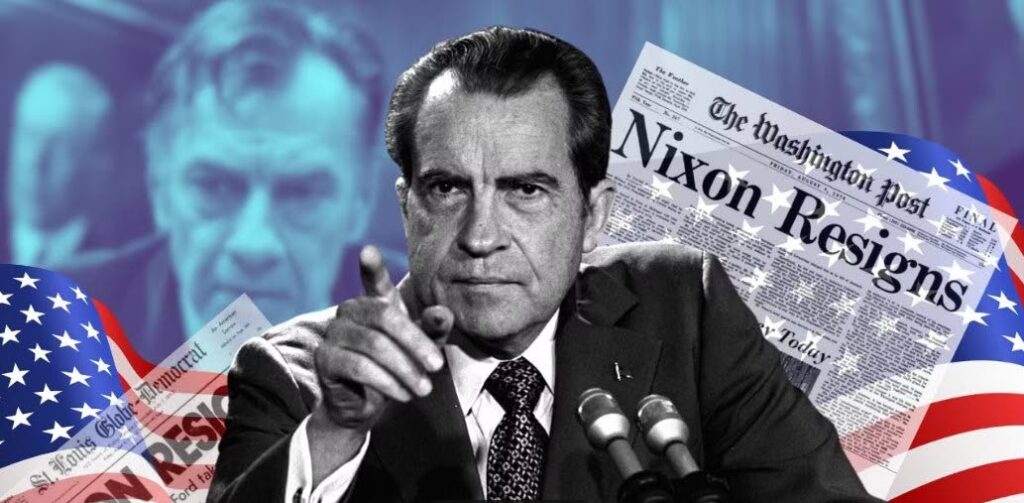
Richard Milhous Nixon, the 37th president of the United States, paid the price for his actions with his resignation from office..
Richard Milhous Nixon, the 37th president of the United States, died of massive brain swelling, a complication of a debilitating stroke, on April 22, 1994. Some around the world rejoiced. Some were saddened. I suspect only a few were indifferent.
Nixon was, on several levels, a deeply divisive and controversial figure. Some people dearly loved and respected him. Some hated him like a “dose of poison”, as we say locally. Some presidential historians argue that, of all those who received the key to the Oval Office, Nixon brought the United States nearest to the precipice of a police State. Some scholars posit that Nixon has been severely and unfairly judged, partly because he was never accepted by the establishment — in particular the Ivy League crowd. Some political experts say Nixon squandered a golden opportunity to earn a space on Mount Rushmore. Some historians say he was his own worst enemy and that he suffered from a debilitating inferiority complex. Some researchers say Nixon was way ahead of his time. Many presidential historians agree that, for all his foibles, Nixon delivered consequential results for America.
In my The Agenda column on December 28, 2025 I said, among other things: “For me, the four most consequential presidents of the United States in the last 100 years are Franklin Delano Roosevelt, Lyndon B Johnson, Bill Clinton, and Richard Nixon. I know a lot of eyebrows will be raised because, among other things, Nixon resigned in disgrace. I can well understand the raised eyebrows. I will discuss my choice of Nixon in a coming piece against the background of certain global events that are unfolding, and which will have huge consequences for us in the Caribbean.” I stand by what I said.
Nixon’s involvement in the Watergate Scandal is without doubt one of the lowest and darkest moments in modern Oval Office history. Watergate has been used to define Nixon in many arenas. So dastardly was Watergate that it has become a sort of byword, especially in American journalistic circles, for presidential excess, corruption, and malfeasance. Nixon paid the price for his criminal actions. He resigned. He was not impeached. Last Sunday marked 52 years since Nixon resigned.
Understand this, man is fallible. Romans 3:23 says, “For all have sinned and fall short of the glory of God.” (NIV) All excludes none. Show me a man or woman who says he has never done any wrong or who pretends to be perfect, and I will show you a scoundrel. All mortals are prone to mistakes, great and small. That has been the human condition since time immemorial. That will not change.
I have warned several times in this space that we must always be wary of those who pretend to have a direct line to God. They are charlatans. I warned about those who assume they have a monopoly on moral rectitude. They are swindlers, because no mortal — born or unborn — can or will ever be a paragon of virtue. Psalm 51: 5 says, “Behold, I was shapen in iniquity; and in sin did my mother conceive me.” (KJV) This is the condition of man and woman.
“Oh, Higgins, you are just making excuses for the criminal actions of Nixon,” some will scream.
No! I am holding up a mirror that shows you and me. We are flawed and fallible creatures, hostage in many ways to the social conditions into which we are born, susceptible to the stalking reality that, “Power corrupts and absolute power corrupts absolutely.” And forever swinging on a pendulum of choice between right and wrong. This is the human condition.
Nixon has not been given even half the credit he deserves. A big reason is that the name Nixon has become a synonym in many circles for political overreach, corruption, and administrative failure. This severely limited and limiting measurement has buried the signal achievements of Nixon’s presidency.
If a single mistake determines the measure of a mortal man in the pressure cooker environment of politics and other spheres of life, then all who say Nixon was an abject failure are right. But if we accept the reality of human fallibility, then it is right to examine Nixon through lenses which correct the mental myopia that often causes acute fact-aversion and fact-resistance.
“I screwed it up, I screwed up.” This is what Nixon said to students at the Oxford Union in 1978 when he was asked about his involvement in Watergate. He did not sugar-coat his response. To me, this counts for something — something positive.
A person who genuinely and publicly accepts that he or she made mistakes, and who pays a proportionate price for those mistakes, is well along the road to personal redemption. Those who adopt an iron-clad state of unforgiveness when someone offers a sincere apology and serves a proportionate penalty must have already shed their mortal coil. Good luck!
Those who believe that human error should mean permanent banishment, irrespective of its scale, may be dumbfounded at how Nixon emerged like the phoenix from the ashes of Watergate and became one of the most respected statesmen globally. He did so through sheer force of intellect.
At the mentioned Oxford Union meeting, Nixon gave a talk on crucial matters related to international geopolitics and how the policy decisions he had spearheaded were reshaping the world. His talk was a masterclass.
He spoke for 20 minutes without notes. He did not rely on verbal pauses (for example, um, uh, ah), discourse markers (among them, like, you know, well), or bridge phrases (such as, so, I mean). He was clinical in the presentation of facts. His humour was sharp and his retorts memorable. He fielded questions from students for just under an hour and did not buck-shuffle once.
IMMENSELY CONSEQUENTIAL
For decades, the vice-presidency of the United States had been seen as a ‘do-nothing job’. Nixon broke that mould. He was one of the most visible and impactful vice-presidents in modern times.
Nixon served in the political arena for almost 50 years. He became president in 1969 after many political and personal ups and downs.
During his presidency, he spearheaded the historic opening of relations with China. Some mean-spirited commentators claim Nixon only “reopened” relations with China. That is a blinkered interpretation. The fact is that Nixon opened relations with the People’s Republic of China (PRC), even though full embassy normalisation took place in 1979 under Jimmy Carter. It was Nixon who paved the way. He broke the ice.
During his historic 1972 trip to China, Nixon met with Communist Party Chairman Mao Zedong, Premier Zhou Enlai, and other top Chinese officials. Without this historic cooling of tensions during the height of the Cold War (1945–1991), the world, according to some scholars, could very probably have descended into a hot war — even a nuclear one.
Imagine the horrific consequences a nuclear war would have had on countries in the Caribbean. Jamaica is only approximately 485 to 600 air miles from the nearest part of the United States — Key West, Florida. A nuclear event in Florida, for example, would very likely have produced catastrophic consequences for Jamaica.
Recall that the US atomic bombings of Hiroshima (August 6, 1945) and Nagasaki (August 9, 1945) killed up to 246,000 people — most of them civilians — levelled both cities, and caused generations of radiation-related illness.
By 1972, bombs several times more powerful than those dropped on Japan had been developed, and the Union of Soviet Socialist Republics (USSR), for example, was spending about 79 per cent of its national budget on armaments, according to some experts. The world was racing toward annihilation.
It was after Nixon’s “thawing of relations” with China — often referred to as détente — that the USSR began to realise what time of day it was, as we say in the streets.
By opening relations with China, Nixon gained leverage to bring the USSR to the negotiating table, especially on nuclear arms control.
Nixon understood the practical application of the ancient proverb, “The enemy of my enemy is my friend.” This allowed him to form temporary alliances with one adversary to counter a greater shared threat.
The first major bilateral nuclear arms agreement between the US and the USSR was the SALT I (Strategic Arms Limitation Talks) agreement, which included the Anti-Ballistic Missile (ABM) treaty. It was signed by Richard Nixon in 1972.
SALT I focused on limiting the growth and deployment of nuclear arsenals, rather than reducing the total number of existing weapons — a significant difference from earlier arms agreements.
clovis
VIETNAM
Nixon ended the Vietnam War, which had started during the presidency of John F Kennedy. There were 58,220 US military fatalities (US National Archives).
An estimated 1.1 million North Vietnamese Army (NVA) and Viet Cong (VC) troops were killed. The South Vietnamese (ARVN) military suffered approximately 200,000 to more than 250,000 deaths. Civilian casualties are harder to pin down, with estimates ranging broadly from 400,000 to well over 2 million across both North and South Vietnam (HistoryNet).
Some experts say Nixon escalated the war before he ended it. That is true. In his address at the Oxford Union, Nixon pointed out that the brief escalation was necessary to force some of the warring parties to the negotiation table. He argued that, without that escalation, the war and the eventual peace agreement would have taken longer and resulted in greater loss of life.
Some experts agree that if the Vietnam War had not ended when it did the political, economic, and ideological landscape of countries like Singapore and others in Southeast Asia would have been quite different today — possibly very red. Some experts also argue that a longer war in Vietnam could have negatively impacted countries in the Caribbean.
Recall that the Vietnam War officially ended in 1975. This was a period of heightened ideological, social, and economic upheaval in Jamaica and the wider region. The ending of the war, some experts say, helped stop the over-stretching of the ideological elastic, locally.
I agree.
In this August 9, 1974 file photo, US President Richard Nixon waves goodbye from the steps of his helicopter outside the White House, after he gave a farewell address to members of the White House staff. Nixon was taken to nearby Andrews Air Force Base where he boarded Air Force One for a flight to California.
LIFE-CHANGING NIXON
Nixon is peerless when it comes to success in foreign policy. Unsurprisingly, when Nixon spoke at the Oxford Union in 1978, the hall was packed like a can of sardines. Simultaneously, demonstrators outside shouted as loudly as they could to disrupt the proceedings inside. They failed. They could not typecast Nixon as a pariah.
Nixon shared two key strategies that helped him achieve unprecedented success, especially with China and the USSR. A devout anti-communist, he made it clear that he loved the people of China and the USSR but detested communism.
This candour opened the door to negotiations on economic cooperation and other important matters. Nixon noted that many crucial matters on human rights, for example, were negotiated out of the glare of the media. Why? “A great nation will not and cannot give in to public pressure with regard to its internal affairs. So don’t put them on the spot. Put them on the spot privately,” he said.
The Mark Golding-led Opposition People’s National Party (PNP), a socialist party, needs to learn that crucial lesson. That is basic international relations.
Nixon has not been given nearly enough credit for his contributions to cancer research. His unique achievement was declaring the “War on Cancer” and signing the National Cancer Act of 1971. This landmark legislation transformed the medical landscape by elevating the National Cancer Institute (NCI) to national prominence, establishing independent funding mechanisms, and laying the groundwork for today’s NCI-Designated Cancer Centers. Globally, thousands have benefited.
Today, many of the guard rails that Nixon called structured peace have been eroded. Major bilateral arms control treaties have been shredded. The bipolar structures which Nixon cemented have been demolished. Among other things, a multipolar nuclear environment now exists. ‘Any number can play now,’ as we say locally. The present and likely future impacts for the Caribbean are uncertain. The global waters are choppy for countries like ours.
Garfield Higgins is an educator and journalist. Send comments to the Jamaica Observer or higgins160@yahoo.com