

The Dominican Republic Signed a Haiti Cooperation Deal. Two Days Later, a Wall, Then a Raid — What Changed?
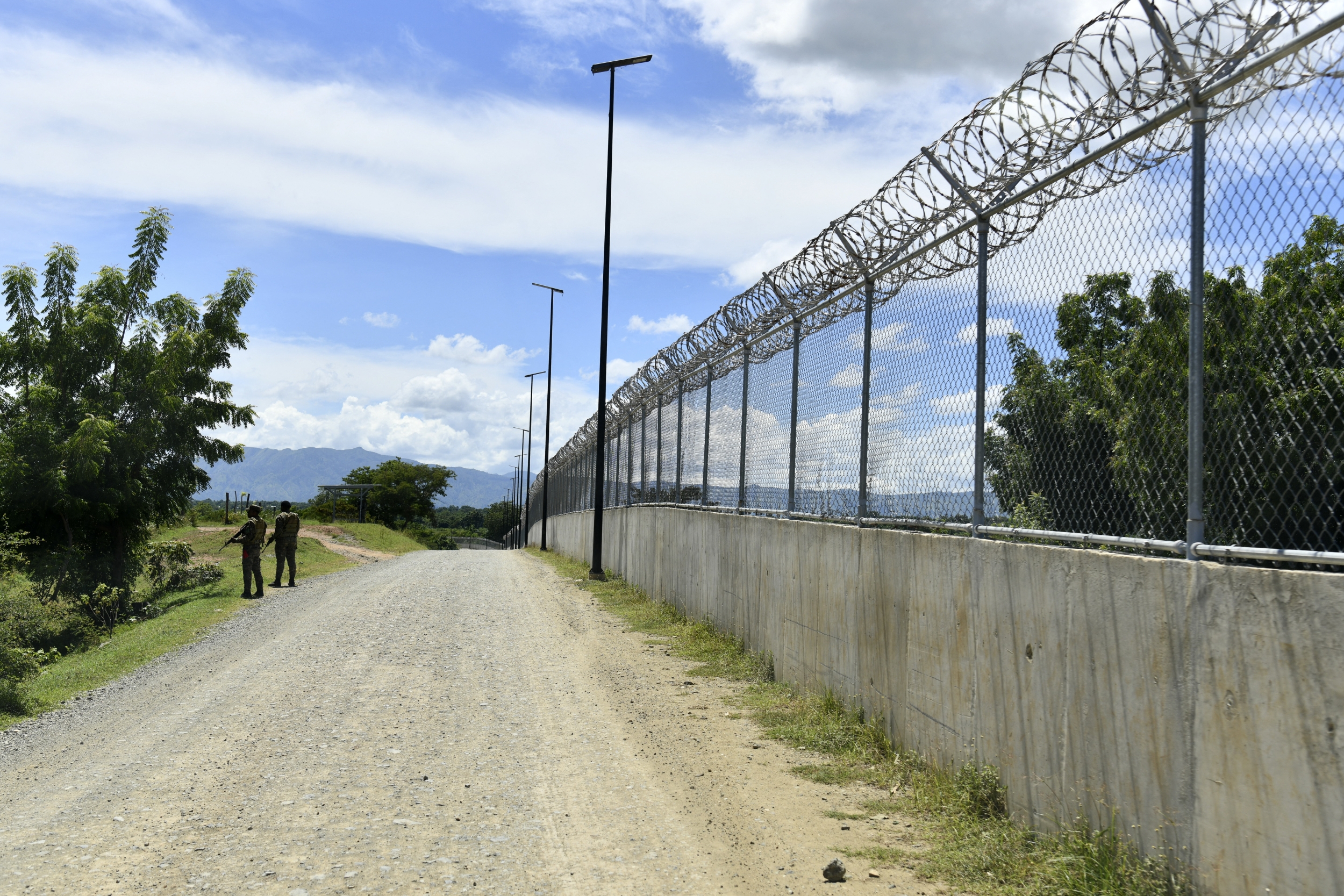
Photo by Danny Polaco / AFP) (Photo by DANNY POLACO/AFP via Getty Images
- Migration agents detained 58 Haitians in a September 6 sweep through Dajabón, part of a campaign that has removed roughly 202,000 people through that single crossing since October 2024.
- The raid came one day after the Defense Ministry broke ground on a new 14.5-kilometer wall segment in Independencia province on September 5, part of the “Frontera Fuerte” project targeting 164 kilometers of barrier along the 391-kilometer border.
- Both events followed a September 3 meeting in Dajabón, where the Dominican and Haitian foreign ministers signed a joint declaration promising closer cooperation on migration, trade, and border security.
- The four-day window compresses diplomacy, construction, and enforcement into a single stretch that critics and border families read very differently than the government does.
Before dawn on Sunday, September 6, Dominican migration officers moved through Dajabón’s streets and outlying neighborhoods, rounding up 58 Haitian nationals accused of crossing into the country through unauthorized points. The sweep landed exactly one day after the Dominican Defense Ministry broke ground on a fresh stretch of border wall further south, and three days after the two countries’ top diplomats sat down to promise deeper cooperation on that same border. Read in sequence, the week tells two stories at once: a government talking partnership while its enforcement machinery keeps running at full speed.
For Dominican-American communities that follow the island’s politics from New York, Miami, and beyond, and for the families who live on both sides of the Dajabón crossing, the gap between the diplomatic language and what happens on the ground each week is the actual story.
Diplomats Sat Down First
Three days before the sweep, Dominican Foreign Minister Víctor Bisonó Haza and his Haitian counterpart, Raina Forbin, met at the CODEVI industrial park in Dajabón on September 3. Their joint statement touched on border security, illicit trade, migration governance, formal commerce, and expanded flight connections between the two capitals. Both delegations also agreed to keep pressing the United Nations Security Council to fully staff and renew the mandate of the Gang Suppression Force, the roughly 5,500-member mission authorized under Resolution 2793 to help stabilize Haiti. Dominican officials additionally signaled they want to restore consular operations inside Haiti once security conditions allow.
Concrete Starts Moving in the South
Two days after that meeting, on September 5, Defense Minister Carlos Antonio Fernández Onofre presided over the start of a new 14.5-kilometer wall segment in Jimaní, in the southern Hoya de Enriquillo basin of Independencia province. The new stretch will include six watchtowers, 35 drainage culverts, and stand about 13 feet tall, matching specifications used elsewhere along the barrier. It’s the second phase of construction at that specific location and part of the broader “Frontera Fuerte” strategy, which the Defense Ministry says now combines roughly 1,500 solar lights, fiber-optic sensors, smart cameras, drone patrols and about 11,000 deployed troops. Officials count close to 55 kilometers of wall built so far — 38 of them along the northern stretch, with additional segments in Elías Piña, Independencia, and Pedernales — though a separate tally published the same week by El Día put the completed total above 61 kilometers. The government’s stated target remains 164 kilometers of physical barrier along the 391.6-kilometer frontier, concentrated in populated corridors rather than harder-to-cross mountain stretches.
Then Came Sunday’s Sweep
The Dajabón operation itself began around 5:30 a.m. and fanned out through the town center and the surrounding sectors of Los Miche, Santiago de la Cruz, and Barrio Norte. Migration Director Vice Admiral Luis Rafael Lee Ballester confirmed the 58 detentions and said those held would go through identification and status review before any final decision. It’s one operation inside a far larger pattern: the Dominican General Directorate of Migration says at least 202,294 Haitians have been deported through the Dajabón crossing alone between October 2024 and the end of August 2026, with 79,938 of those removals happening in the first eight months of this year and 4,492 in August alone.
A Border Family Watches the Gap Widen
Mixed households — Dominican residents with Haitian spouses, in-laws, or grandchildren — are common in towns along this frontier, where decades of cross-border commerce and family ties have coexisted uneasily with tightening security. For relatives watching from Dominican communities abroad, a routine crossing for work, a hospital visit, or a market run can now carry real deportation risk.
Human rights groups have pushed back on the broader deportation campaign for years. In one of the more pointed exchanges, after Amnesty International urged Santo Domingo to halt mass expulsions, President Luis Abinader told reporters visiting the border that the organization should “go work in Haiti” and focus on conditions there instead — remarks he made in April 2025. That specific comment predates this week’s news by more than a year, but it captures a stance the government has held consistently since: enforcement is framed as sovereign necessity rather than a rights violation, and outside criticism is met with skepticism rather than concession.
What Comes Next
Whether September’s joint declaration produces anything more durable than the diplomatic language of previous years remains to be seen. For now the wall keeps growing, the deportation count keeps climbing, and the families who cross the Masacre River for reasons that have nothing to do with politics are the ones absorbing the contradiction.
© {{Year}} Latin Times. All rights reserved. Do not reproduce without permission.