

‘The Battlefield Has Gone Underground’: Khartiia Commander Reveals Ukraine’s Edge Over Russia
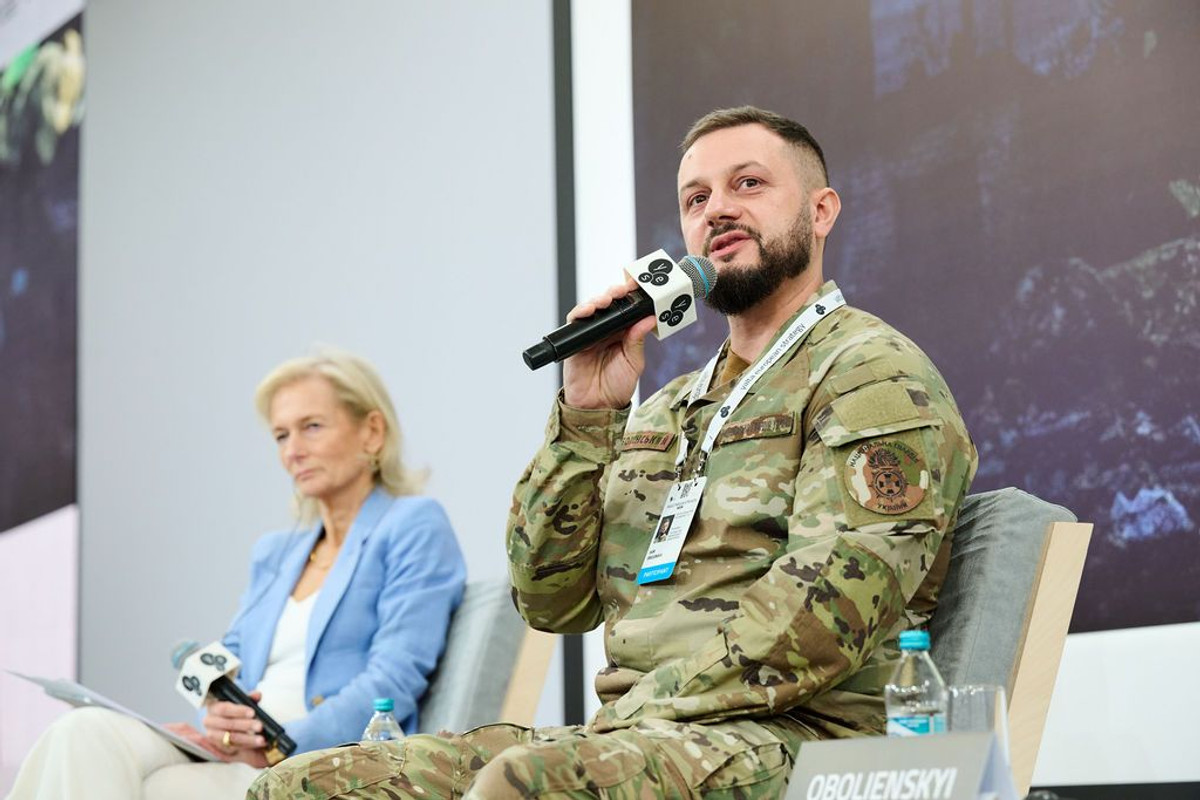
The battlefield in one sector of Ukraine’s front has moved underground, where Ukrainian troops are proving more effective than Russian forces, according to Ihor Oboliensky, commander of the National Guard’s 2nd Khartiia Corps.
“Today, in our corps’ area of responsibility, the battlefield has gone underground,” Oboliensky, known by the call sign “Kornet,” said during the annual Yalta European Strategy (YES) conference in Kyiv.
JOIN US ON TELEGRAM
Follow our coverage of the war on the @Kyivpost_official.
“And we are more effective there than the Russians.”
Oboliensky, who holds Ukraine’s highest state honor, Hero of Ukraine, said the shift was another example of how rapidly the war is changing. Technologies and battlefield tactics that were relevant two years ago are now outdated, while new developments can alter combat operations every two or three months.
The commander said that constant adaptation is also reshaping Ukraine’s air-defense requirements, particularly as Russia develops faster jet-powered attack drones.
Despite the growing focus on aerial attacks and military technology, Oboliensky warned against shifting attention away from infantry and the front line.
“The soldier remains the most important. Please do not shift the focus under any circumstances,” he said.
Russia will continue striking Ukrainian cities as long as its forces can show progress on the battlefield, he said. Halting Russian advances and denying Moscow even small territorial gains would undermine the Kremlin’s justification for continuing the war.
Other Topics of Interest
Kharkiv Holds First Pride March Since Russia’s Full-Scale Invasion
About 200 activists, allies, service members, and veterans joined the carefully secured march through the metro system of Ukraine’s front-line city.
“As soon as the front is stopped, as soon as Moscow has no success, not a single kilometer, then you will ask the question, and Moscow and Putin will face the same question: Why are you fighting? Why are you not advancing?” Oboliensky said.
Areas for improvement
The commander identified three main areas in which Ukraine needs greater help from its partners: financing, access to technology and industrial capacity, and military training.
Western countries should help finance at least half of Ukraine’s available production capacity for drones and missiles, Oboliensky said, as such cooperation would support Western economies while also creating work for Ukrainians.
Oboliensky also described how Ukrainian officers serving under his command had traveled to France for training and visited the Normandy beaches, where Allied forces landed during World War II.
The officers called him by video from Utah Beach and said seeing the site had transformed their understanding of military logistics, he recalled.
“They said, ‘Commander, we understood what logistics means,’” Oboliensky said.
The visit demonstrated that success in battle depends not only on troops fighting at the front but also on the ability to deliver everything they need, he said.
Oboliensky spoke during a discussion with Ukrainian military commanders at the 22nd YES Annual Meeting, held in Kyiv on Sept. 11-12. The event brought together about 700 politicians, diplomats, military personnel, business leaders, veterans, activists, and experts from 28 countries, according to organizers.