

The Anatomy of a Blood Debt: How Clan Revenge Killings are Fracturing Somalia’s Frontlines
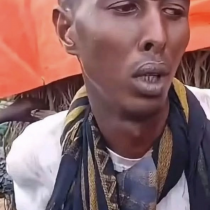
MOGADISHU, Somalia (HORN OBSERVER) — On September 8, 2026, on the dusty, volatile outskirts of El Baraf in the Middle Shabelle region, an active-duty Somali National Army soldier named Ahmed Shire Hussein was pulled from a transit vehicle. He was not intercepted by Al-Shabaab, the terrorist group his uniform was meant to combat. Every account gathered for this piece — from clan elders to opposition figures — instead points to a local clan militia, though no security agency has officially confirmed a motive.
Before he was
executed, a chilling video captured his final moments. Stranded and
defenseless, Hussein looked directly at his armed captors and uttered a
devastating plea: “Abtiyaalow, ha i dilina” (“Maternal uncles,
do not kill me”).
The phrase was
not just a desperate cry for mercy — according to clan elders and opposition
figures interviewed for this piece, it reflected a specific and devastating
reality. Hussein’s mother, they said, belonged to the very community holding
the rifles — the Abgal clan. But because his paternal lineage traced back to
the Xawaadle clan, the rigid, mathematical ledger of Somalia’s ancestral blood
feuds dictated that he had to die. His execution was a cold, calculated receipt
paid toward a collective blood debt he had no personal part in creating.
Hussein was
not traveling alone that day. He was one of three soldiers in the vehicle when
it was stopped, and the armed group captured all three. Once an armed group has
someone in custody, establishing lineage is standard practice in these
encounters — it is that determination, not the initial stop, that decides who
is released and who is held. Consistent with that pattern, the other two
soldiers were released unharmed. Only Hussein was not.
For observers
of the Horn of Africa, Hussein’s death is a small window into a catastrophic
reality: Somalia’s most lethal enemy is increasingly becoming its own
unyielding internal tribal fractures.
A ledger no one
signed
To understand
why a national soldier can be pulled from a highway and executed by his own
relatives, one must examine how the traditional system of customary law has
been dangerously corrupted by modern assault weapons and a total breakdown of
government control.
Under classic
customary law, conflicts between clans were mediated by elders through the
payment of blood money. Today, rogue clan militias bypass elders entirely,
choosing immediate blood retaliation instead.
The terrifying
hallmark of modern revenge killings is that the actual perpetrator of an
initial crime is almost never the target. Instead, retaliatory militias hunt
for the most valuable, high-profile, or accessible member of the rival clan. A
doctor in a Mogadishu hospital, a wealthy merchant at an intersection, or an
off-duty soldier traveling home to see his family while managing a health
crisis — all are deemed acceptable substitutes. A person’s maternal ties,
academic achievements, or state uniform offer zero protection when a clan
ledger demands a life.
The pattern is
mechanical. A localized spark — a land dispute, a water well, a decades-old
homicide — triggers what amounts to individual responsibility erasure: an
entire rival sub-clan inherits a collective “debt.” Militias then
search for a high-value target, bypassing the actual offender to hunt down
whoever is accessible. The result is a revenge execution — in Hussein’s case, a
man targeted purely for his paternal lineage.
Not rage. A plan.
What makes
modern revenge killings distinct is that they are not spontaneous acts of rage;
they are highly planned, cold-blooded assassinations. When a clan decides to
collect a “blood debt,” hit squads are organized, funded, and sent
out with specific execution targets in mind. They set up sophisticated highway
ambushes, share intelligence on a target’s travel plans, and wait patiently for
days at specific transit chokepoints. The executioners do not act on impulse —
they follow a deliberate blueprint for revenge, treating the assassination of
an innocent human being like a calculated business transaction to balance an
ancestral tribal ledger.
Who pays for the guns
An
investigation into modern revenge killings reveals a sophisticated network that
stretches far beyond rural hideouts. These planned assassinations are expensive
operations requiring vehicles, modern firearms, and reliable intelligence.
Funding is frequently traced back to a toxic combination of local commercial
interests and contributions from the global diaspora, who send funds via mobile
networks under the illusion of funding “homeguards” or “community
defense forces.”
Tracking has
evolved too. Militias deploy networks of informants at major transit hubs, bus
garages, and roadside cafes. These informants spot high-value targets, track
their movements, and relay information to armed hit squads waiting at strategic
bottlenecks along the unpaved highways.
The killers
operate with near-total defiance of the law, and the reason is not that Somalia
lacks the machinery to punish them. Somalia’s Military Court has a documented
record of harshness — it has repeatedly sentenced Al-Shabaab operatives to
execution by firing squad. Yet clan hit squads carry out killings in broad
daylight, unmasked, filming themselves in the act. The difference is not
capability; it is a tribal shield. Gunmen know their community will physically block
any arrest attempt, and local political figures routinely pressure federal
authorities to drop investigations rather than risk fragile clan coalitions. A
court willing to execute terrorists will not touch a man protected by his own
sub-clan — and that asymmetry, more than any lack of resources, is what lets
the cycle of premeditated violence continue.
Not just El Baraf
While the
Xawaadle-Abgal friction currently paralyzes the critical transport corridors
connecting Hiiraan and Middle Shabelle, this structural rot is replicated
across nearly every semi-autonomous region, creating invisible internal
borders. In Mudug and Galguduud, cyclical blood feuds over grazing land
routinely escalate into full-scale battles between rival sub-clans, turning
pastoral villages into active frontlines. In Gedo’s Luuq district, minor
localized arguments over municipal representation rapidly turn into
multi-generational revenge cycles, displacing thousands of families overnight.
And in Middle Shabelle and Hiiraan themselves — the corridor where Hussein was
killed — the pattern is not an isolated exception. It is the epicenter of the
current crisis.
Why the courts never
show up
A November
2025 report from the Heritage Institute for Policy Studies (HIPS), a
Mogadishu-based policy think tank, offers a structural explanation. It found
that Hirshabelle’s rushed, top-down formation in 2016 and its unresolved clan
grievances left the state with weakened institutions — conditions the report
says have opened space for both Al-Shabaab and clan militias to fill the
resulting security and justice vacuum. The report specifically points to the
outsized political role played by the Xawaadle and Abgal clans, and the
exclusion felt by others, as a driver of that fragility.
That
institutional weakness compounds a more visible problem: illiteracy. A lack of
formal education leaves a massive population of unemployed youth highly
vulnerable to tribal manipulation — but illiteracy is merely a symptom of a
deeper crisis. The core engine driving these revenge killings is a profound
justice vacuum. Because the federal government lacks courts and police capable
of enforcing the rule of law outside major cities, rural communities default to
traditional clan rules.
Without
functional state courts to punish individual criminals, the extrajudicial
custom of collective clan liability becomes a survival mechanism. This social
fragility is systematically exploited by local political actors seeking
leverage over regional checkpoints, agricultural territory, and administrative
state borders. For uneducated young militiamen lacking alternative economic
paths, acting as the violent enforcement arm of a tribal blood debt becomes
their only source of validation, protection, and livelihood.
A gift to Al-Shabaab
The most
critical political consequence of these revenge killings is its direct,
devastating impact on the offensive against Al-Shabaab. Ahmed Shire Hussein’s
uniform should have been his shield; instead, his death exposes how deeply clan
dynamics compromise the internal cohesion of the state’s security forces.
The El Baraf
corridor itself is haunted by this exact structural vulnerability. In December
2024, a similar flashpoint occurred nearby when a local militia ambushed and
killed seven soldiers from a rival clan, an event that paralyzed local military
operations for weeks.
When a soldier
is murdered in a clan revenge attack, the shockwaves cause national army
battalions to fracture along tribal lines. In previous escalations, when
national soldiers were targeted by rival clan militias, their fellow clansmen
within the military routinely abandoned their frontline trenches and vacated
counter-terrorism bases. They returned to their home regions to protect their
kinsmen or launch counter-revenge operations.
Every time a
clan feud erupts, national security forces risk turning their weapons on one
another. This creates immediate security vacuums that Al-Shabaab eagerly
exploits, frequently stepping into these local disputes to act as a fake
peacekeeper or offering heavy weapons to aggrieved sub-clans to win their
loyalty. In Middle Shabelle and Hiiraan, transit route control and historical
political grievances have fractured military battalions and opened security
gaps near El Baraf. In Mudug and Galguduud, competition over pasture land and
watering holes diverts regional forces away from anti-terror offensives
entirely. And in Gedo’s Luuq district, disputes over local administrative
control and land ownership have caused mass civilian displacement and paralyzed
local governance.
Guudlaawe’s silence
Beyond the
frontlines, the execution of Ahmed Shire Hussein strikes directly at the
fragile political architecture of the Hirshabelle regional government. The El
Baraf corridor is a critical artery connecting the Middle Shabelle and Hiiraan
regions — territories governed by State President Ali Abdullahi Hussein (Ali
Guudlaawe). For observers, Hussein’s murder is a stark indictment of
Guudlaawe’s administration, highlighting a persistent failure to establish
state control over regional highways or disarm localized sub-clan militias.
When state
personnel are intercepted on a government-monitored road, it exposes a
dangerous reality: the regional administration operates with a culture of
selective enforcement. Despite strong political statements routinely issued
from the capital of Jowhar following these incidents, the failure of regional
security forces to make arrests feeds an environment of systemic impunity.
This is not
the first time Guudlaawe has faced this exact test. After the killing of seven
soldiers in the same corridor in December 2024, he publicly condemned the
violence and pledged that those responsible would be brought to justice — a
pledge that produced no known prosecutions. As of August 2026, Hirshabelle Vice
President Yusuf Dabaged was still working to arrange a presidential visit to
Beledweyne, itself telling of how difficult it remains for Guudlaawe to engage
directly with Hiiraan’s population. The friction is not merely symbolic: that
same month, Ma’awisley fighters — government-aligned clan militias — reportedly
seized voter registration centers in Beledweyne, opposing the disputed National
Independent Electoral and Boundaries Commission’s plan to hold elections across
twelve Hirshabelle districts, six of them in Hiiraan. The pattern dates back at
least to 2022, when the killing of the Beledweyne police station commander
during clashes prompted Guudlaawe to convene an investigative committee — a
committee whose findings, like the aftermath of the 2024 soldier killings, were
never made public.
Hiiraan wants out
This
governance vacuum carries severe consequences for the entire country. The
underlying animosity between the Abgal and Xawaadle clans is tied to grievances
of political representation within Hirshabelle. While the regional capital
remains in Middle Shabelle, the population of Hiiraan frequently expresses
frustration over perceived political marginalization and economic neglect by
the state center.
Every
unpunished execution along the border corridor hardens the stance of political
hardliners in the city of Beledweyne. Hussein’s death has already re-ignited
calls among Hiiraan’s local leadership to completely sever ties with the
regional administration. By failing to enforce individual accountability, the
state is allowing entrenched cyclical blood feuds to systematically dismantle
the territorial integrity of a key regional state.
The push for
separation has deep roots and an institutional face. Former Hiiraan Governor
Ali Jeyte Osman was named interim president of a self-declared “Hiiraan
State” initiative — a political movement born directly out of the same
grievances over power-sharing and neglect that Hussein’s killing has reignited.
That the region has already produced a rival administrative structure, however
informal, underscores how close Hiiraan sits to a formal break from
Hirshabelle.
Everyone spoke except
the government
Reaction to
the killing has been sharp, but uneven. Former President Sharif Sheikh Ahmed, a
leading figure in the opposition coalition against the federal government’s
electoral model, publicly condemned the killing, calling it a reflection of
state weakness and tying it to the broader, recurring pattern of clan revenge
killings across Somalia.
Traditional
Xawaadle clan leadership also spoke out. In a video obtained for this piece,
elders — including Nabadoon Osman Mohamud and Nabadoon Hussein Colad —
explicitly blamed regional security failures, describing Hussein’s killing as a
targeted attack fueled by inter-clan animosity among local militias. They
warned the federal government that lasting peace hinges on immediate
accountability, while also pledging to work with authorities toward a
resolution.
By contrast,
the Federal Government’s response has been conspicuously muted. As of this
writing, no formal statement addressing Hussein’s killing specifically has come
from Mogadishu or from Hirshabelle President Ali Guudlaawe — notable given his
public pledge of accountability after the nearly identical 2024 killings in the
same corridor. Civil society organizations and religious leaders had not issued
public statements on the killing as of this writing.
The video did the
rest
The cycle
continues because the Federal Government of Somalia operates within a profound
judicial vacuum outside major urban centers. When a revenge killing occurs,
federal courts and police forces rarely intervene to arrest the specific
gunmen. The state often treats these executions as private, tribal matters to
be deferred to traditional elders, signaling an implicit culture of impunity.
Recording
Hussein’s execution was not incidental to the killing — it was integral to it.
Broadcasting an execution into a rival sub-clan’s homes and phones has a
predictable effect: it terrorizes and humiliates the watching community in a
way a private killing could not, and it forces a public escalation that leaves
local leadership little room for quiet mediation. The video spread across
TikTok and Facebook within hours of Hussein’s death, and digital algorithms did
the rest — amplifying tribal war poetry and execution footage until a localized
rural dispute became a globalized argument among the diaspora, some of whom
help fund the violence that plays out on the ground.
Until the
leadership in Mogadishu and the Ministry of Defense treat clan revenge killings
not as an insulated cultural byproduct, but as a direct threat to national
sovereignty equal to terrorism, the ledger of blood will never close. Young men
like Ahmed Shire Hussein will continue to look into the eyes of their own
maternal relatives, pleading for a mercy that a broken system simply refuses to
give.
______________________________
ABOUT THE AUTHOR
Ismail Abukar
is Co-Founder and Chairperson of the Organization for Prisoners’ Rights (OPR),
an independent civil society organization based in Mogadishu, Somalia. He has
conducted primary field research in Somalia for seven years, covering
prisoners’ rights, enforced disappearances, press freedom, and electoral
corruption. His investigations have been published by African Arguments and
Horn Observer, including “Somalia’s New Speaker Got His Seat Through a
Military Operation,””The Disappeared,” and “A Government
With One Foot Out the Door: Somalia’s Foreign Passport Crisis.” He holds
an MA in International Law and Human Rights from the University for Peace
(UPEACE) and maintains an active ORCID record: 0009-0003-1435-3691.
Credit: Source link