

Tackling the Monrovia and Paynesville Garbage Quagmire | News
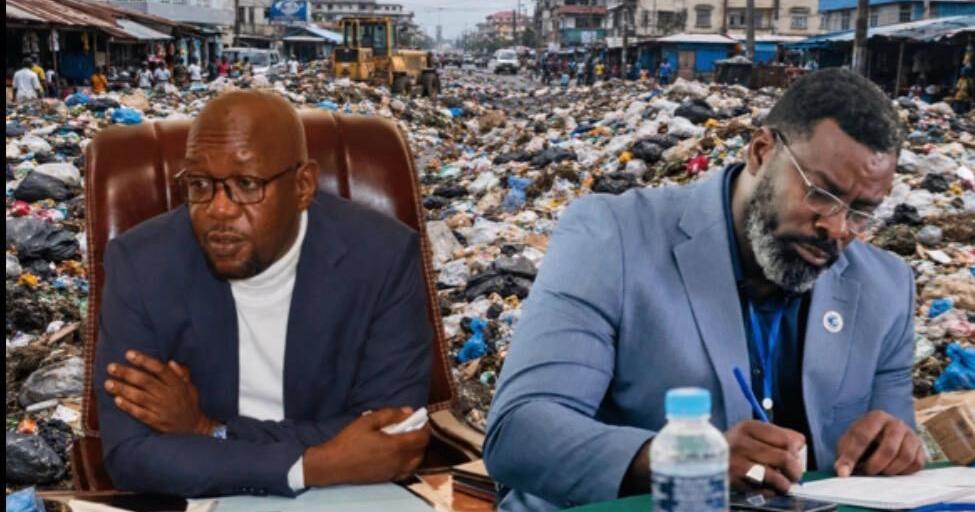
After decades of struggling with mounting garbage, inadequate disposal facilities, limited collection coverage, and recurring public health concerns, authorities in Monrovia and Paynesville have launched a new Public-Private Partnership (PPP) Framework that officials believe could mark a turning point in the management of solid waste across Liberia’s largest urban corridor.
The framework, unveiled on June 12 at Monrovia City Hall under the theme, “Transforming Waste Management Through Partnership, Innovation, and Local Enterprise Development,” seeks to bring together municipal authorities, private waste operators, community-based enterprises, development partners, and residents under a coordinated system designed to improve waste collection, disposal, recycling, and environmental management.
The initiative comes at a time when Greater Monrovia—home to nearly a third of Liberia’s population—faces increasing pressure from rapid urbanization, population growth, inadequate sanitation infrastructure, and rising volumes of solid waste.
For city authorities, the launch represents not merely another sanitation project but an attempt to address structural weaknesses that have plagued waste management efforts for generations.
Waste management has remained one of the most persistent urban governance challenges confronting both the Monrovia City Corporation (MCC) and the Paynesville City Corporation (PCC).
For decades, residents have contended with overflowing dumpsites, illegal dumping, clogged drainage systems, poor waste collection services, and periodic sanitation emergencies, particularly during the rainy season when accumulated waste contributes to flooding and disease outbreaks.
The challenge has grown alongside urban expansion. Monrovia and Paynesville have experienced significant population increases since the end of Liberia’s civil conflict, placing enormous pressure on infrastructure that was already struggling to meet demand.
Experts note that while municipal authorities have made periodic gains, waste generation has consistently outpaced collection and disposal capacity.
Today, officials estimate that Greater Monrovia generates more than 1,200 tons of waste every day—a figure expected to increase as urban populations continue to grow.
Mayor John-Charuk Siafa acknowledged that the sector has long suffered from fragmented responsibilities and insufficient coordination among stakeholders.
“No one is coming to solve our problems for us. No one is coming to clean our streets for us,” Siafa said during the launch. “Today is not simply the launch of a framework. It is the launch of a new way of thinking about sanitation and environmental management.”
The new framework also comes amid growing recognition that infrastructure investments alone have not been enough to solve the sanitation crisis. According to Mayor Siafa, more than US$60 million was invested in Liberia’s sanitation sector between 2020 and 2024.
Despite those investments, major challenges remain.
“More than US$60 million was invested in Liberia’s sanitation sector, yet the infrastructure remains inadequate,” he said. “The paradox is clear. More infrastructure is needed.”
The statement highlights a reality long recognized by sanitation experts: waste management requires more than trucks, transfer stations, and landfill sites. Sustainable solutions also depend on governance systems, public participation, financing mechanisms, enforcement, and private-sector engagement.
Many previous interventions focused heavily on collection and transportation while giving less attention to recycling, waste processing, resource recovery, and long-term disposal solutions.
The latest framework is not the first attempt to address waste management challenges in Liberia. Over the years, both MCC and PCC have implemented a range of initiatives aimed at improving sanitation conditions.
Among the most notable have been the rehabilitation and management of the Whein Town landfill, which remains the country’s principal waste disposal facility, community cleanup campaigns organized by municipal authorities and civil society groups, the introduction of private waste collection franchises and licensed operators, and public awareness campaigns focused on litter prevention and environmental responsibility.
Others are drainage clearance exercises designed to reduce flooding risks and partnerships with international development agencies supporting sanitation infrastructure and environmental health projects, and expansion of waste collection points and transfer stations across various communities.
While these interventions produced measurable improvements at different stages, officials acknowledge that they often operated in isolation and lacked the integrated approach necessary for long-term sustainability. The newly launched framework seeks to address that gap.
One of the defining features of the initiative is its emphasis on collaboration. Rather than placing sole responsibility on municipal authorities, the framework recognizes waste management as a shared responsibility among government, businesses, communities, and residents.
Paynesville Mayor Roberts Bestman II emphasized this point. “There is no way we can believe that the solution to our sanitation problems rests solely with the city corporation,” Bestman said. “The waste is generated by all of us, and it is our collective responsibility to manage it.”
His remarks reflect an evolving understanding of waste management as a complex urban ecosystem rather than a simple garbage collection service. Bestman argued that Liberia’s greatest challenge lies not necessarily in collecting waste but in determining what happens afterward.
“Our biggest problem is not simply collecting waste. The real challenge is where the waste goes after it is collected,” he said.
Perhaps the most ambitious aspect of the framework is its effort to reposition waste as an economic resource rather than merely an environmental burden. Officials envision expanded investments in recycling, composting, waste treatment facilities, and waste-to-energy projects capable of creating jobs while reducing environmental impacts.
Bestman described waste as both “a resource” and “a treasure,” arguing that proper processing infrastructure could unlock significant economic value.
This perspective was echoed by Samuel Duo, President of the Liberia Solid Waste Management Association (LiSWMA). “This is more than the signing of a framework,” Duo said. “It is the establishment of a shared vision and a structured partnership aimed at addressing one of the most pressing challenges facing our society today.”
Duo stressed that no single institution could solve the problem alone. “The government cannot do it alone. The private sector cannot do it alone. Communities cannot do it alone. The solution lies in partnership.”
He further described waste management as an emerging industry with substantial economic potential. “Waste management is an industry. Just as we have the mining industry and the agricultural industry, waste management is also an industry—one that can create jobs.”
According to Duo, LiSWMA currently represents approximately 83 companies employing more than 4,600 Liberians directly.
Environmental experts view the framework as potentially significant because it attempts to address multiple dimensions of the sanitation challenge simultaneously.
The agreement promotes expanded private-sector participation; Stronger regulatory oversight; Increased community engagement; Waste segregation at source; Recycling and composting initiatives; and climate resilience measures.
Others are resource recovery programs; Women’s and youth employment opportunities and development of a circular economy.
Perhaps most importantly, it creates a formal structure through which stakeholders can coordinate efforts rather than operating independently.
Mayor Siafa also disclosed plans for a proposed National Sanitation Fund based on the Polluter Pays Principle, which could provide a dedicated financing mechanism for future investments.
If successfully implemented, the fund could support recycling infrastructure, public toilets, drainage maintenance, waste treatment facilities, and services for vulnerable communities.
Despite the optimism surrounding the launch, observers note that the success of the framework will ultimately depend on implementation.
Liberia has no shortage of sanitation policies, strategies, or plans. The challenge has often been translating those commitments into measurable outcomes.
Residents of Monrovia and Paynesville hope that the success will not be measured by signed communiqués or policy declarations but by cleaner streets, reduced flooding, improved public health, reliable waste collection services, and visible environmental improvements.
The framework’s significance therefore lies not only in what it promises but in whether it can finally help overcome the institutional fragmentation that has hindered previous efforts.
For two cities that have spent decades battling growing mountains of waste, the new partnership represents both an opportunity and a test—an opportunity to transform sanitation management and a test of whether collaboration can succeed where fragmented approaches have struggled.
As Greater Monrovia continues to expand, the stakes could hardly be higher.
Credit: Source link