

Little Liberia builds home, culture and community in Detroit’s East English Village – Metromode
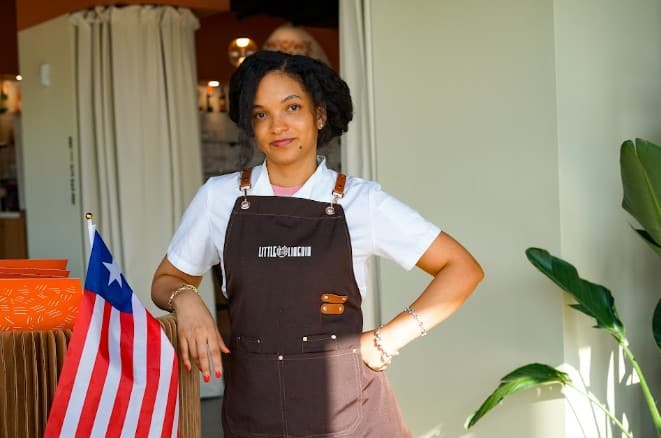
For years, Little Liberia has existed in motion — at festivals, bars and other temporary spaces.
The food pop-up was known for its hearty and healthy stews. The setup was scrappy by necessity: prep what you can, transport everything, build a kitchen where you land, then break it all down again.
That experience shaped the business, but it also made clear what was next.
After 10 years as a pop-up, Little Liberia opened its permanent brick-and-mortar restaurant in Detroit’s East English Village neighborhood in March. Dishes are now prepared inside a commercial kitchen, and more than just the concept has evolved. Little Liberia has grown to 20 employees, expanded its menu of Liberian dishes and drinks, and since opening, foot traffic has more than doubled.
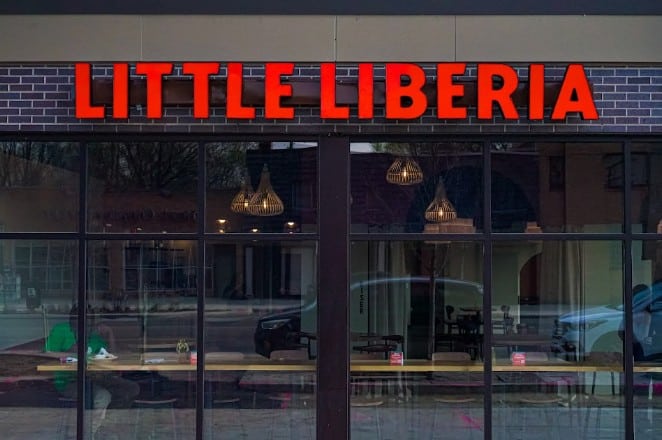
“The volume has changed, the expectations from people have changed, and the quality has immensely changed from where we started,” says Ameneh Marhaba, the chef and owner of Little Liberia and one of thousands of immigrant entrepreneurs across Michigan helping to shape and revitalize neighborhoods.
The state’s immigrant population increased around 25% from 2003-2018 and immigrants are more likely to start a business than native-born residents, according to the Michigan League for Public Policy, a nonprofit focused on economic opportunity.
Small, immigrant-owned businesses like Little Liberia contribute to the local economy not just by creating jobs, but by activating commercial corridors and drawing people into communities. They introduce new cultural experiences, foster connections and often reinvest directly into the neighborhoods they serve.
For Marhaba, the evolution from pop-up vendor to restaurant owner hasn’t always been easy. She hopes her journey resonates, especially for others starting from scratch.
“Persistence, drive and dedication… taking 10 years and staying dedicated to the vision and the goal,” she says. “It’s a testimony [to] believing in something hard enough to want to do it.”
A passion turns into purpose
In 2010, when she was 16 years old, Marhaba immigrated to Detroit from Liberia with her family and found work at a pawn shop.
Around six years later, when that job fell through, she turned to something she loved: cooking. While she had never owned a business before, she saw an opportunity to use her lifelong passion to support her family.
In 2016, Marhaba launched Little Liberia, a pop-up named after the small West African country she was born and raised in. At the time, she noticed there wasn’t any Liberian restaurant in Detroit let alone an African one, driving a desire to share her culture with her new home city.
“Everybody that would come — it was very new to them, and it was something very different, but they were so accepting of it,” Marhaba says of customers’ reactions to Liberian food.
To the owner, introducing Liberian culture and cuisine to a community that had little or no prior exposure to it remains what she considers to be her biggest accomplishment since opening.
Navigating barriers and pushing through them
Still, the journey from pop-up to restaurant owner tested both her patience and persistence.
Marhaba took many entrepreneurship courses and applied for hundreds of grants, facing setbacks along the way. Still, she kept going.
Her journey into entrepreneurship came with layered challenges — not just starting a business, but doing so as a woman and an immigrant with limited access to capital and networks.
“Opening a business period as a woman is twice as hard,” she says. “Most of the lenders you go talk to, they don’t even think you know what you’re talking about.”
That skepticism was compounded by her background.
“Being an immigrant on top of that, it’s like they always think you’re taking an opportunity from someone else,” she says. “But really what I feel like, America was built on immigrants.”
Over time, access opened up — but the barriers and disappointments didn’t disappear. What carried her through was consistency.
“There was a lot of let down…but having a community that supported me definitely helped,” she says. “People saw it wasn’t just a business for me.”
She has gotten major grants and community support to help sustain and grow the business along the way.
In 2022, Little Liberia won the Hatch Detroit contest, which granted the pop-up $100,000 and pushed her forward in her decision to pursue a full restaurant. More recently, in 2025, Motor City Match awarded Marhaba $80,000 to support the opening of the restaurant’s brick and mortar.
Since opening, Little Liberia has garnered a loyal following and support system. Aside from major grants, other support came from organizations like ProsperUs Detroit, TechTown Detroit, and Invest Detroit, where she built her business plan, pitched for funding, and gained more tools needed to move forward.
Food as culture, connection and education
When it came time to find a permanent home, Marhaba was looking for a community-centered atmosphere and neighborhood. After a previous location in New Center didn’t work out, she found a space in East English Village that aligned with her vision.
The neighborhood, known for its growing development association and investment in new businesses, offered something she had been building toward: a place where people show up for each other.
“I think the community drew me,” Marhaba says.
For many Detroiters, Little Liberia is their first introduction to Liberian cuisine — something the owner embraces as both an opportunity and a responsibility.
“I think the main thing is, experience the culture and community that we’re building,” she says. “Experience the food.”
Dishes include a roasted goat shank and a groundnut stew with cassava leaves, Liberia’s national dish. The restaurant also features a bar with drinks including the tropical Robert Sports, inspired by the golden hues of a Liberian sunset over the Atlantic, and the Bassa Blue, a cocktail honoring the Bassa people of Liberia.
“People come here and are like ‘I feel like I just ate at home’,” she says. “[The dishes] bring the comforting flavors of home and reflect our culture of togetherness. In Liberia, food is meant to be shared, and gathering around a meal is an important way families and communities connect.”
She adds, “Liberian cuisine is known for its rich, flavorful dishes made with ingredients like rice, palm oil, peppers, onions, garlic, and ginger. More than just food, it represents hospitality, community, and the joy of eating together.”
Through the food, drinks, design and even the merchandise, Marhaba is intentional about sharing knowledge about Liberian culture, and even expanding people’s understanding of Africa as a continent.
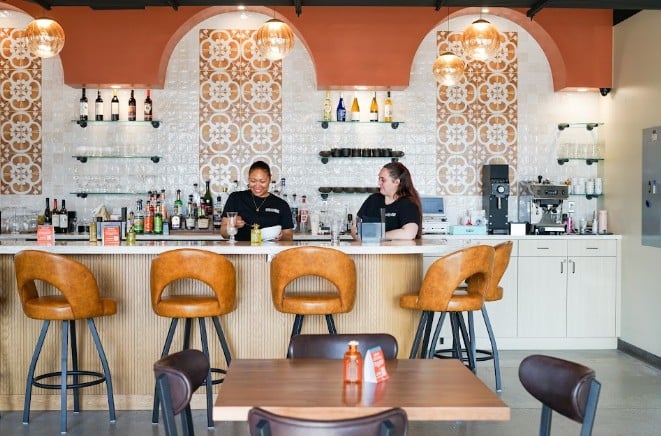
“You won’t believe how many people thought Africa was a country,” she says. “I’m creating a form of education, because Africa is where I’m from, and Africa is what I want to share with visitors so that they learn more about it.”
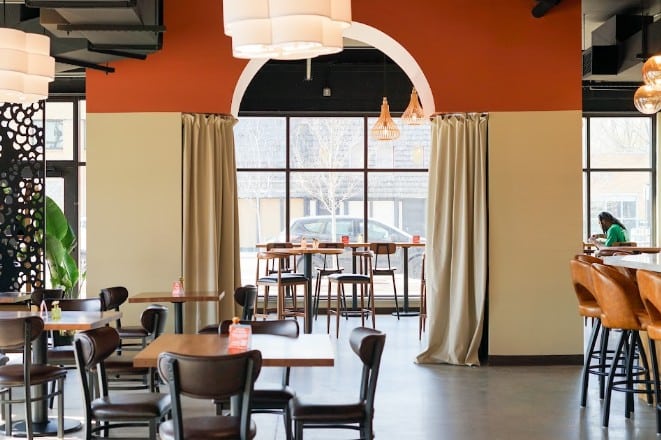
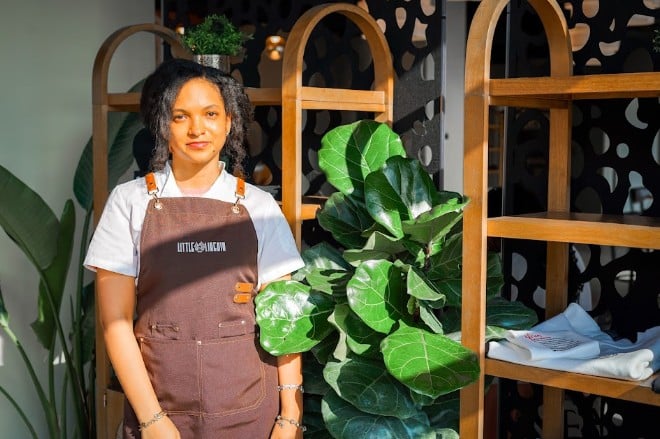
That mission is woven throughout the restaurant. Merchandise features facts about Africa’s geography and history, and the decor of the space reflects key elements of Liberia’s heritage and landscape. The arches are inspired by traditional Liberian architecture, the wood accents represent the country’s sandy beaches and beautiful coastline, and the greenery highlights Liberia’s rich natural environment and landscapes.
Every detail gives customers a glimpse of the country’s history, culture and beauty beyond the menu.
Bringing Marhaba’s hard-won dream to life took perseverance. To her, it still feels surreal.
“I’m a single woman show who’s doing everything from the cooking to the accounting, to the legal, to the construction,” she says.“It literally is a dream come true. But also not. I didn’t just dream it. I also worked for it.”
Little Liberia is located at 16530 E. Warren Ave. Unit A in Detroit. It is open Wednesday to Sunday from 11am-9pm. For more information, visit littleliberia.com or follow the restaurant on Instagram, @little_liberia.
Point of Entry is a series exploring the lived realities and vital contributions of immigrant communities across Southeast Michigan. This is a collaboration with New Michigan Media, supported by the Community Foundation for Southeast Michigan. See more stories from this series here.
Credit: Source link