

Sudan’s Civil War Has Become the World’s Largest Humanitarian Crisis, With 33 Million People in Desperate Need of Aid
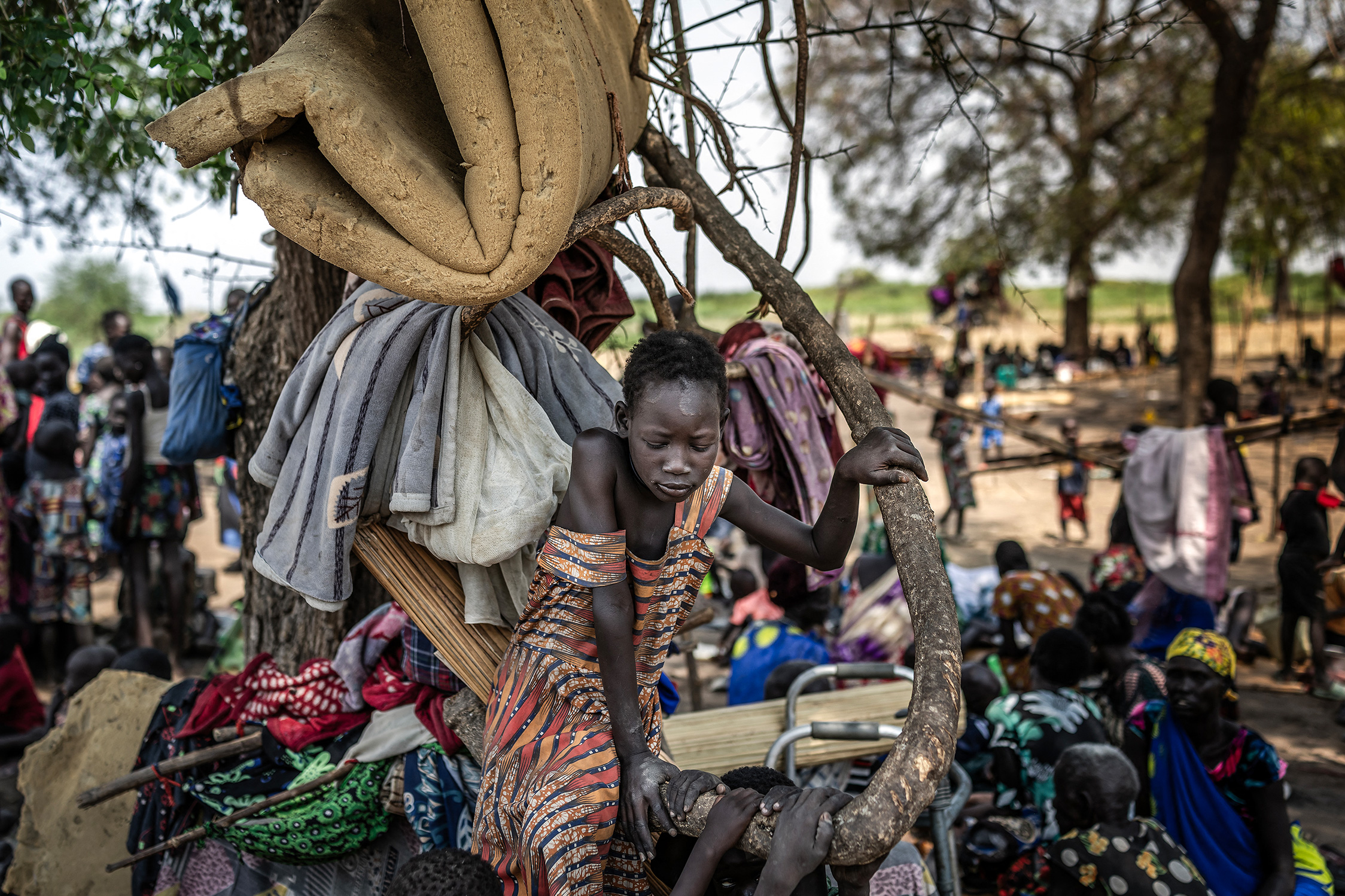
Sudan’s civil war has created the world’s largest humanitarian crisis, displacing millions of families, cutting off access to food and clean water, and leaving children vulnerable to hunger, disease, death and violence with no clear end to the conflict in sight.
The war, which began in April 2023 between the Sudanese Armed Forces and the paramilitary Rapid Support Forces, has pushed more than 33 million people into need of humanitarian assistance. More than 24 million people are facing acute food insecurity, and more than 4 million children are suffering from acute malnutrition.
Grace Mavhezha, a World Vision aid worker in Sudan, said families are still being displaced daily, while others are returning to destroyed communities with nothing left to rebuild their lives.
“Children are suffering,” Mavhezha said. “They don’t have food to eat.”
The conflict began in April 2023 between the Sudanese Armed Forces and the paramilitary Rapid Support Forces. Since then, more than 9 million people have been displaced inside Sudan and more than 4 million have fled to neighboring countries.
Mavhezha said children born after the conflict began have never known peace.
“They have grown to the sounds of the conflict, sounds of the drones, of the bombs,” she said.
The war has damaged or destroyed critical infrastructure across the country. Health facilities have been hit. Water systems have broken down. Schools have closed or been turned into camps for internally displaced families. Mavhezha said more than 10 million children are out of school.
Disease outbreaks have followed. Cholera, measles and hepatitis E have spread in areas where people have little access to clean water, sanitation or medical care.
The hunger crisis is especially severe. Mavhezha said she recently sat with women at a health facility whose children had been screened for acute malnutrition. The mothers told her they could not breastfeed because they themselves did not have enough food to eat.
“They are suffering from hunger, they can’t breastfeed, and the children are suffering from malnutrition,” she said.
In displacement camps, families are often surviving without regular meals. Mavhezha said some children cry throughout the day because they may have gone several days without eating anything more than porridge.
“Hunger is not just a story that we can tell, but it is a reality in Sudan,” she said. “People are going for days without food.”
She recalled arriving at one internally displaced persons camp and seeing a boy standing near a makeshift shelter.
“The first thing he said to me is, ‘I want food,’” Mavhezha said.
The war has also made it difficult for families to grow their own food. Many who once relied on farming can no longer safely access their land. Aid shipments are also struggling to reach the people who need them most because of insecurity, damaged roads, closed entry points and administrative barriers.
Mavhezha said one driver delivering food to an internally displaced persons camp took five months to reach the area.
“Imagine five months people haven’t received their portions of food,” she said.
World Vision is currently operating in eight of Sudan’s 18 states, providing food assistance, clean water, sanitation support, protection services, livelihood support and cash assistance where possible. The organization is also rehabilitating boreholes so communities can access clean water.
Mavhezha said aid workers are also responding to the needs of unaccompanied children and women and girls facing gender-based violence.
But the needs continue to outpace the response. Funding has fallen as the crisis has dragged on, forcing some emergency feeding programs to close.
“Sudan is in need of support and the global community has to mobilize for funding,” Mavhezha said.
For Mavhezha, one story from a displacement camp has stayed with her. She met an 11-year-old boy who said he saw his father shot. His mother had gone to the market when violence broke out, and the family was separated as people fled.
Months later, Mavhezha returned to the same camp and asked his foster caregiver where the boy was.
“She said he ran away,” Mavhezha said. “He said he wanted to look for his mother.”
Mavhezha said the story reflects what is happening to children across Sudan: families separated by violence, children forced into survival and communities left without the basic conditions needed for safety.
“This is not only his story,” she said. “This is what is happening to many children.”
The crisis has struggled to hold global attention, despite its scale.
“The Sudan crisis seems to be a forgotten crisis,” Mavhezha said. “When we don’t talk about it, we don’t highlight the current situation … people tend to forget.”
Humanitarian groups say people outside Sudan can help in several immediate ways. They can give to organizations providing emergency food, clean water, medical care and protection services inside Sudan. They can contact elected officials and urge them to support humanitarian funding, safe aid access and diplomatic pressure for peace. They can also help keep the crisis visible by sharing verified information from aid organizations and news outlets.
Mavhezha said that visibility matters because funding often follows attention.
“When we don’t talk about it, people tend to forget,” she said.
For World Vision, that support helps provide food assistance, clean water, sanitation support, protection services for vulnerable women and children and cash assistance where possible. But Mavhezha said Sudanese families ultimately need both aid and an end to the conflict.
“Children have seen enough,” she said.
Credit: Source link