

Strange Stone Circles Hint at a Lost Nomadic Culture of the Sahara Desert
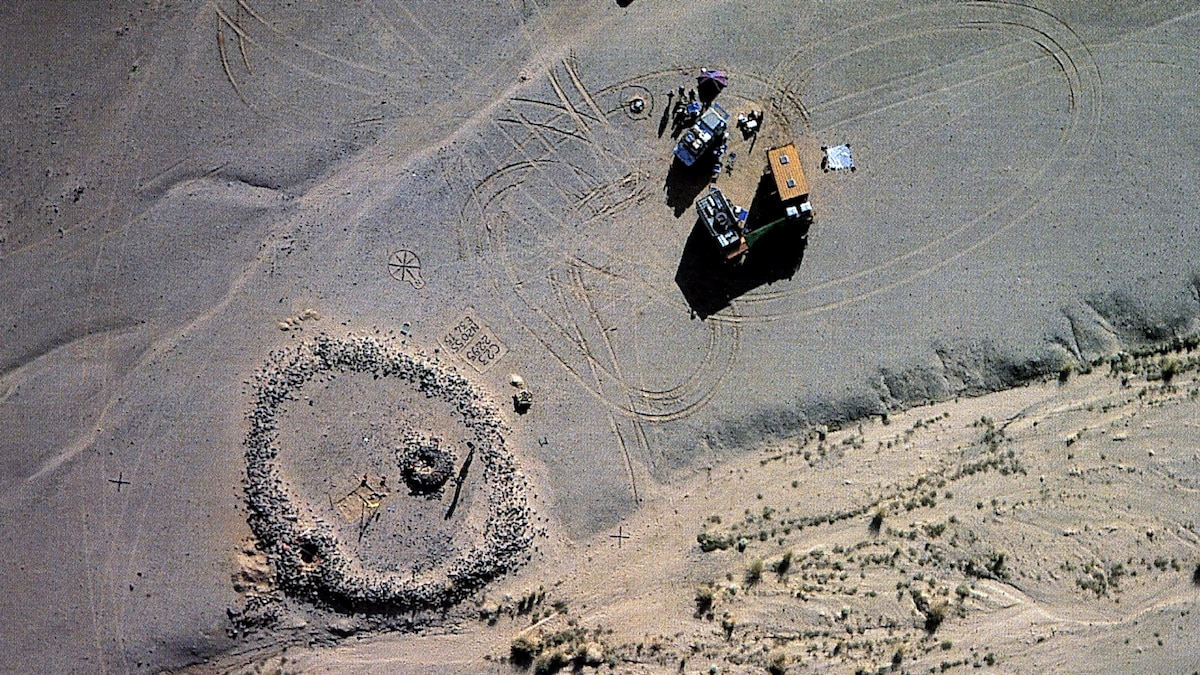
Desert dwellers
The team’s work is part of a recent effort to uncover the cultures that once thrived in the Atbai Desert. The area’s history has remained an archaeological black box given its remote, rocky terrain and surrounding political climate. Much of the desert lies in modern Sudan, where ongoing war and illegal mining operations make excavations dangerous. But the area is also underexplored because of its far more famous neighbors.
“Since the beginning of Egyptology and Nubiology, most archaeological investigation was based along the Nile,” says Gatto. The Nile is lined with pyramids, large temples, or “the fancy stuff,” as she puts it.
“We are trying to add the desert side of the story to the equation,” she says.
Desert nomads still wander there today, and survey work has uncovered ancient rock art etched onto cliff faces and promontories depicting animals like cattle, giraffes, goats, and dogs. One recently discovered cliff face even depicts a “fleet” of boats, suggesting its creators interacted with Nilotic and seafaring traders. The art dates from the early Neolithic, around 12,000 years ago, to around 3,100 B.C., when Egypt’s first pharaoh, Narmer, consolidated control over Lower and Upper Egypt.
These pastoralist peoples had a particularly strong interest in cattle, says Gatto. “The cattle cult is at this moment in time common everywhere in the Saharan Arabian belt,” she adds.
Credit: Source link