

Strange Complete Boar Burials Discovered Beneath the Tombs of a Greco-Roman Necropolis in the Nile Delta
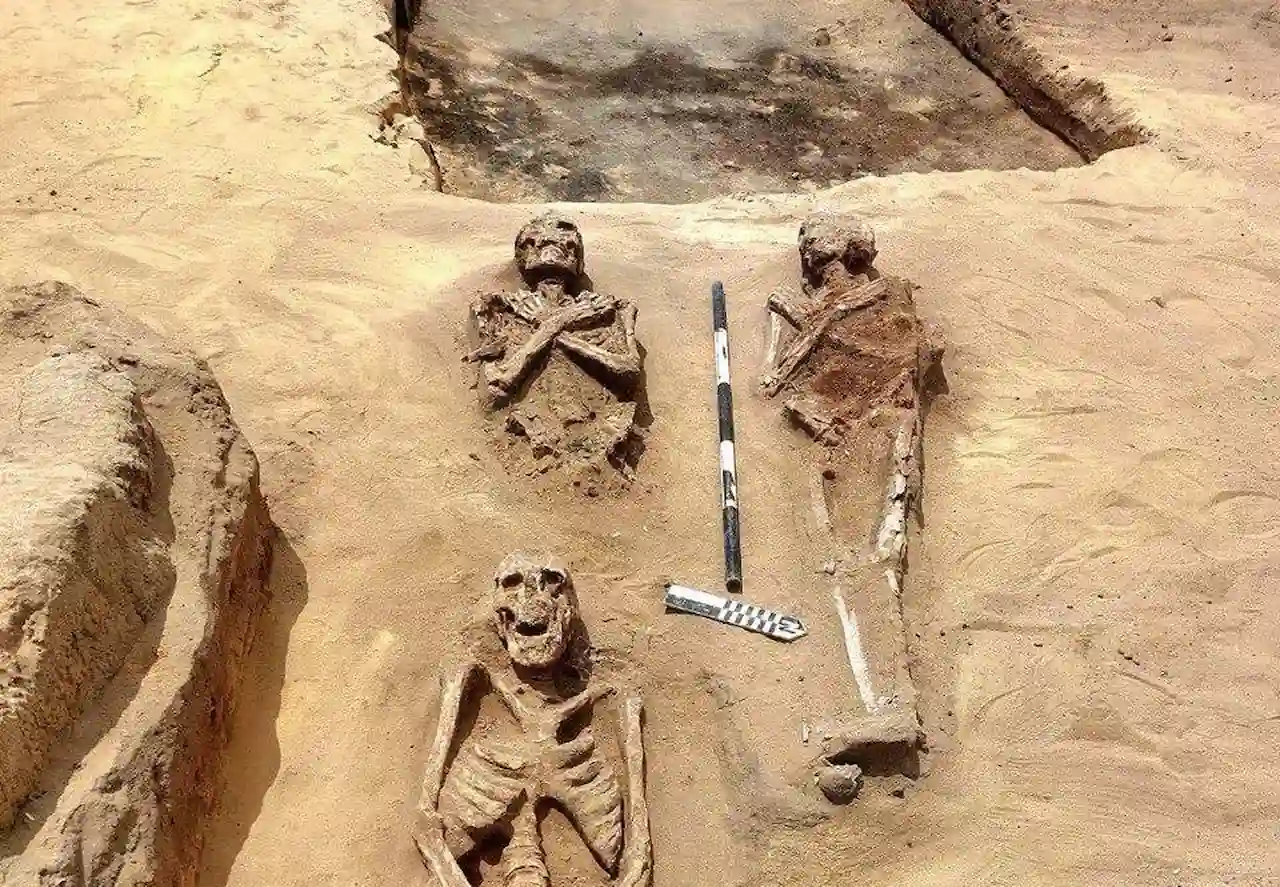
The excavation campaign carried out by the Egyptian archaeological mission under the Supreme Council of Antiquities at the tell of Kom Aziza, located in the Beheira Governorate, has brought to light a portion of a necropolis dating to the Greco-Roman period.
The discovery, presented by the Ministry of Tourism and Antiquities, expands knowledge of this delta site and consolidates it as an exceptional stratigraphic record where multiple historical periods overlap.
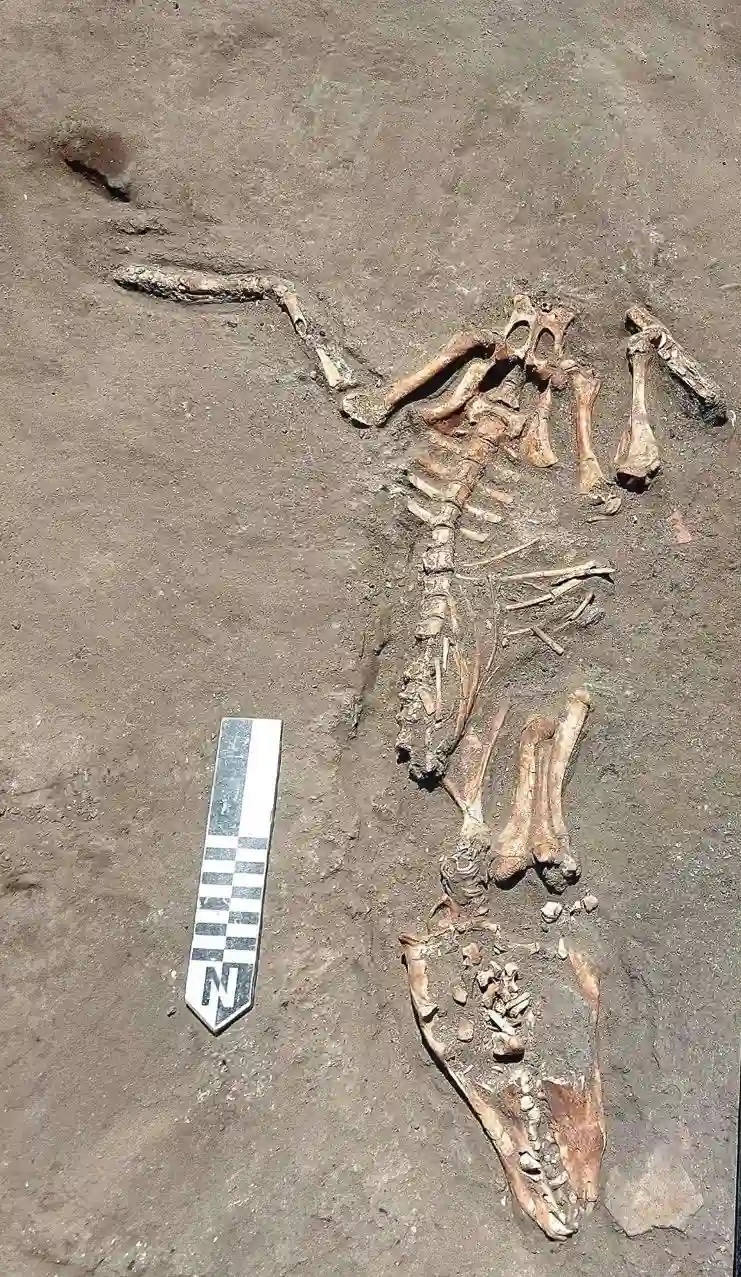
Among the elements that have drawn the attention of specialists is the discovery of several complete boar burials (Sus scrofa) inserted in one of the archaeological layers. The presence of this animal in funerary contexts of ancient Egypt is extraordinarily rare due to the negative symbolic association of the boar, linked in the pharaonic religious imagination to the deity Seth, the force of chaos and the disturbance of cosmic order.
The excavation leaders have indicated that this isolated occurrence might point more to an economic or domestic activity developed at the site during one of its occupation phases, rather than to a deliberate ritual practice, although the definitive interpretation awaits further analysis.
The Secretary General of the Supreme Council of Antiquities, Dr. Hisham El-Leithy, explained that the preliminary study of the human skeletal remains exhumed in the cemetery reveals a notable diversity in burial rites and body treatment techniques prior to interment.
Archaeologists have documented both individual and collective graves, with orientations varying between the north-south and east-west axes. The positions of the arms of the deceased also show a highly heterogeneous pattern: hands folded and crossed over the pelvis, arranged around the neck, adopting the well-known Osirian posture with forearms crossed over the chest, or extended straight along the thighs.
This typological variability demonstrates the coexistence of different funerary traditions and ways of preparing the body within the same community or across successive generations.
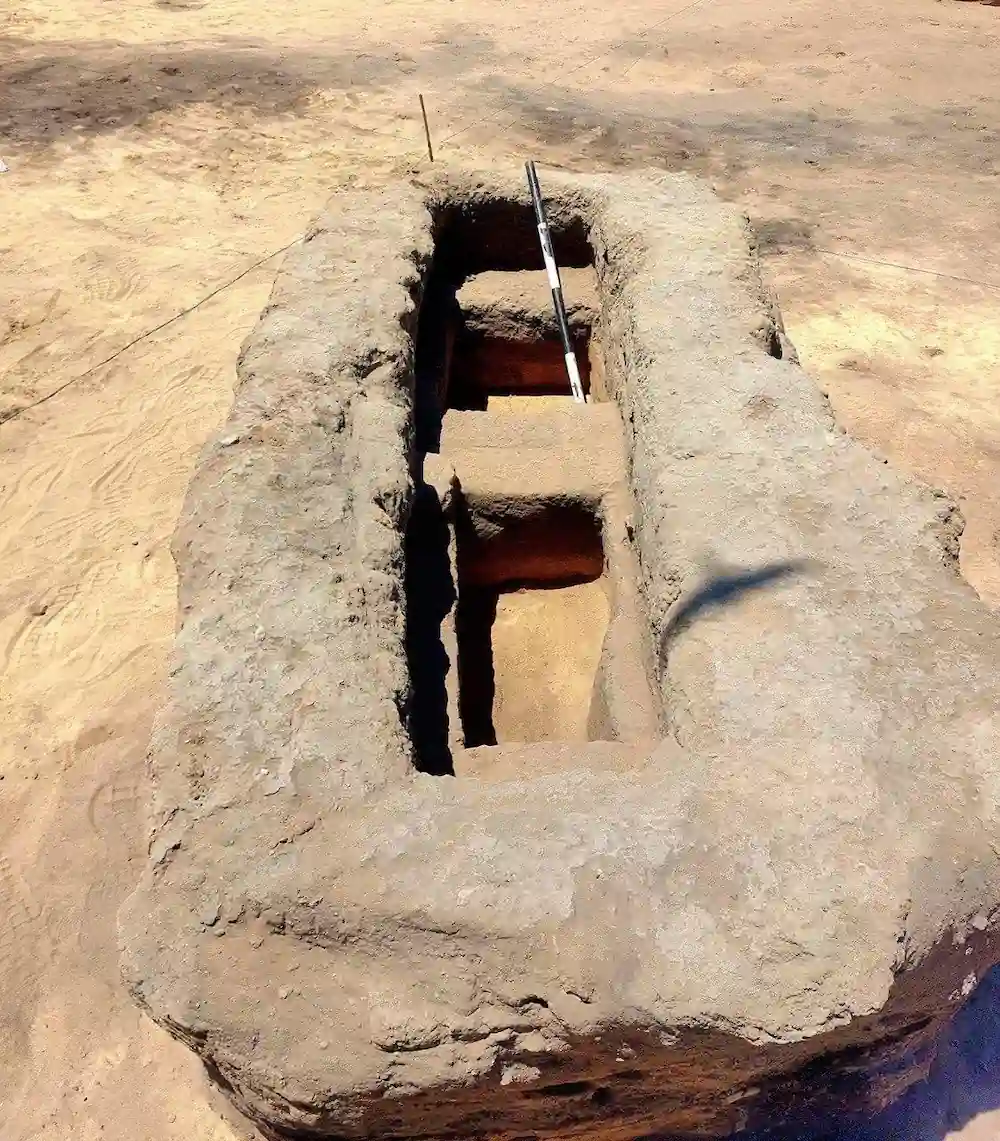
The excavations have documented a wide range of burial structures. There are simple pits where the body was placed directly on the ground; others have perimeter mudbrick linings that create a more elaborate space; several burials within polychrome stucco sarcophagi have also been recovered, along with others placed in cylindrical or barrel-shaped ceramic coffins, a type particularly characteristic of the Ptolemaic period.
The coexistence of these architectural solutions within the same funerary area suggests social stratification or chronological evolution in mortuary practices, which future work will need to clarify.
Mr. Sherif Fathi, Minister of Tourism and Antiquities, emphasized that this discovery highlights the archaeological potential of the Kom Aziza tell as one of the most promising sites in the delta region. The significance of the site, he added, is not limited to its funerary evidence but aspires to offer a complete picture of the evolution of settlement, daily life, and the relationships between humans and their environment over millennia, thereby enriching knowledge of the history of pharaonic civilization.
The analysis of the stratigraphic sequences conducted by the team has determined that the Greco-Roman necropolis was built upon much older occupation levels. The material remains recovered confirm a human presence in Kom Aziza that dates back to the Old Kingdom, continuing through the New Kingdom and the Late Period, and finally reaching the Greek and Roman periods.
It is, therefore, a point of recurrent occupation over nearly three thousand years, an archaeological palimpsest where each layer documents a different episode in the history of the western delta.
The head of the Egyptian Antiquities sector, Mr. Mohamed Abdel Badi, detailed that the recovered objects include ceramic and stone vessels for domestic use, molds for bread-making, lithic tools of various functions, as well as several ovens and storage containers.
The sieving process has also yielded large quantities of fish spines and scales, bird bones, and mammal remains—a faunal assemblage that will allow the reconstruction of the diet and economic activities of the successive inhabitants of the tell.
The Director General of Beheira Antiquities and head of the excavation mission, Mr. Khaled Abdel Ghani Farhat, stressed that the site represents a unique model of a multi-phase location, where residential and productive activities succeeded one another from the dawn of ancient Egyptian history until later periods when the area was transformed into an intense funerary zone.
Farhat emphasized that Kom Aziza is not just a simple necropolis but a comprehensive archaeological record that attests to various forms of human interaction with the environment across successive chronological horizons.
The team remains hopeful that upcoming field seasons will reveal new secrets and evidence at this site, whose stratigraphic sequence still contains many unexplored layers. The appearance of the boars, for now, opens an unexpected line of investigation that will require revising the usual interpretations of the significance of wild fauna in the domestic and funerary contexts of ancient Egypt, at least in this area of the delta.
Credit: Source link