

Spain Rules Out Morocco’s Role in Ceuta Migration Crisis, Blames Foreign Interference
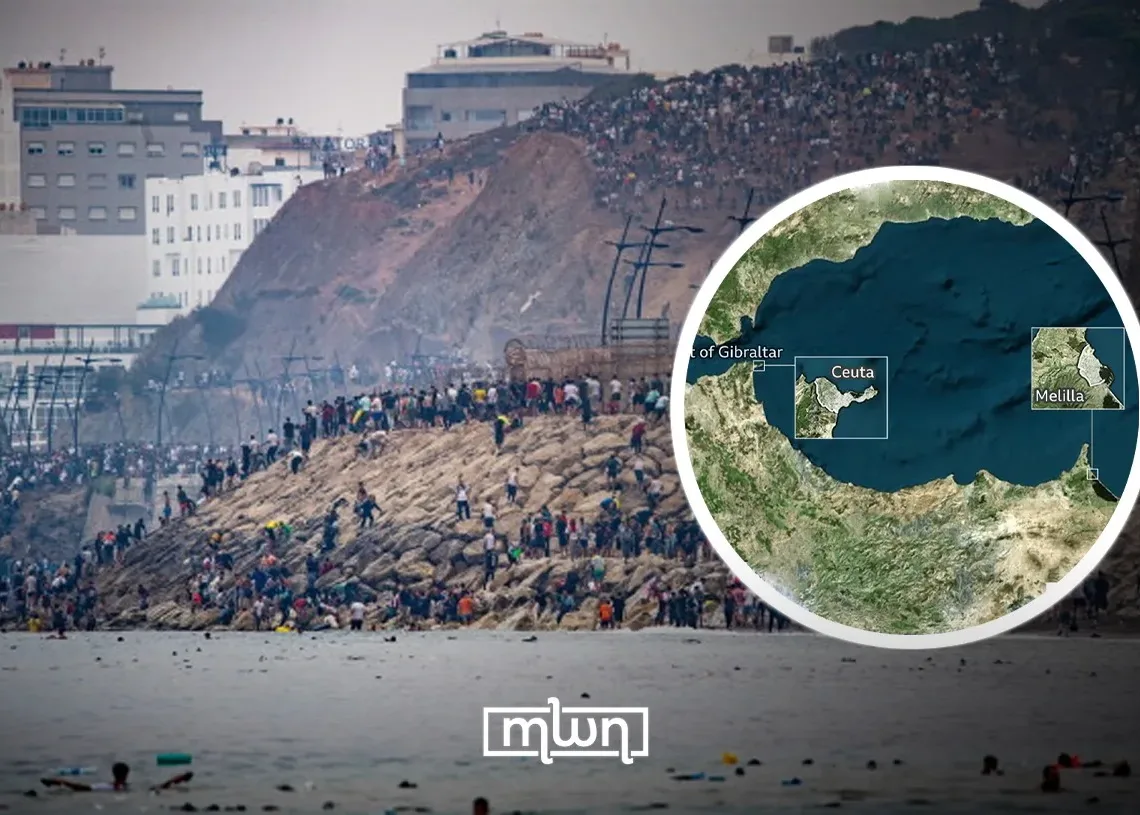
Rabat – The Spanish government has ruled out Morocco as being behind the mass attempt to enter Ceuta earlier this month, instead pointing to possible foreign interference on social media, according to a report by El Español.
The report, published Thursday, said Spanish government sources believe there is no evidence that Rabat organized or encouraged the events in the Spanish enclave. Instead, authorities are examining whether foreign actors used social media to increase tensions and fuel anti-immigration sentiment in Europe.
According to El Español, confidential government reports identified unusual activity linked to accounts and messages from several countries, including Russia, Kosovo, and the United States. The activity allegedly sought to spread messages that could contribute to social tensions and deepen divisions within the European Union.
The government’s position marks an important distinction from the 2021 Ceuta crisis, when relations between Spain and Morocco sharply deteriorated. That crisis followed Spain’s decision to allow Polisario Front leader Brahim Ghali to receive medical treatment in Spain.
This time, Madrid says Morocco acted differently. According to the report, Moroccan authorities cooperated with Spain during the latest crisis, including efforts to return migrants who had entered the enclave. Spanish and Moroccan officials also maintained frequent contact throughout the episode, with dozens of calls reportedly taking place between the two sides.
The Spanish Ministry of Foreign Affairs said Foreign Minister José Manuel Albares speaks “daily” with his Moroccan counterpart, Nasser Bourita.
The government’s assessment comes amid a separate dispute within Spain over whether its intelligence services had warned authorities about a possible mass entry into Ceuta.
Defense Minister Margarita Robles has said that the National Intelligence Centre (CNI) had provided information about a potential operation. However, other government officials have disputed the interpretation of those warnings, arguing that there was no specific intelligence predicting that thousands of people would attempt to enter Ceuta within hours.
The Spanish government has also made clear to Morocco that, despite ongoing cooperation, it does not accept Moroccan claims over Ceuta and Melilla. Madrid considers both cities Spanish territory and part of the European Union.
Meanwhile, several Moroccan ministers have publicly reiterated Morocco’s claim to the occupied cities of Ceuta and Melilla. Justice Minister Abdellatif Ouahbi said the two cities represent Morocco’s “historical and geographical right” and called for a dialogue mechanism with Spain to discuss their future and eventual return to Morocco.
Minister of Islamic Affairs Ahmed Toufiq also referred to Ceuta during a religious ceremony chaired by King Mohammed VI in Rabat on Monday, invoking historical Muslim scholars from the city and describing Morocco’s struggle to “liberate the occupied cities.”
The statements have added to tensions with Madrid, which has repeatedly rejected any challenge to Spanish sovereignty over Ceuta and Melilla. Spain’s Foreign Ministry said both cities are an integral part of Spain and the European Union.
Credit: Source link