

There Is No Morocco-Spain Crisis, Only a Rift Inside Madrid’s Government
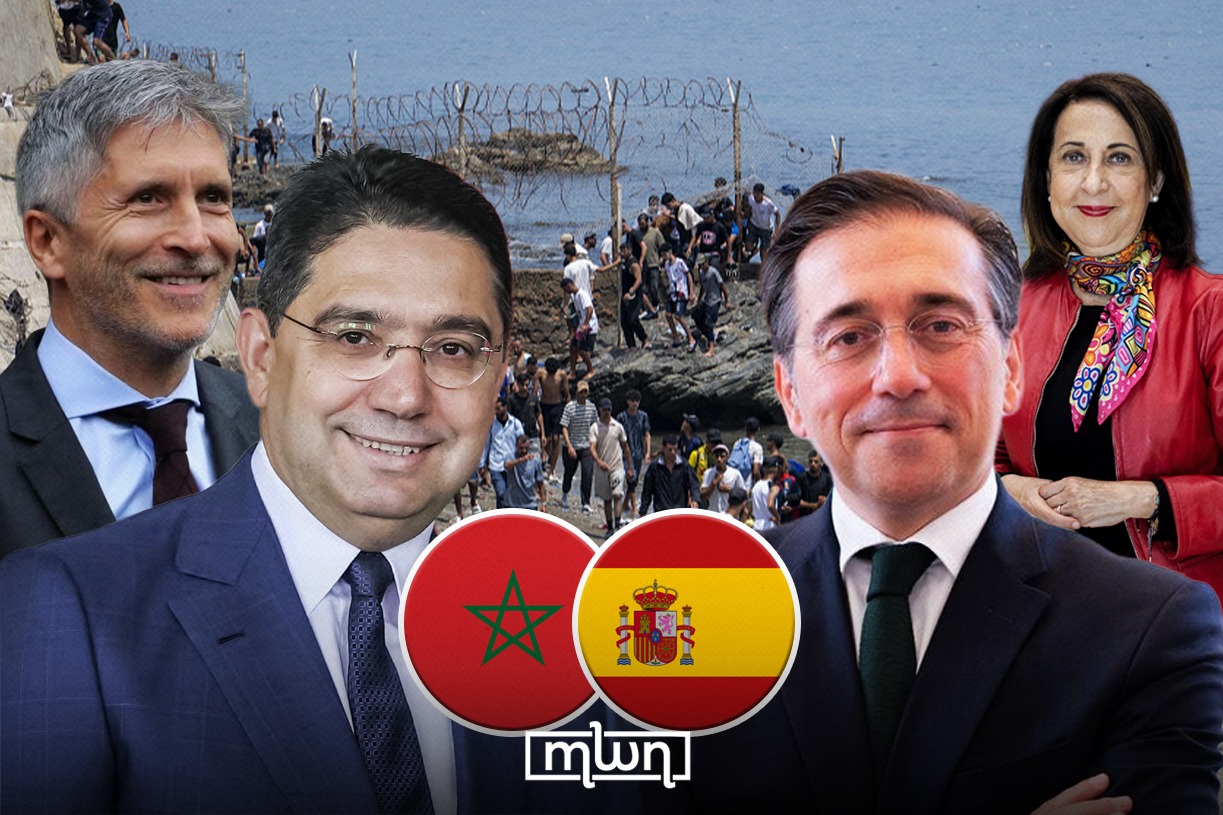
As I have argued for nearly a month now, there is no diplomatic crisis between Morocco and Spain. Nor does the Spanish government appear to harbor any doubts over Morocco’s alleged orchestration of last month’s Ceuta crisis, despite all the digression and wild speculation the Spanish press and some politicians have spread over the past month.
What does exist is a deliberate effort by certain media and political circles to fuel a confrontational narrative and create an artificially tense atmosphere for the sole purpose of advancing their own agendas and particular interests.
Above all, what we are witnessing is an intense media and political campaign against Morocco, driven by part of the Spanish press and certain sectors of the Spanish political establishment, particularly the PP and Vox. It is therefore important to draw a clear distinction between this political and media confrontation and the much broader, deeper, and more strategic reality that defines relations between the two states.
The noise generated by certain political and media actors is one thing; the structural relationship between Morocco and Spain is quite another. For geographical, economic, strategic, and human reasons, both countries have far more to gain from dialogue and cooperation than from a permanent dynamic of confrontation.
For Morocco, Spain is an indispensable strategic partner, a country with which it will always be necessary to engage in dialogue, cooperate, and seek areas of mutual understanding. Disagreements between neighbors—and even between brothers—are inevitable, but reason, pragmatism, and a sense of responsibility must ultimately prevail so that relations can return to their normal course.
Had a genuine bilateral crisis existed, everyone would know it. Spain would have recalled its ambassador for consultations, or at the very least summoned Morocco’s ambassador in Madrid to demand an explanation. Morocco would likely have answered in kind. None of that has occurred. The two governments are not in crisis, and their channels of cooperation remain open, as do trade ties and bilateral coordination, including the arrangements for the summer return of Moroccans living in Europe.
Madrid knows and acknowledges ‘there’s no evidence’ to remotely accuse Morocco
The latest evidence came on Tuesday, August 26, when sources at Spain’s Foreign Ministry confirmed that Foreign Minister José Manuel Albares speaks daily with his Moroccan counterpart, Nasser Bourita, a man Albares habitually calls a “friend.” The ministry described the regular exchanges between the two top diplomats as a fluid diplomatic dialogue of great value at this moment, one in which any effective and workable response runs through diplomacy.
A month earlier, on July 31, Spanish Prime Minister Pedro Sánchez had voiced his appreciation for Rabat’s “repeated, constant, and seamless” cooperation on the repatriations. Morocco’s conduct “has nothing to do with what happened in 2021,” he stressed, instead deploring the “lack of solidarity” of some European partners. Days later, Albares went further. “Morocco’s intention is for every last person to return,” that the neighboring country “has asked for nothing in return,” he insisted, pointing to Rabat’s cooperation as evidence that it remained a reliable partner.
Other Spanish ministers held the same line. Transport and Sustainable Mobility Minister Óscar Puente called Morocco “a loyal and necessary partner,” arguing that anti-Morocco rhetoric might yield electoral dividends for some but was detrimental to Spain. Interior Minister Fernando Grande-Marlaska, for his part, credited cooperation with Rabat with allowing Spain to “revert the situation in 24 hours,” while reiterating that Morocco was “a reliable partner” and “not a threat” to Spain. From the outset, he and Sánchez also turned their criticism toward parts of Europe, denouncing what Marlaska called the “very selfish” and unsolidary attitude of some European governments and what Sánchez termed a “selfish, polarising and unlawful reaction” to the crisis.
And according to a source from Spain’s Foreign Ministry quoted by El Español, “there is no evidence that it was a hybrid attack linked to Morocco’s claims over Ceuta and Melilla. Instead, the source noted, there are indications that social media was used to divide and destabilize the EU by fueling anti-immigration sentiment.
Even more critical, the El Español report revealed that Morocco’s Foreign Minister Nasser Bourita called his Spanish counterpart in the morning of July 30 to convey to him Rabat’s concerns that some unusual movements were taking place at the border, stirred up by social media activities that had consistently referred to the Spanish Supreme Court’s ruling on the summary return of migrants who swim their way into Ceuta. While renewing Morocco’s commitment to work closely with Spain to ensure the return of irregular migrants, the sources recalled, Bourita explained to his counterpart that the situation may well get out of control and that the police could not stop everyone by force, especially given the presence of whole families with their kids.
No such revelations and acknowledgement would come from a government that believes its neighbor engineered a hostile operation against it. Were Madrid truly convinced that Morocco had opened the floodgates to punish or pressure Spain, its senior ministers would not be lining up to describe that same neighbor as loyal, reliable, and no threat at all.
Some Spanish services did not bother to act on early warnings
What does exist, though, is an internal dispute within the Spanish government, triggered by an exchange of accusations between Defense Minister Margarita Robles and Interior Minister Marlaska over responsibility, and over the government’s possible failures in anticipating what would unfold on July 30.
Appearing before the Congress of Deputies, Robles turned the spotlight on the government’s own conduct. Spain’s intelligence services, the CNI, which keep 25 agents in the occupied city of Ceuta, had warned that something close to what eventually happened could occur.
On July 29, according to Robles, CNI agents had reported that thousands of people might try to enter by swimming, taking advantage of a festival in the neighboring country. Marlaska rejected that account, maintaining that his ministry had received no information allowing it to anticipate the scale of what took place.
Which of the two versions offered by Spanish officials is closer to the truth belongs to an internal public debate that Spain must settle for itself. Either way, the dispute inside the government carries at least one merit: it throws into question many of the far-fetched theories that have proliferated over the past four weeks.
More telling still, and pointing to possible failures by the Spanish government in preventing what happened, Robles’s remarks appear to align with a report published nine days ago, whose journalists spoke with six unions representing the National Police and the Civil Guard in Ceuta.
According to those unions, prior to the events of July 29 and 30, the Spanish government, the Interior Ministry, and the Ceuta government were presented with a series of warnings that never received the attention they deserved. The Interior Ministry did not even receive their representatives, while the regional government of Ceuta reportedly offered them an appointment three or four weeks out.
So this quarrel among members of the Spanish government has at least the merit of shifting attention to the essential question of what information the Spanish authorities held, when they received it, and what they did with it. It also considerably weakens the groundless and politically motivated speculation that Morocco deliberately staged the events as an instrument to “blackmail” Spain.
Samir Bennis is the co-founder and publisher of Morocco World News. You can follow him on Twitter @SamirBennis.
Credit: Source link