

Spain Fails to Secure EU Sanctions Against Morocco Over Ceuta Border Entry
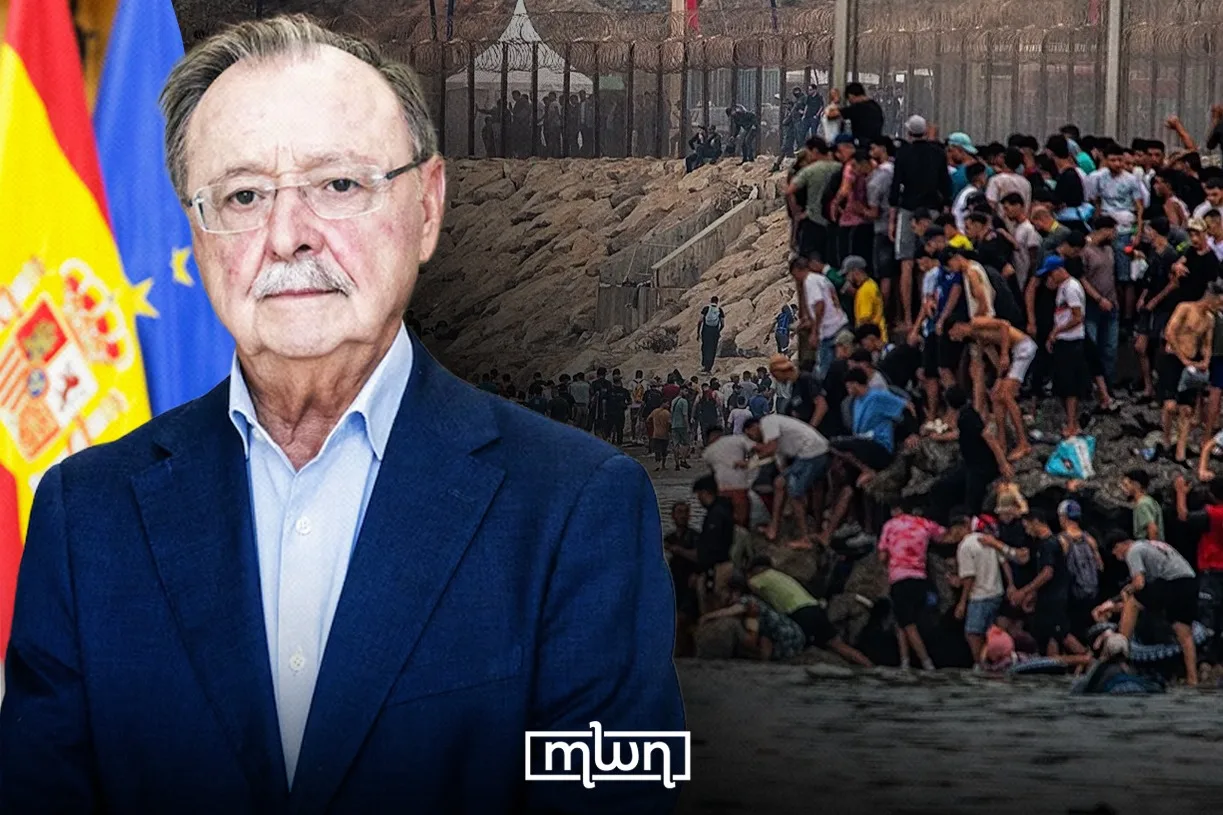
Casablanca – Spain’s efforts to secure European action against Morocco over the mass entry through the Tarajal border crossing have so far failed to produce a commitment from EU institutions, following a recent visit by Ceuta President Juan Vivas to Brussels.
Vivas met with the European Commission, the European Parliament and other EU institutions, where he presented the Spanish-occupied city’s account of the events. He said European officials showed “receptivity and understanding” toward his version, which accuses Morocco of using migration pressure to put Ceuta’s territorial integrity under pressure.
However, Vivas did not return with any announced sanctions or other punitive measures against Morocco.
The Ceuta leader said he asked European authorities for a “clear and unequivocal” statement that Ceuta and Melilla form part of Spain and therefore Europe. He also called for the EU to stress that their borders must be respected, arguing that cooperation with any country becomes difficult if those borders are not respected.
When asked about possible economic sanctions, the suspension of some areas of cooperation with Morocco or other measures, Vivas avoided making specific demands about what Brussels should decide.
“We went to present the situation. They heard us, there was receptivity and understanding. And I hope there will be a response,” he said.
Read also: Vivas Calls for Detention of Up to 11,000 Migrants in Ceuta
Vivas said his visit had two main goals, presenting the local government’s account of what happened and asking European institutions for support in dealing with the consequences.
He pointed to the €115 million in extraordinary European aid announced for Ceuta and said the coming months would show whether the EU’s response turns into concrete measures.
He wants the city to return to normal, prevent another similar situation, address what he described as a humanitarian emergency and ensure that the events mark a turning point.
Among his requests, Vivas asked the EU to pressure for the return to Morocco of people who remain in Ceuta after the mass entry.
He also proposed creating a European working group to facilitate and speed up the return of unaccompanied minors under the EU Migration and Asylum Pact, with family reunification as the priority. If no family exists, he calls for a tutor, followed by a reception institution when neither option exists.
Vivas also asked for stronger security resources at the borders and permanent Frontex and European Asylum Agency presence in Ceuta and Melilla.
He maintained the same position he defended in Madrid and said his assessment has not changed since the beginning.
Vivas again attributed the July events to Morocco, arguing that an operation involving more than 80,000 people could not take place without Moroccan authorities knowing about it or consenting to it.
Pedro Sánchez, Spain’s Prime Minister, however, has repeatedly said that Spanish intelligence services found no information linking Moroccan authorities to the operation and that neither the European Commission nor any international body had provided Spain with solid proof of Moroccan involvement.
Morocco said the events were driven by social media activity, misleading information, human trafficking networks and confusion over Spanish legal and administrative procedures.
Credit: Source link