

TotalEnergies Fast-Tracks Angola Oil Find, Expands Exploration Footprint — BigGo Finance
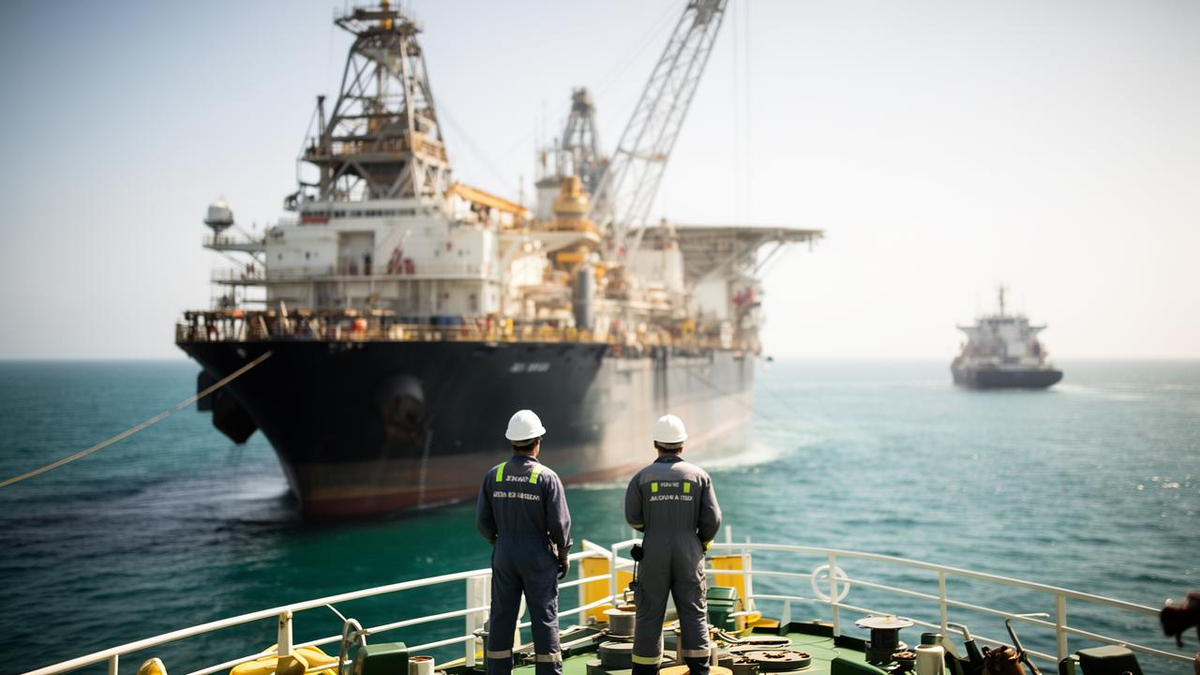
TotalEnergies SE (TTE) unveiled a fresh oil discovery off the coast of Angola on Thursday, and the French energy giant is wasting no time turning the find into revenue. The company said it expects to bring the Acacia-5 well into production just three months after the discovery was made in June, a rapid timeline made possible by tapping into existing infrastructure.
The announcement, made during the Angola Oil & Gas Conference in Luanda, marks the second exploration success for TotalEnergies in the country this year and underscores the company’s deepening commitment to one of Africa’s most prolific hydrocarbon provinces.
Acacia-5 Discovery and Fast-Track Development
The Acacia-5 discovery sits on Block 17, where TotalEnergies holds a 38% operated interest. The company said first oil will be achieved through a fast-track development that leverages available capacity on the Pazflor floating production, storage and offloading vessel, commonly known as an FPSO. Once online, the project is expected to add 6,000 barrels per day to Block 17’s output.
This approach reflects a broader industry trend toward maximizing the value of existing infrastructure rather than building new facilities from scratch. By connecting new discoveries to already-operating FPSOs, companies can dramatically reduce both capital expenditures and the time between discovery and first production.
The Pazflor FPSO has been producing on Block 17 since August 2011, when TotalEnergies announced the hub would reach 220,000 barrels per day from the Perpetua, Hortensia, Zinia and Acacia fields. Against that original scale, Acacia-5’s 6,000 barrels per day is an increment of roughly 3%. The value of the tie-back lies in speed rather than volume: the discovery bypasses the design, construction and installation phases that a new production unit would require.
Three months is far outside the industry norm. Conventional offshore fields that started producing in recent years averaged about 15 years from discovery to first oil, and in the U.S. Gulf of Mexico the gap from project sanction to first production on large deepwater floating units has averaged about 47 months since 2014, according to Offshore Magazine’s review of offshore project cycle times. The fastest comparable projects still measure in years: Eni’s Baleine field offshore Côte d’Ivoire reached first oil in under two years using a refurbished FPSO, while Shell’s Whale in the Gulf of Mexico took about 7.5 years. The same review credits tiebacks, converted vessels and phased development as the main source of the shorter cycles the industry has managed since 2014.
▲ An FPSO takes oil and gas from subsea well centers through flowlines, processes it on board, stores it in the hull and offloads it to shuttle tankers. Acacia-5 will follow that same route into the Pazflor FPSO. (Diagram: Wikimedia Commons, CC BY-SA 3.0, User:WikiDon)
The Acacia-5 find follows an earlier discovery on Block 0 in the Lower Congo Basin, where TotalEnergies holds a 10% stake alongside operator Chevron. That block’s ownership structure includes Sonangol E&P with 41%, Chevron with 39.2% and Azule Energy with 9.8%.
New Exploration Blocks Signed
Beyond the discovery itself, TotalEnergies announced it has signed agreements with Angola’s national concessionaire, Agência Nacional de Petróleo, Gás e Biocombustíveis (ANPG), to acquire 40% operated interests in exploration Blocks 17/25 and 32/21. Both blocks are located in the Lower Congo Basin, an area that has yielded significant discoveries for decades.
The new blocks come with existing 3D seismic coverage, which reduces exploration risk and shortens the timeline for drilling decisions. They are also positioned close to TotalEnergies-operated Blocks 17 and 32, where six FPSOs are currently producing. That proximity could enable future discoveries to be tied back to existing facilities, mirroring the strategy being applied to Acacia-5.
Ownership of the new blocks includes ExxonMobil with 40% and Sonangol E&P with 20%, alongside TotalEnergies’ 40% operated stake.
In February, TotalEnergies also signed a Head of Agreement with ANPG and ExxonMobil to acquire a 35% interest in Blocks 40, 41, 42 and 58 in the Benguela Basin, further expanding its Angolan portfolio.
Across the four blocks, TotalEnergies’ role shifts with each block’s maturity:
| Block | Timing | Interest | Role | Status |
|---|---|---|---|---|
| Block 0, Lower Congo Basin | 2026 discovery | 10% | Non-operator | Chevron operates |
| Block 17 | Producing since 2011 | 38% | Operator | Acacia-5 fast-track |
| Blocks 17/25 and 32/21 | Signed September 2026 | 40% | Operator | Exploration |
| Blocks 40, 41, 42, 58, Benguela Basin | Head of Agreement, February 2026 | 35% | Farm-in | Exploration |
Leadership Commentary
Patrick Pouyanné, Chairman and CEO of TotalEnergies, framed the announcements as evidence of the company’s long-term view on Angola. “I am very pleased to announce these exploration successes in Angola, which demonstrate both the attractiveness of the country and our confidence in its future,” he said in a statement. “Exploration is a key pillar of our ambition in Angola, supported by the incentives introduced to encourage investment.”
He added that the company aims to “explore further and unlock new resources, sustaining a strong exploration effort to identify new opportunities across Angola’s offshore basins.”
Angola’s Strategic Importance
TotalEnergies’ relationship with Angola stretches back to 1953, making it one of the company’s longest-standing operating jurisdictions. The country contributed 156,000 barrels of oil equivalent per day to TotalEnergies’ production in 2025, and the company’s operated deepwater assets account for roughly 45% of Angola’s total oil output.
| Metric | Value |
|---|---|
| Block 17 operated interest | 38% |
| Block 17 partners | Equinor (22.16%), ExxonMobil (19%), Azule Energy (15.84%), Sonangol E&P (5%) |
| Acacia-5 expected output | 6,000 barrels per day |
| Blocks 17/25 and 32/21 operated interest | 40% |
| Angola production contribution (2025) | 156,000 boe/d |
| Share of Angola oil production from operated deepwater assets | ~45% |
Note: Figures reflect TotalEnergies’ disclosed interests as of September 2026.
Market Reaction and Stock Performance
TotalEnergies shares edged higher on Thursday, gaining 0.15% to $91.78 at the time of publication, even as broader markets declined. The Nasdaq fell 1.05% and the S&P 500 dropped 0.56% during the same session.
The stock remains in a long-term uptrend, trading 2.7% above its 20-day simple moving average of $89.10 and 13.1% above its 200-day SMA of $80.92. Momentum indicators remain positive, with the MACD above its signal line and a positive histogram. Over the past 12 months, TotalEnergies has gained 47.12% and is approaching its 52-week high of $94.17.
Analyst sentiment remains constructive. The stock carries a Buy consensus rating with an average price forecast of $97.67. Piper Sandler recently raised its price target to $93 from $85 while maintaining a Neutral rating, and Mizuho initiated coverage in July with an Outperform rating and a $103 price target.
The Benzinga Edge scorecard assigns TotalEnergies a Momentum score of 81.1 and a Value score of 90.33, with a Growth score of 37.45. Traders are watching $92 as near-term resistance, followed by the 52-week high, with support near $85.
Strategic Implications
For TotalEnergies, the Angolan developments reinforce a strategy built around maximizing returns from existing infrastructure while selectively adding new exploration acreage. The fast-track approach to Acacia-5 demonstrates how operators can compress development timelines when infrastructure is already in place, a model that could be replicated across the company’s global portfolio.
The entry into Blocks 17/25 and 32/21, combined with the Benguela Basin farm-in announced earlier this year, signals that TotalEnergies sees continued exploration upside in Angola despite the global energy transition. The company’s ability to secure operated stakes in these blocks also reflects the Angolan government’s efforts to attract investment through improved fiscal terms and regulatory incentives.
For Angola, the announcements reinforce the country’s position as a destination for upstream investment at a time when many producers are competing for a shrinking pool of exploration capital. The rapid development of Acacia-5 will provide near-term production growth, while the new exploration blocks offer longer-term resource potential.
TotalEnergies employs approximately 1,500 people in Angola across its various business segments, and the company’s presence extends beyond upstream operations to include service stations in partnership with Sonangol and renewable energy projects.
Japan’s Shifting Supply Mix
Japan imports virtually all of its crude oil, and where it comes from is changing fast. Ministry of Economy, Trade and Industry data show Japan imported 11.72 million kiloliters of crude in July 2026, up 17.0% year on year, with the United States the single largest source at 4.34 million kiloliters, a 4.6-fold increase. The Middle East supplied 58.9% of the total, down 28.7 percentage points from a year earlier and the tenth straight month below the prior-year level. Japan’s Middle East dependence was still 95.9% in fiscal 2024, when the United Arab Emirates accounted for 43.6% and Saudi Arabia 40.1%.
Direct Japan-Angola trade is minimal. Japanese imports from Angola totaled about 380 million yen in 2024, according to Japan’s Ministry of Foreign Affairs. Angolan crude nevertheless enters the same global pool Japan buys from, competing on how quickly new barrels can be brought online.
Credit: Source link
Comments are closed.