

Southwest Somalia conflict risks spiraling into inter-clan war, ACLED warns
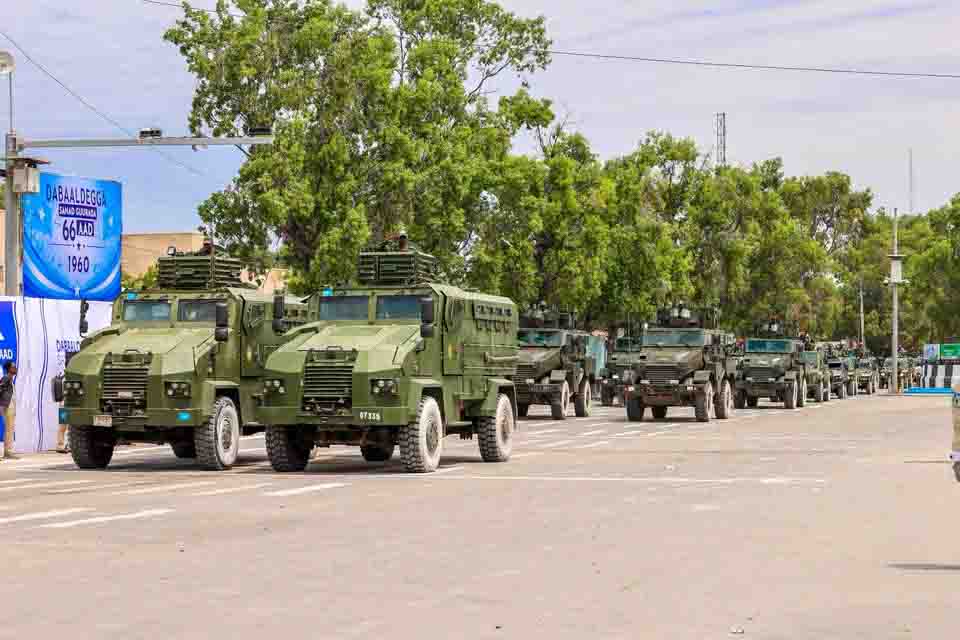
MOGADISHU (Somaliguardian) – A political and military standoff in Somalia’s Southwest state risks escalating beyond a power struggle into a protracted inter-clan conflict that could destabilize the wider Bay region, the Armed Conflict Location & Event Data Project (ACLED) said in a new report.
The conflict pits federal government forces and their regional allies against Darwish forces loyal to ousted Southwest State President Abdiaziz Hassan Mohamed Laftagareen. According to ACLED, the two sides have fought at least 78 armed engagements in the Bay region between Feb. 2 and Aug. 28, with fighting concentrated overwhelmingly in the Baidoa district.
Twenty-two of those clashes occurred in a five-week window from Feb. 4 to March, ACLED found, as federal forces mobilized to remove Laftagareen from power. The push to unseat him followed his decision to hold a state election, in which he was re-elected on March 28 to a second term – a vote Mogadishu did not recognize.
The federal government and a new Southwest administration, installed in June, have since branded the opposition forces as terrorists. Officials have accused Laftagareen’s fighters of coordinating with Al-Shabaab militants during an attack on Baidoa city on Aug. 17, and specialized federal forces have begun deploying to the region to launch an operation against them. Spokespersons and supporters aligned with the opposition have firmly rejected the terrorism allegations.
ACLED warned that the prolonged standoff carries a strategic cost beyond Southwest state’s borders: it risks diverting federal military resources away from the national campaign against Al-Shabaab at a moment when the group is intensifying its own offensive in the region. Since the new Southwest administration took office on June 11, ACLED has recorded more than 75 Al-Shabaab attacks in the Bay region through Aug. 28 – a surge the group’s analysts linked directly to the political vacuum and security realignment triggered by the leadership dispute.
“If left unresolved, this political standoff between the Opposition-SWSPF and the federal government could escalate beyond a simple power struggle and devolve into a protracted inter-clan conflict, severely exacerbating communal instability across the region,” ACLED said.
The Southwest crisis has become one of the most closely watched flashpoints in Somalia’s internal politics this year, pitting Mogadishu’s authority to install a federal-aligned administration against a local leader who claims an electoral mandate – with implications for clan cohesion, regional security, and the broader fight against Al-Shabaab.
Background: How the Southwest crisis reached this point
Laftagareen had governed Southwest state since 2018 before the rupture with Mogadishu. Tensions escalated after President Hassan Sheikh Mohamud’s government pushed through constitutional changes that extended his own term and altered Somalia’s power-sharing arrangement; Laftagareen rejected the changes and severed cooperation with the federal government in March. Federal troops, backed by allied clan militias, entered Baidoa on March 30, and Laftagareen resigned and left for Nairobi rather than fight – the moment that set the current standoff in motion.
Since then, fighting around Baidoa has recurred in waves rather than settled into either war or peace: opposition-aligned fighters mounted an attempted incursion in May, came close to reaching the presidential palace in a June 21 assault, and clashed with federal and Southwest forces again in August, including the Aug. 17 attack federal officials have linked to Al-Shabaab. Casualty figures from these episodes are contested and have not been independently verified by either side.
The clan dimension ACLED warns about is not abstract. Southwest’s federal-backed administration is led by figures including former parliamentary speaker Aden Mohamed Nur “Madobe,” who comes from the Hadamo sub-clan of the broader Rahanweyn clan family; Laftagareen belongs to the Harin sub-clan, also part of the Rahanweyn. Because both camps draw on branches of the same clan family, analysts have noted that a prolonged military standoff carries a distinct risk of hardening into intra-clan and inter-clan rivalry rather than remaining a straightforward contest between a federal government and a former regional president.
Contact us: info@somaliguardian.com
Credit: Source link