

South Sudan Reforms Target New Investment Push as AEC Backs Oil Sector Revival
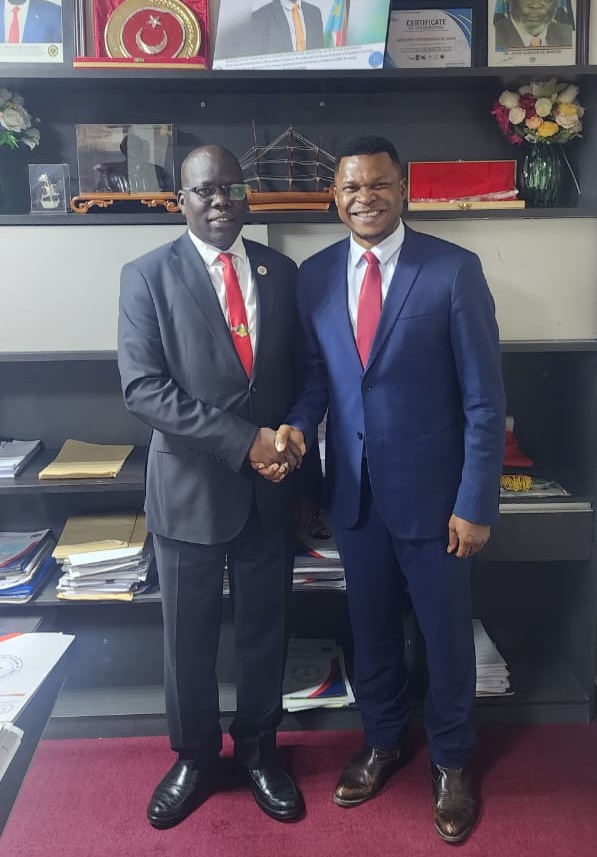
South Sudan is taking steps to reposition itself as a strategic destination for foreign investment, with a renewed focus on attracting capital across the oil value chain. During a working visit to Juba, the African Energy Chamber (AEC) – which serves as the voice of the African energy sector – engaged with government officials and industry stakeholders to identify priority reforms designed to stimulate new capital flows, increase production and advance projects across both upstream and downstream segments.
The visit reflects a shared recognition that while South Sudan remains one of the continent’s most resource-rich oil frontiers, lack of investment has disrupted the country from unlocking the full potential of its hydrocarbon reserves. The government seeks to address this challenge by implementing new reforms aimed at strengthening the investment climate, ensuring clearer regulatory frameworks and incentivizing greater participation from both international and regional operators.
With proven oil reserves of 3.5 billion barrels, South Sudan is both a legacy oil producer and currently the only major oil producer in East Africa. Production is largely led by the national oil company Nilepet, alongside Dar Petroleum Operating Company, Greater Nile Petroleum Company – operated by China National Petroleum Company – and Sudd Petroleum Operating Company. South Africa’s Strategic Fuel Fund also holds a 90% stake in the Block B2 concession, with plans to advance exploration while assessing opportunities for refining development.
Current production ranges between 70,000 barrels per day (bpd) and 100,000 bpd, with approximately 8.5 million to 12.2 million barrels of production estimated between August and November 2026. The government seeks to raise these numbers by attracting investment across the entire oil value chain, facilitating greater exports while addressing key national challenges such as fuel security and power generation. Oil represents the backbone of South Sudan’s economy, and the government seeks to cement this position by introducing reforms aimed at alleviating the country’s energy crisis.
To achieve this, the government has committed to reduce barriers to investment, improve project execution and create a more predictable environment for energy companies. Discussions also explored opportunities across natural gas, power generation and associated infrastructure, recognizing that diversified energy investment will be essential to supporting long-term economic development. The AEC reaffirmed its commitment to promote South Sudan on a global stage, taking the country’s energy story to a global audience.
Beyond oil and gas production, a major focus of the working visit was strengthening local content. Parties discussed strategies to increase employment opportunities for South Sudanese workers, while developing local value chains and ensuring that future projects generate broader economic benefits beyond production revenues. By increasing international visibility, the Chamber aims to position South Sudan alongside other emerging African energy markets competing for exploration and infrastructure capital.
“South Sudan possesses the resource potential to become one of Africa’s most compelling frontier investment destinations, but attracting capital requires sustained engagement with the global investment community. The Chamber will champion South Sudan’s opportunities on the international stage, connecting investors with government and industry leaders while supporting reforms that create a stable, competitive and investable energy sector capable of delivering long-term growth,” said NJ Ayuk, Executive Chairman of the AEC.
Credit: Source link