
South Sudan inaugural poll credibility in doubt, Kenyan-led peace monitor warns
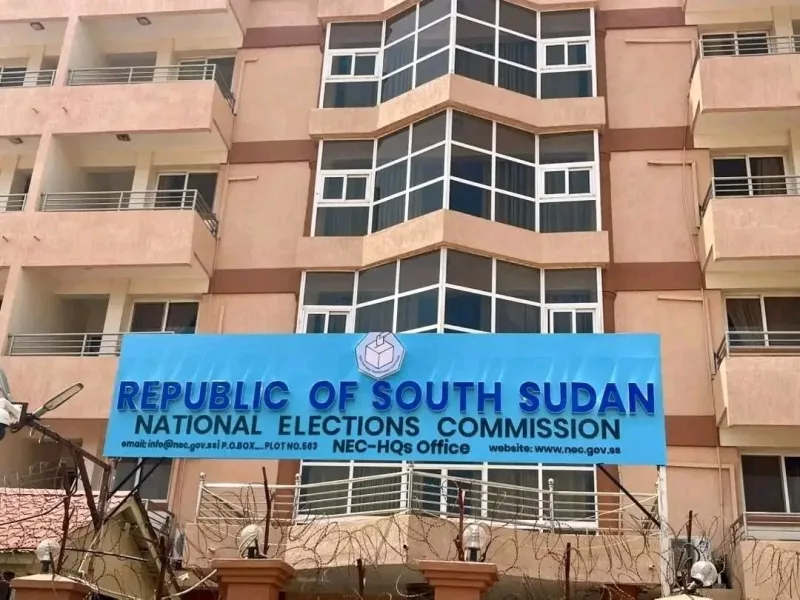

A peace
monitoring body in South Sudan has warned that political, legal, security and
humanitarian conditions necessary to deliver credible, peaceful and inclusive
polls remain largely absent.
The red
flag raises fresh concerns over the December 22 vote.
In its
latest quarterly report, the Reconstituted Joint Monitoring and Evaluation
Commission says that although electoral preparations have continued,
fundamental prerequisites for a credible election have yet to be met.
With less
than six months to the scheduled general election, RJMEC says various
conditions provided under the 2028 peace agreement are missing.
This puts
to question the credibility of the first general election under independent
South Sudan.
The
stability of South Sudan or lack of it has a ripple affect on Kenya in terms of
trade, security and refugees.
Foreign Affairs CS Musalia Mudavadi says a peaceful and stable South Sudan is in Kenya’s strategic interest.
“It strengthens regional security, expands trade, attracts investment and creates greater opportunities for our people,” he said on July 31 when he met his South Sudanese counterpart James Morgan.
The report
notes that the National Elections Commission has officially
declared December 22, 2026, as polling day, secured additional government
funding and begun civic and voter education activities.
The
Political Parties Council has also completed the registration of 39 political
parties, signalling continued technical preparations for the polls.
However,
RJMEC warns that these administrative steps are being undertaken against a
backdrop of unresolved political disputes, fragile security, a worsening
humanitarian crisis and outstanding legal reforms that continue to threaten the
integrity of the electoral process.
“Critical
prerequisites for credible, peaceful, and inclusive elections remain
outstanding,” the commission says.
The
commission led by Amb. Maj. Gen (Rtd) George Owinow cites unresolved legal
questions, incomplete transitional security arrangements and uncertainty over
political inclusivity.
RJMEC also
raises concerns over continued displacement of citizens, restrictions on civic
and political space and inadequate funding for election preparations.
The
monitoring body says the implementation of the 2018 revitalised peace deal has
slowed considerably amid a prolonged political and security impasse, which has
weakened trust among the parties.
It has also
undermined agreed power-sharing arrangements, it says.
One of the
key concerns is the government’s handling of proposed amendments to the peace
agreement.
RJMEC says
the Transitional Government submitted amendments directly to Parliament without
obtaining the commission’s consent as required under Article 8.4 of the
agreement.
The move,
it says, flouted due process and heightened political tensions.
Although
two contentious amendments were later withdrawn, the commission says the
process undermined confidence in the peace framework.
Political
tensions have also intensified following the continued detention of First Vice
President Riek Machar and the dismissal of opposition lawmakers from
Parliament.
These developments,
RJMEC says, have weakened inclusive governance and consensus-based
decision-making envisioned under the peace accord.
The report
further raises concerns over the security environment.
Fighting
has continued in Upper Nile, Jonglei, Unity and Equatoria states during the
reporting period.
RJMEC says
implementation of the permanent ceasefire remains inconsistent, while key
security institutions remain non-operational.
The
unification of forces, disarmament, demobilisation and reintegration programme,
and broader security sector reforms have also stalled.
According
to the commission, these security gaps pose a direct risk to the conduct of
peaceful elections and the participation of voters in conflict-affected areas.
The
humanitarian situation presents another major challenge.
The report
says more than 7.8 million people are projected to face crisis-level or worse
food insecurity, while over 2.5 million remain internally displaced.
Since
conflict erupted in neighbouring Sudan in April 2023, more than 1.3
million refugees, returnees and asylum seekers have crossed into South Sudan,
placing additional pressure on already stretched humanitarian resources.
RJMEC warns
that millions of displaced people could struggle to participate in the
elections because of insecurity, lack of documentation and limited access to
essential services.
It calls
for electoral planning that accommodates internally displaced persons, refugees
and returnees to safeguard the inclusivity of the vote.