

South Star Turnaround in Brazil: Restart and Fully-Funded Expansion Path in Santa Cruz Graphite Operations – Article
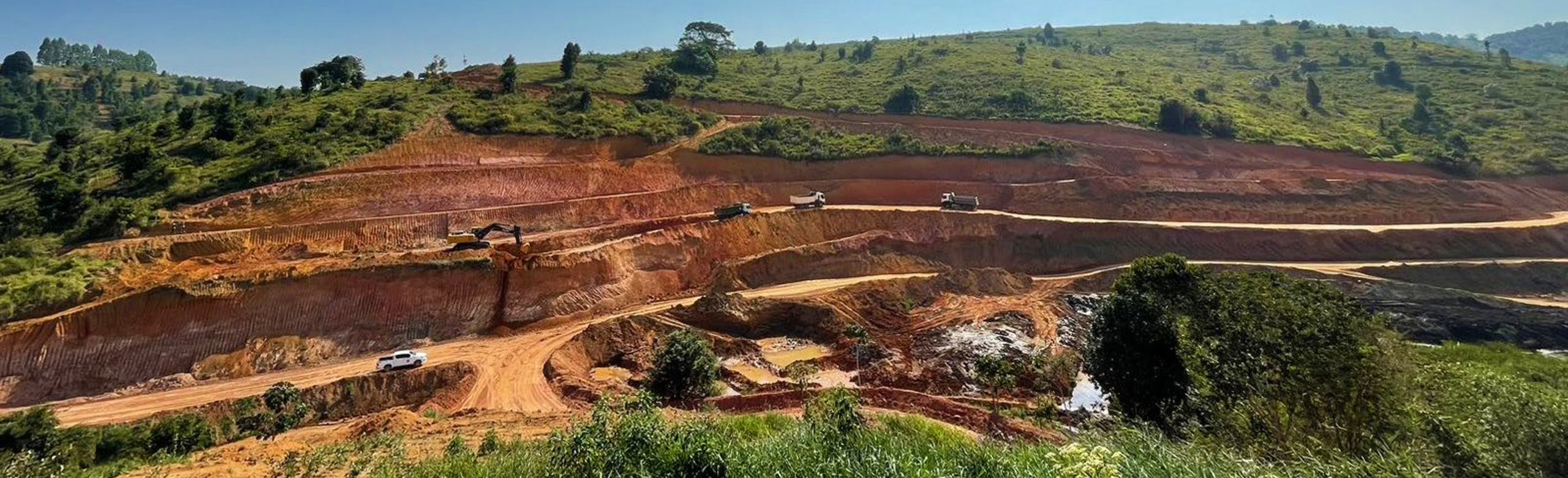
- South Star Battery Metals Corp (TSXV:STS) has turned around its Santa Cruz graphite operation in Bahia, Brazil following a near-bankruptcy in October 2025 to restart and plant throughput improvements this year.
- Management reports a 60% reduction in cash operating costs with current operating costs below $800 per tonne of concentrate.
- Production restarted in 2026 with a target of 5,000 tonnes per year by year-end and a low-capex and reportedly fully-financed expansion path to 10,000 tonnes per year.
- A larger expansion toward 25,000+ tonnes per year depends on an updated feasibility study since existing 2022 study is no longer reliable as per management.
- CEO Tiago Cunha owns roughly 40% of the company, funded personally through the near-collapse, aligning management closely with shareholders.
South Star Battery Metals Corp (TSXV:STS) has turned around its Santa Cruz graphite operation in Bahia, Brazil, following a near-bankruptcy in October 2025, restarting production and improving plant throughput this year. Management reports a 60% reduction in cash operating costs, with current operating costs below $800 per tonne of concentrate. Production restarted in 2026 with a target of 5,000 tonnes per year by year-end, and a low-capex expansion path to 10,000 tonnes per year that the company says is fully financed. A larger expansion toward 25,000+ tonnes per year depends on an updated feasibility study, since the existing 2022 study is no longer reliable, per management. CEO Tiago Cunha owns roughly 40% of the company, funded personally through the near-collapse, aligning management closely with shareholders.
Graphite makes up more of a lithium-ion battery by weight than any other raw material, yet it has spent most of the last decade overshadowed by lithium, cobalt and nickel in the critical-minerals conversation. China controls roughly 80% of global graphite mining, and Western governments are increasingly treating graphite supply as a defence and industrial-security issue rather than a purely commercial one. South Star Battery Metals Corp is one of the few Western-Hemisphere companies actually shipping product from a producing mine.
The Santa Cruz Graphite Operation
South Star’s Santa Cruz Graphite operation in Bahia, Brazil restarted production in 2026 after a near-bankruptcy the company’s own CEO describes candidly. Since then, management says it has cut cash operating costs by 60%, with current operating costs below $800 per tonne of concentrate. Much of that came from unglamorous fixes: renegotiating an electricity contract from retail to wholesale rates cut power costs by 35% within 30 days, and a change to filter-press mesh size took the plant from bursting seven filter pads a day to running 20 days without a failure. As of July 2026, South Star had 140,425,944 basic shares outstanding and 217,141,501 fully diluted, with a share price of C$0.24 per share on the TSXV.
Turnaround Story
CEO Tiago Cunha, South Star’s largest shareholder at roughly 40%, took over as an investor-turned-CEO after the company came close to bankruptcy in October 2025, unable to meet payroll. He funded two payroll cycles personally before a capital raise closed in December 2025. Cunha describes replacing effectively the entire workforce and management team. The new COO, Rogério Barcellos, reportedly matched six months of prior graphite output in two months without changing any equipment, which Cunha takes as evidence that the underlying asset was never the problem.
“The most difficult part is not money, is not raising capital. The most difficult part is have the team united with the right mindset to go for,” Cunha said.
Production and Expansion Roadmap
Santa Cruz is targeting 5,000 tonnes per year of capacity by the end of 2026. Cunha describes a low-capital expansion to 10,000 tonnes per year for under $1 million, which he says is fully financed because the plant’s off-the-shelf equipment was built with far more capacity than 5,000 tonnes requires. A larger-scale expansion toward 25,000 tonnes, and potentially 50,000 tonnes, is also under discussion with development finance institutions, though Cunha was clear that the underlying feasibility numbers behind that larger phase predate the turnaround.
Interview with Tiago Cunha, Director & CEO of South Star Battery Metals
Competitive Positioning
South Star’s product mix currently runs roughly 70% flake and 30% fines, ahead of the plant’s original 65/35 design split, with flotation grades in the 95-97.5% graphitic carbon (Cg) range. Cunha argues the company’s edge against low-cost Chinese supply lies less in product chemistry than in geology: shallow, oxidised, clay-hosted mineralisation that requires no blasting and no underground mining.
“China has been playing a very low level of pricing trying to cut down and cut off all the competitors around the world. For us to succeed against China, you must be prepared for a very low level of pricing for a long period of time. So in the case of South Star, our own characteristic is – number one and most important – very shallow reserves.”
South Star says it is selling to multiple US buyers under long-term supply discussions, alongside emerging niche markets. Cunha cited agricultural graphite fetching roughly $4,000 per tonne against roughly $500 per tonne for commodity-grade material, and is deliberately avoiding dependence on a single customer.
Catalysts
Near-term catalysts include ramping toward the targeted 5,000 tonnes per year capacity, securing the low-capex 10,000 tonne-per-year expansion, and converting ongoing offtake discussions into long-term contracts. Longer term, Cunha points to potential credit lines and grants under discussion with the Brazilian Development Bank and the US International Development Finance Corporation (DFC) to help fund a larger capacity expansion, alongside graphite’s current exemption from US tariffs – a status Cunha attributes to US reliance on non-domestic supply rather than any formal trade protection.
Risks
The clearest risk Cunha himself identifies is pricing: Chinese graphite pricing is opaque and, in his description, deliberately suppressed to undercut non-Chinese producers, with no floor-pricing mechanism yet in place for graphite as has emerged for some rare earths. He also acknowledged that South Star’s 2022-vintage Preliminary Feasibility Study (PFS), the study underpinning the larger-scale expansion economics, is dated and pending an updated study reflecting the company’s revised, lower-cost process flowsheet. Investors should treat headline economics tied to that older study with appropriate caution until updated figures are published.
The Investment Thesis for South Star
- South Star is one of a small number of Western-Hemisphere companies with an operating graphite mine, positioning it against China’s dominance of graphite supply.
- A 60% reported reduction in cash operating costs and sub-$800/tonne operating costs suggest meaningful progress on the cost side that first attracted turnaround capital.
- The near-term 10,000 tonne-per-year expansion is low-capex (under $1 million) and management says it is fully financed, making it a lower-risk catalyst than a full new-build project.
- CEO ownership of roughly 40%, funded personally through the company’s near-bankruptcy, aligns management incentives closely with shareholders.
- A larger-scale expansion toward 25,000-50,000 tonnes per year depends on an updated feasibility study; the current PFS economics predate the operational turnaround.
Macro Thematic Analysis
Graphite’s re-rating is less about batteries than about supply-chain concentration. China’s dominance runs from mining through to Active Anode Material, and Western defence and industrial planners have begun treating graphite the way they treat rare earths: as a security-of-supply problem rather than a simple commodity trade. Brazil’s position as the world’s third-largest producer, with more than 80 years of continuous flake production, deepwater port access, and no export restrictions, gives it a structural advantage that few other jurisdictions can match on cost, track record and Western alignment simultaneously.
“Today, graphite is more than just the battery story. It’s more than just an industrial story. It’s also a case of supply chain security, for a number of uses including defence materials for the US and the Western Hemisphere,” Cunha said.
This captures the broader thesis that graphite investors are increasingly being asked to weigh: not simply battery demand growth, but the premium the West may eventually pay to de-risk its supply from a single, dominant, low-cost producer.
TL;DR
South Star Battery Metals Corp (TSXV:STS) has turned around its Santa Cruz graphite operation in Bahia, Brazil, after coming close to bankruptcy in late 2025. CEO Tiago Cunha, the company’s largest shareholder, replaced management, cut cash costs by 60%, and restarted production ahead of schedule, targeting 5,000 tonnes per year by end-2026. A low-capex expansion to 10,000 tonnes is reportedly fully financed, while a larger 25,000+ tonne expansion depends on an updated feasibility study, since the CEO says the existing 2022 study is outdated. Against a backdrop of Chinese dominance in graphite supply, South Star offers investors near-term production exposure alongside a longer-dated, less-certain expansion option.