

South Korea weighs Strait of Hormuz deployment amid U.S. pressure and Iran threats

With thousands of Koreans marching on downtown Seoul, an unprecedented direct warning from Tehran and mounting retaliatory pressure from U.S. President Donald Trump, Seoul is caught in an especially tight geopolitical vise.
Six months after the United States first requested naval assets to secure the Strait of Hormuz, Korea’s potential contribution has become one of the most consequential — and volatile — foreign policy decisions of President Lee Jae Myung’s term.
As of mid-September, the government insists no final decision has been made. However, a confluence of alliance politics, domestic opposition and economic leverage is forcing Seoul into a corner.
How did we get here?
The pressure traces back to March, when U.S. President Donald Trump asked several allies, including Korea and Japan, to consider sending naval assets to the Strait of Hormuz as the U.S.-Iran war disrupted oil shipping.
While Tokyo’s reluctance gave Seoul cover to remain noncommittal through the spring, Trump recently began singling out Korea by name.
In an Aug. 16 post on Truth Social, Trump wrote that the Korean president had turned down an offer to join the “Denuclearization of the Islamic Republic of Iran” — a rebuff he said he would remember. He cited Korea’s reliance on the Strait of Hormuz for about 35 percent of its oil as a reason he expected help, a story he repeated to reporters the following day.
Alongside the rhetoric, Washington ordered a sharp curtailment of the Ulchi Freedom Shield, the annual Korea-U.S. military exercises, a move widely read in Seoul as retaliation.
By early September, Seoul shifted from stalling to active planning.
The Minister of Defense dispatched an inspection team to the United Arab Emirates (UAE) over the Sept. 6 weekend to assess operating conditions. The team reportedly assessed bases and logistics support in the UAE, where Korean troops are already stationed to train local forces and where the U.S.-operated Al Dhafra Air Base could serve as a staging point.
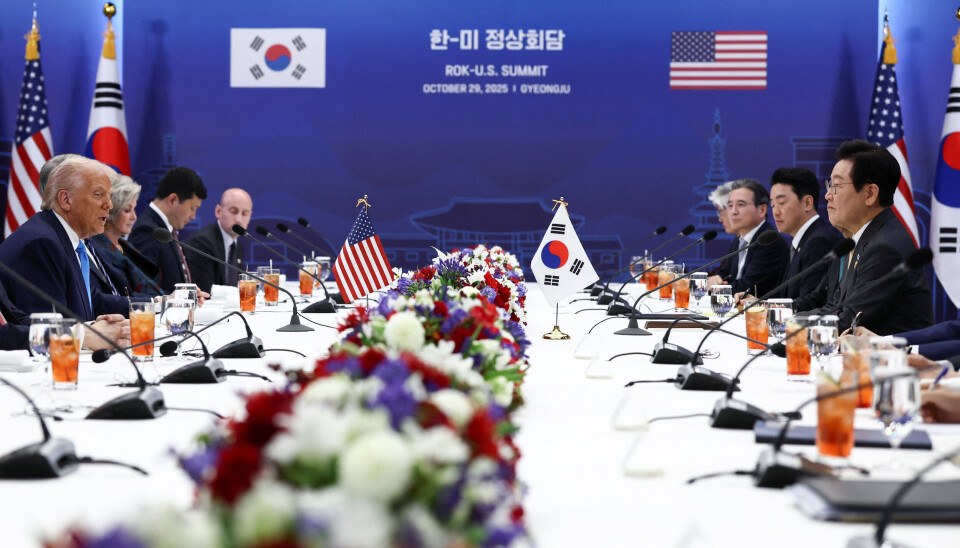
Why is Washington singling out Korea specifically?
Foreign policy watchers tie the pressure to money as much as to security.
Korea’s $200 billion strategic investment pledge to the United States — the centerpiece of last year’s tariff deal — has stalled for roughly ten months. Washington appears to view the delay as deliberate avoidance, using the Hormuz deployment as a test case for an ally it perceives as milking security guarantees while slow-walking economic commitments.
However, the logjam may be breaking.
Industry Minister Kim Jung-kwan returned from Washington on Sunday, confirming that the two nations are “close to an agreement” on the investment structure, which is capped at $20 billion annually. Leading candidate projects reportedly include a combined-cycle gas power plant in Encina, Texas, and a massive project to build eight nuclear reactors in the United States.
Whether finalizing the deal this week will satisfy Washington — or if the Hormuz question will remain a bundled point of leverage — is likely to become clearer within days.
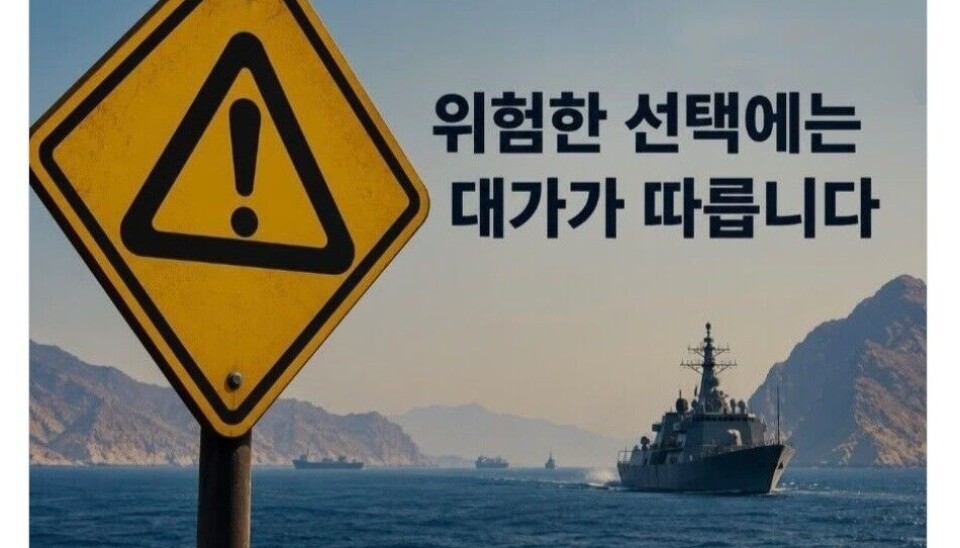
How is Iran responding?
Iran has not taken Seoul’s deliberations lightly.
Iranian Foreign Ministry spokesperson Esmaeil Baghaei posted an unusual warning in Korean on X on Sept. 7, stating that any country joining military operations in the Persian Gulf or Hormuz would face “serious consequences” and be treated as “supporting the aggressor.”
Four days later, Tehran’s Foreign Minister Seyyed Abbas Araghchi requested a call with his Korean counterpart, Cho Hyun. During the call, Cho reaffirmed that Korea has “not decided anything” on deployment and stressed Seoul’s position that free and safe passage for all vessels must be protected.
The fact that Iran asked for the call suggests Tehran wanted Seoul’s position confirmed directly at the ministerial level, moving beyond social media threats.
Park Hyun-do, a professor at the Sogang Euro-Mediterranean and Middle Eastern Institute, said that Iran would almost certainly strike back militarily even against non-combat assets.
“Whether it’s a patrol aircraft or anything else, I think there’s a high chance Iran will hit it militarily,” he told the Korea JoongAng Daily, adding that in the worst case, “they could go after Korean firms operating or anything connected to us” in the region.
Park argued the risk is worse than in 2021, when Iran seized the Korean-flagged tanker Hankuk Chemi, because Korea would be acting alone this time rather than as part of a coalition. He even suggested that Iran has an incentive to make an example of Korea before other countries follow suit.
What assets could Seoul send to the Middle East?
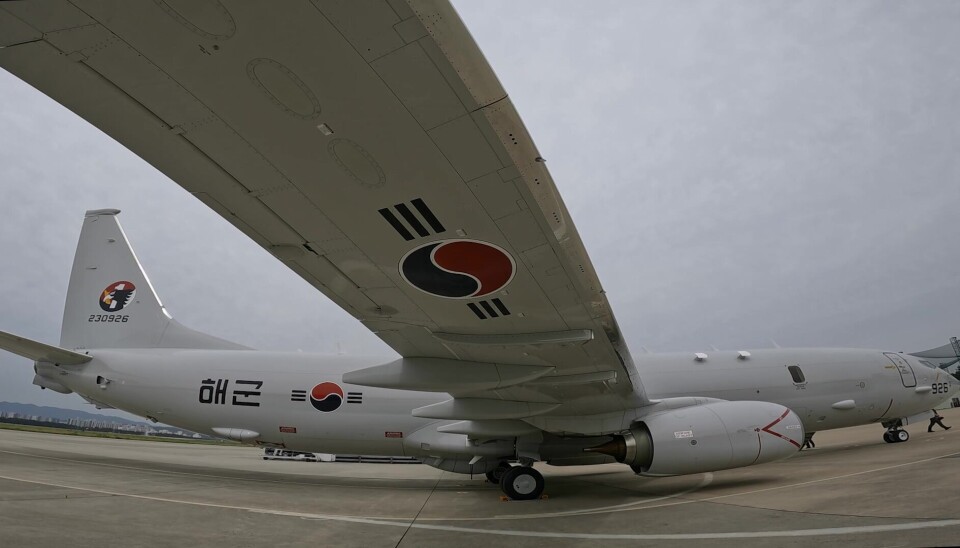
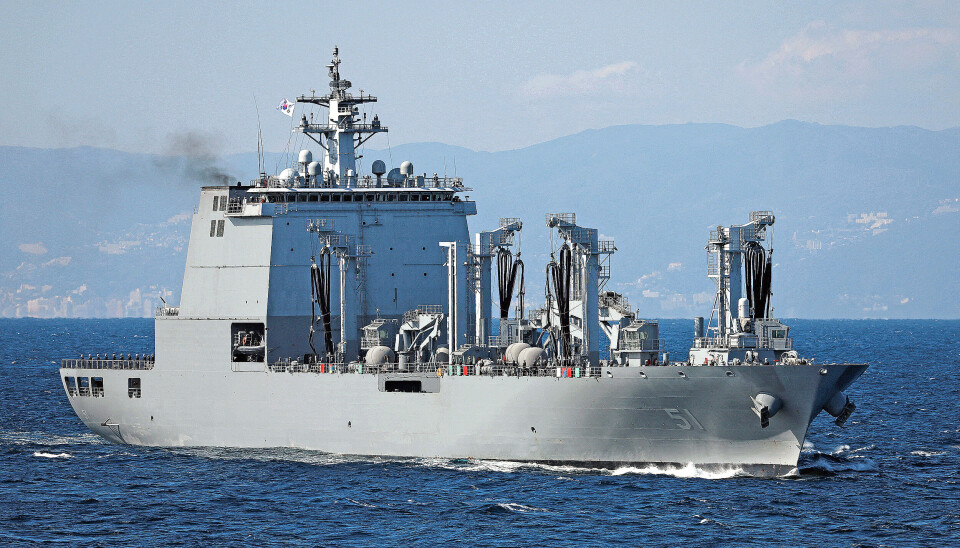
The options under review reportedly include a P-8A maritime patrol aircraft, the 11,000-ton logistics ship Soyang and an explosive ordnance disposal unit.
Officials have deliberately framed these as “non-combat contributions” aimed at “normalizing the Strait of Hormuz” rather than a combat deployment.
However, recent leaks suggest military authorities are concerned about the risks to the roughly 150 personnel required to operate these assets. This sparked internal debates about potentially scaling down the deployment even further to avoid casualties.
Deputy Defense Minister Lee Doo-hee told the National Assembly on Sept. 10 that no decision has been made.
Where does the public opinion stand?
The Lee administration is facing fierce resistance at home.
A Gallup Korea poll conducted over Sept. 8 and 9 and released Sept. 11 found 55 percent opposed to deployment, with only 32 percent in favor.
Opposition within the ruling Democratic Party (DP)’s own base has surged from 55 percent to 69 percent in a matter of days.
DP Rep. Lee Ki-heon publicly opposed even a non-combat deployment, arguing its “essence is clearly participation in a war.” Minor progressive factions, including the Rebuilding Korea Party and the Justice Party, have taken similar stances.
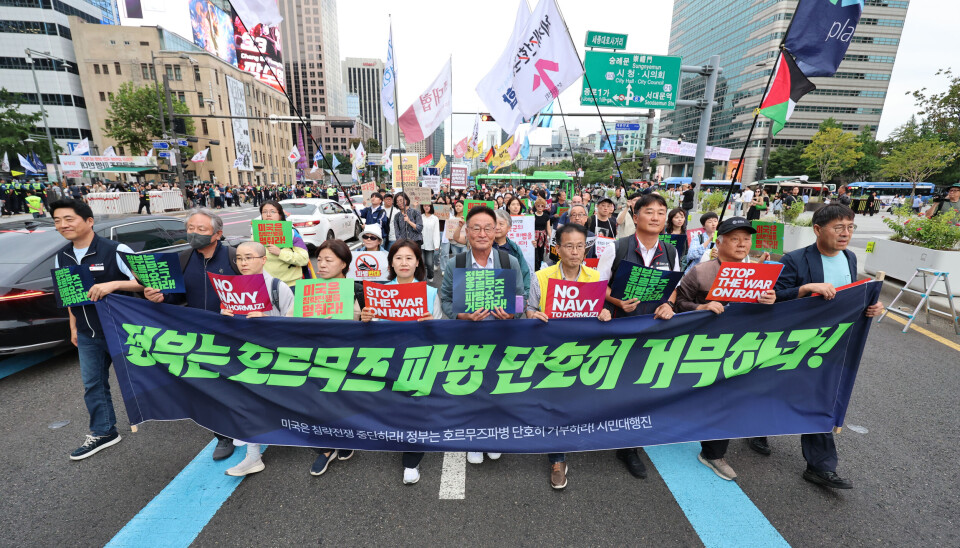
On Sept. 12, a coalition of 540 civic groups held simultaneous rallies in nine cities. In downtown Seoul, protesters marched past the U.S. Embassy to the Blue House, framing any deployment as Korea joining a war it has no part in and asking young conscripts to bear the cost.
Has Korea faced a similar decision before?
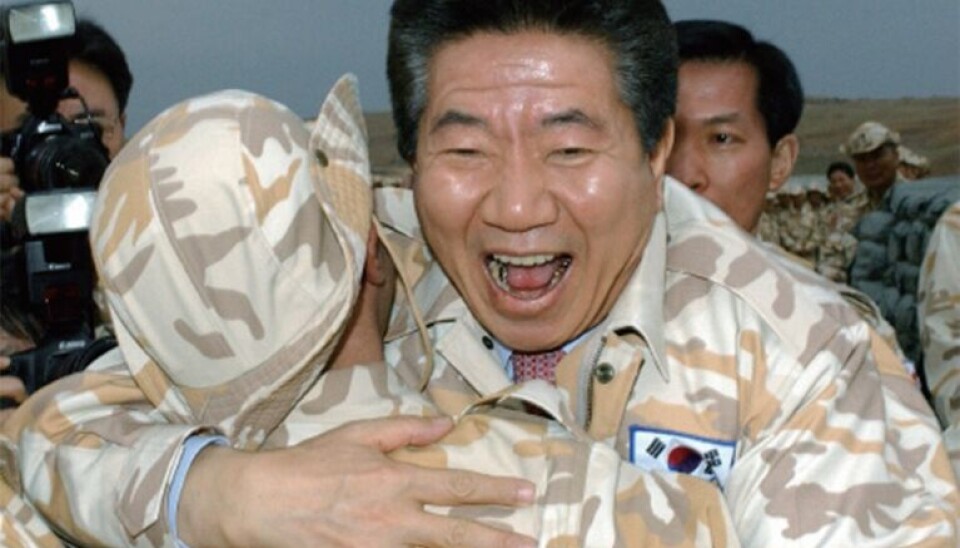
Analysts often compare the dilemma to the Roh Moo-hyun government’s 2004 deployment of the non-combat Zaytun Unit to Iraq.
Facing the same kind of pressure from Washington, massive protests and a presidential approval rating that fell into the 20s, Roh ultimately sent roughly 3,600 non-combat troops instead of the up to 10,000 combat troops the U.S. had originally sought and stationed them in a comparatively low-risk area.
Korea has also taken a lighter-touch approach.
In 2020, rather than standing up a new unit, the government expanded the operating area of its existing Cheonghae Unit — a Korean naval force taking part in multinational anti-piracy patrols off the coast of Somalia — to temporarily cover the Strait of Hormuz, a precedent officials may look to as a lower-profile alternative.
Structurally, however, today’s dilemma is harder to resolve.
The U.S. campaign against Iran lacks the broad international coalition or even Congressional authorization seen in Iraq. Legal scholars argue that supporting a preemptive strike — as the United States and Israel appear to have conducted against Iran — could violate Article 5 of the Constitution, which renounces wars of aggression.
Additionally, unlike Saddam Hussein’s collapsed regime in 2004, Iran remains a defiant power capable of choking off a vital global energy artery.
“This is completely different from the Iraq deployment,” Professor Park said. “We acted as part of a broader coalition. This time we don’t have that.”
His own recommendation was that Korea should avoid sending any forces and, if a financial contribution is unavoidable, “pay our way out of it” rather than put troops at risk.
What happens next?
President Lee has attempted to dilute the bilateral pressure by framing the issue in multilateral terms.
During his state visit to Paris last week, Lee agreed with French President Emmanuel Macron to coordinate closely on restoring freedom of navigation in the Strait, signaling Seoul’s desire to act alongside the broader international community rather than solely as a U.S. proxy.
Washington is reportedly pressing Seoul to settle the matter before the U.S. midterm elections in November — though the Defense Ministry has denied the existence of such a deadline.
The government is scheduled to hold a National Security Council standing committee meeting on Thursday, where it could possibly discuss the Hormuz question.
Additionally, Foreign Minister Cho is coordinating a possible visit to Washington as early as later this week, with a meeting with Secretary of State Marco Rubio expected to cover the Hormuz question alongside other major issues in the alliance, including the strategic investment package.
If the National Security Council approves the move, the ministry must draft a formal deployment bill specifying the region, mission, size and duration. This requires Cabinet review and presidential sign-off before it can reach the National Assembly. Under Article 60(2) of the Constitution, overseas deployments require approval from a legislative majority. While the ruling DP has the numbers on paper, passing the bill would require navigating deep dissent within its own caucus.
Historically, such a process has taken time.
After the National Assembly approved the 2004 Iraq deployment, it took roughly seven months for the main force to reach the field — nearly a year after the initial fact-finding mission. If the pace holds, any real Hormuz deployment would be pushed well past the near-term deadline Washington is said to want.
BY SEO JI-EUN [seo.jieun1@joongang.co.kr]