

Sole survivor stitches dad’s legacy into every shoe
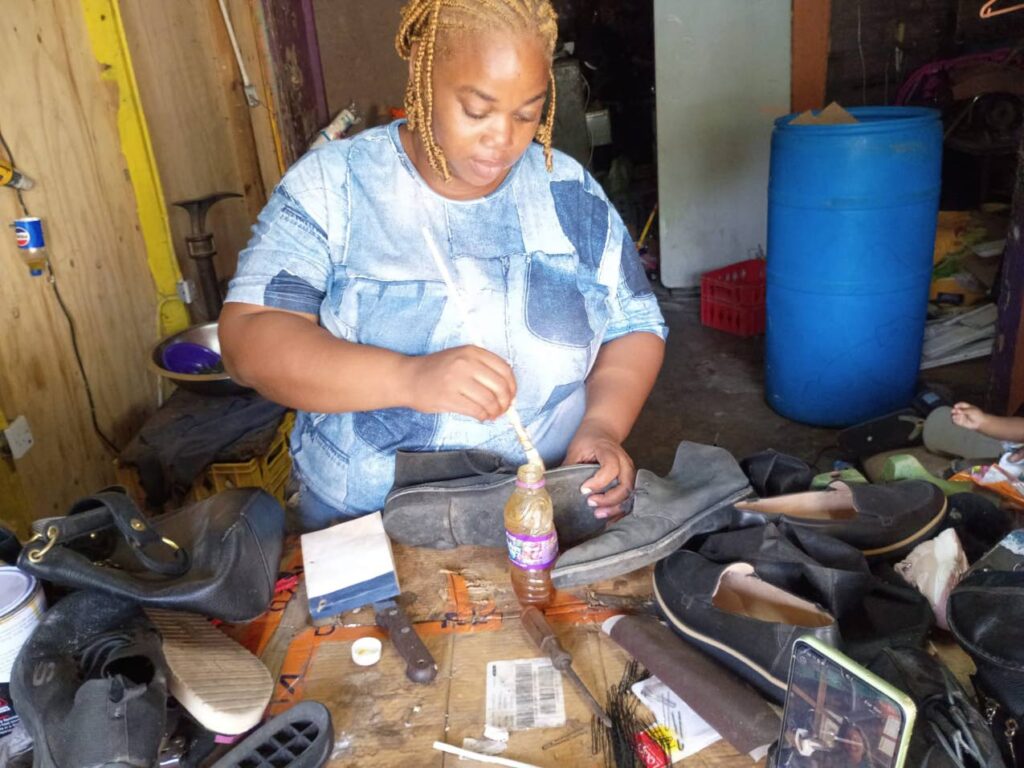
Ria Anderson continuing her father’s legacy of shoemaking and repair at Third World Home of Footwork in Annotto Bay, St Mary. (Photo: Ingrid Henry)
ANNOTTO BAY, St Mary — Step inside Third World Home of Footwork on this town’s main street and you will hear it before you see it: the tap-tap of a hammer on leather, the whirr of a sewing machine, with the faint smell of glue and shoe polish hanging in the air.
Behind the counter is 33-year-old Ria Anderson working on a pair of shoes. Her hands move with the same confidence she saw in her father Lloyd during the more than three decades he manned the store.
When Lloyd opened the doors to Third World Home of Footwork back in 1981, handmade shoes were not a luxury — they were a necessity. He quickly became the one people in Annotto Bay and other areas of the parish called when all hope seemed lost.
“His craftsmanship brought him many customers from across the island and overseas,” Ria recalls, pride in her voice.
“He was known to repair anything that is leather — from handbags to shoes — that owners thought would be unrepairable. During that time the demand for his handmade shoes was [very high],” she told the Jamaica Observer.
Nine years ago her father migrated and went into retirement. Many thought that was the end of Third World Home of Footwear but Ria refused to let the tools of his trade go cold.
“I grew up watching my father repairing and making shoes and sometimes I would do a little sewing on them. With that, I learned the trade that continues to put food on my table,” she told the Observer.
Today she is one of the few young women in Jamaica still practising the skill her father mastered. She takes pleasure in cutting, stitching, resoling and breathing new life into footwear that most would throw away.
Over the years Ria has seen the market evolve and watched as imported brands, often cheaper then her handmade wares, flooded the shelves. She is unbothered, confident the quality of her work will always lure clients to her store.
“They buy these shoes that are made from cheap and poor materials and then they want it fixed when it gets damaged. It comes right back to me and it is done better than before,” said Ria.
A custom-made pair of shoes crafted inside her shop starts at $10,000. Not cheap, but she argues it is an investment.
“These will last you for years, and not months, as the materials used are genuine leather and not a knock off. I am filling a gap with quality, repair, and the kind of personal service you [often] cannot get, [even] in a high-end store,” Ria said.
With only one apprentice she worries that when she retires there will be no one to continue the trade, but for as long as possible she is determined to keep not only her father’s name alive but the craft he loved dearly.
“This shop is his name, the trade that supported his family. This is his legacy,” she said as she ran her hand over a freshly polished shoe.
For Ria as long as people need shoes that last, she will be there.