

La Riojana: A Different Side of Argentine Wine
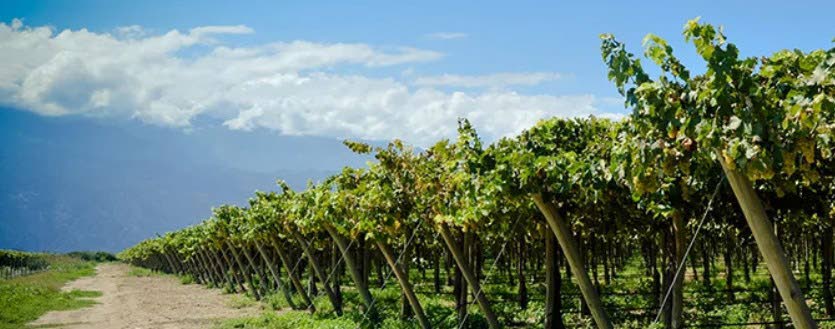
Vineyard landscapes in the Famatina Valley.
For much of the wine world, Argentina begins with Mendoza. Living here has taught me to question that shortcut. Mendoza deserves its international reputation, but the country’s wine map becomes far more interesting once you look north.
In the province of La Rioja, the Famatina Valley offers a very different perspective. La Riojana, Argentina’s largest wine co-operative, has built its operation there around hundreds of growers, Fairtrade production and organic wine. Its 2026 international results provide a useful reason to look again.
Five white wines from the La Riojana stable received medals at this year’s Decanter World Wine Awards: Co-op Fairtrade Torrontés-Chardonnay, 88 points and Bronze; Co-op Fairtrade Pinot Grigio, 90 points and Silver; Tilimuqui Organic Fairtrade Torrontés, 90 points and Silver; Tilimuqui Organic Fairtrade Torrontés-Chardonnay, 88 points and Bronze; and Tilimuqui Organic Fairtrade Chardonnay, 86 points and Bronze.
The significance, for me, lies in what sits behind that spread. Argentina’s 2026 performance at the DWWA was exceptional and, against that scale, recognition across five white wines from one producer in a northern Argentine valley deserves attention. Famatina does not have the instant recognition of the Uco Valley. That is part of what makes the region interesting.
La Riojana sources grapes from approximately 4,125 hectares of vineyards, most of them in the Famatina Valley. The vineyards range from around 900 to 1,400 metres above sea level and experience brilliant sunshine, warm days, cold nights and very low rainfall. The surrounding mountain ranges provide ventilation, while the dry conditions favour organic cultivation.
The landscape helps explain the character La Riojana seeks in its whites. Torrontés Riojano is central to the regional identity, and La Riojana identifies itself as Argentina’s largest producer of Torrontés. The grape can be intensely floral and aromatic, yet good examples retain freshness that makes them particularly useful at the table. For a region better known within Argentina than internationally, that combination gives Famatina a distinctive voice.
The five 2026 medal wines also show how La Riojana connects regional production with different markets. The Co-op Fairtrade Torrontés-Chardonnay and Co-op Fairtrade Pinot Grigio sit within a British retail relationship that gives wines from Famatina a place in an everyday consumer market. UK sales of the Co-op’s Fairtrade Pinot Grigio has helped fund a water pump and reservoir for Tilimuqui, where residents had previously experienced periods of up to four days without regular access to clean water.
That detail changes how I look at a supermarket wine. Price and accessibility are practical considerations, but provenance still matters. A bottle becomes more interesting when its Fairtrade story connects the purchase with a specific community and place. It also demonstrates how wine from a relatively remote Argentine valley can enter an international retail setting while retaining a tangible connection to its origins.
The Tilimuqui wines take the regional story further. Tilimuqui Organic Fairtrade Torrontés received 90 points and Silver, while the Torrontés-Chardonnay blend earned 88 points and Bronze while the Chardonnay received 86 points and Bronze. Together, the results show the range of white wines being produced within the co-operative’s wider portfolio. They also put Torrontés in a position it deserves to occupy more often in conversations about Argentine wine.
Awards, of course, have limits. A medal cannot tell you whether you will love a bottle. It can give you a reason to investigate something you might otherwise walk past. That distinction matters in destination marketing too since the same applies to La Riojana itself. The co-operative traces its roots to 1940, when Italian immigrants with winemaking backgrounds established a small winery and began working collectively. Today, La Riojana has more than 500 producer members, many of them small-scale growers whose families have remained connected to the co-operative across generations.
Fairtrade, an independent certification system indicating that a product meets specific social, economic and environmental conditions surrounding production and trade, became an important part of that model. La Riojana became the first Argentine winery to achieve Fairtrade certification in 2006, and the company has used Fairtrade projects to support local communities, including the water project and school project in Tilimuqui. It was certified as an organic producer in 2000. This gives the wines a context that is easy to miss when they are considered only as entries in an awards table.
There is also a useful lesson here for wine tourism. The luxury wine conversation often gravitates towards famous names, dramatic architecture and bottles commanding serious prices. Those experiences have their place. Discovery has its own value. Finding a region before it becomes familiar, understanding why a grape behaves differently there, meeting the people behind a co-operative, or discovering that a bottle on a British supermarket shelf began among small growers in La Rioja can create a richer travel memory.
For someone arriving from the Caribbean, I find that particularly compelling. Wine country in Argentina can feel geographically distant from island life, yet the human logic is familiar. Agriculture, community, family, food and hospitality remain closely connected. The landscape changes, the grape varieties change and the table changes, but the pleasure of sharing something with a sense of place remains recognisable.
That is why La Riojana’s 2026 results caught my attention. The medals do not suddenly make Famatina the next Mendoza. They do something more useful. They invite us to look at Argentina’s wine story with a wider lens. La Riojana’s results add another dimension to the country’s exceptional 2026 performance, one rooted in a northern valley, a co-operative model, Torrontés, organic and Fairtrade production, and wines reaching consumers in different markets.
For me, that is the real attraction.
A bottle of wine can be a drink, an award result, a retail product or a travel clue. The interesting bottles can be several of these things at once.
In Famatina, the clue is worth following. Salud!
Torrontés is central to La Rioja’s wine identity.
Co-op Fairtrade Torrontes Chardonnay scored a bronze at the 2026 DWWA and silver at IWC 2024. (PHOTO BY LA RIOJANA WINES)
La Riojana Co-op Fairtrade Pinot Grigio is one of two white wines available exclusively in the United Kingdom. (PHOTO BY LA RIOJANA WINES)
Tilimuqui Organic Fairtrade Chardonnay was a bronze medal winner at the 2026 DWWA.
Tilimuqui Fairtrade Organic Torrontés Chardonnay earned bronze at the 2026 DWWA.
At the 2026 DWWA, Tilimuqui Organic Fairtrade Torrontés won a silver medal. (PHOTO BY LA RIOJANA WINES)
La Rioja offers a distinctive perspective on Argentine wine.(PHOTO BY LA RIOJANA WINES)
Wine, landscape and regional identity meet in the Famatina Valley (PHOTO BY LA RIOJANA WINES)
La Riojana brings together growers across the region.