

Snake Island: Inside Brazil’s infamous island overrun with venomous snakes
The extreme heat impacting Arizona is not only dangerous for residents, but is also causing an increase in rattlesnakes across the region. Nature Center Supervisor for the city of Chandler, Arizona, Derek Gerson, joins FOX Weather to discuss what residents can do to avoid being bitten.
SíO PAULO, Brazil — If you’re in need of an island getaway, this is definitely not what you’re looking for.
Off the coast of Brazil lies an island only scientists and soldiers can go to, and even if it was open to the public, any human would be on a death wish to go there.
YOUNG FOOTBALL PLAYER HAS CLOSE CALL WITH VENOMOUS SNAKE HIDING INSIDE HIS HELMET BEFORE PRACTICE
Thousands of highly venomous snakes are concentrated on this isolated island, which has skyrocketed to fame thanks to its chillingly fitting nickname.
Only snakes call Snake Island home permanently, though scientists and Brazilian Navy personnel still make occasional trips to its treacherous shores.
(CARL DE SOUZA/AFP via Getty Images / Getty Images)
Isolated from the mainland for thousands of years, the snakes evolved to thrive on this small island, creating what has become one of the world’s most infamous snake habitats with a trademark species that can’t be found anywhere else in the world.
Located roughly 21 miles off the coast of São Paulo, this small strip of land is occupied by hordes of slithering settlers that have made the island their home.
Officially named Ilha da Queimada Grande, which roughly translates from Portuguese to “Big Burned Island,” it is, for obvious reasons, far better known by its nickname: Snake Island.
HOW THE BIGGEST WAVES IN THE WORLD BREAK OFF THE COAST OF PORTUGAL
While Snake Island is the name that sells, it’s one snake above all that has thrust this horrifying island into the limelight: the golden lancehead viper.
The slithering snakes may rule the island today, but it hasn’t always been that way.
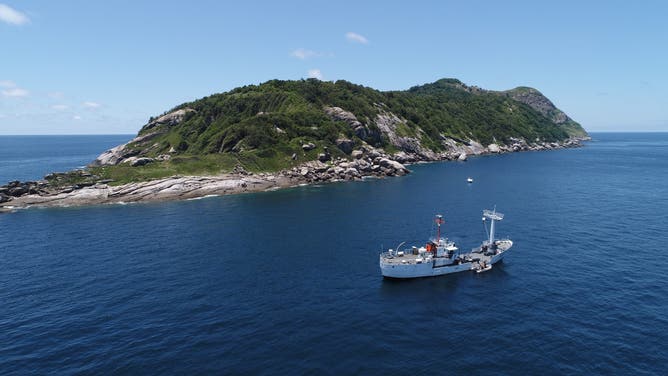
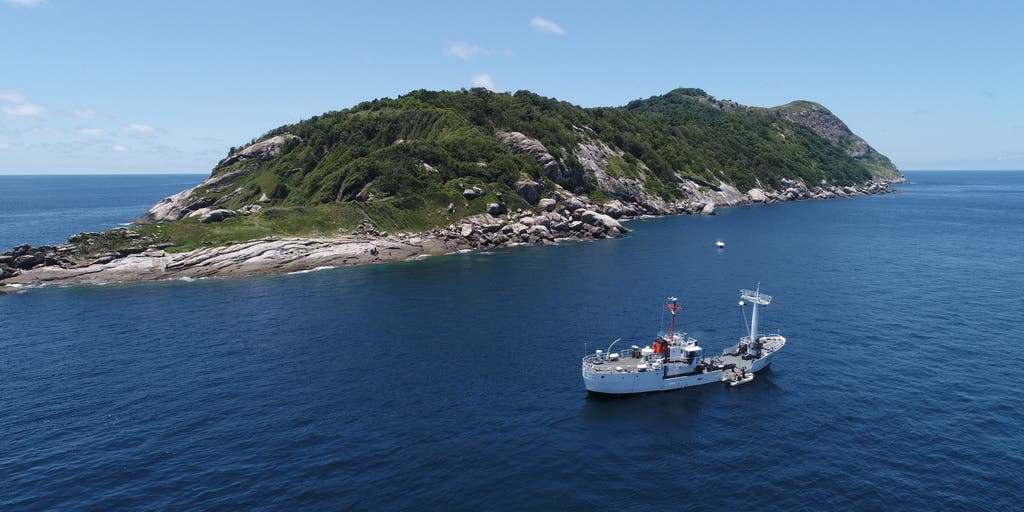
Snake Island, officially known as Ilha da Queimada Grande, is a small island roughly 21 miles off the coast of São Paulo, Brazil, famous for its population of venomous golden lancehead vipers.
(Marinha do Brasil – Navio Balizador Faroleiro Mario Seixas (H26) na Ilha da Queimada Grande, CC BY-SA 2.0, https://commons.wikimedia.org/w/index.php?curid=140442424)
According to researchers at Brazil’s Instituto Butantan, the “burned” island earned its name after humans scorched the island several times in attempts to clear vegetation while making efforts to occupy the area. Even the Brazilian Navy repeatedly burned sections of the island’s vegetation out of fear of its large snake population.
In the early 20th century, lighthouse keepers lived on Snake Island to operate a Brazilian Navy lighthouse. Despite gruesome legends, they weren’t driven off by snakes.
MEET THREEHALVES: THE HAUNTING VIRAL ROBOT DESIGNED FOR EARTH’S MOST DANGEROUS ENVIRONMENTS
When the lighthouse was automated in the 1920s, the keepers were no longer needed and left — leaving Ilha da Queimada Grande without a permanent human population ever since, giving room for snakes to roam and thrive without predators, as they were.
Scientists, however, kept coming. Researchers studying the island documented its unusual wildlife, most famously the golden lancehead, a highly venomous snake found nowhere else on Earth.

The golden lancehead is one of the rarest snakes on Earth, found naturally in just one place: Brazil’s Snake Island. Isolated from mainland relatives thousands of years ago, the species evolved entirely on the island and exists nowhere else in the wild.
(CARL DE SOUZA/AFP via Getty Images / Getty Images)
The golden lancehead viper is the undisputed ruler of Snake Island, with estimates suggesting a few thousand inhabit the tiny island.
RESEARCHERS TURN TO USING DRONES TO REVOLUTIONIZE TRACKING OF HUMPBACK WHALES IN HAWAII
Despite its infamous nickname, Snake Island isn’t home to dozens of snake species. In fact, only two are known to inhabit the island: the golden lancehead, by far its most famous resident, and a snail-eating Dipsas albifrons.

The Brazilian Navy maintains Snake Island’s automated lighthouse, periodically sending personnel ashore to replace batteries, clean solar panels and perform other maintenance. Because of the island’s dense snake population, biologists have accompanied Navy crews to help keep personnel safe during some missions.
(VANDERLEI ALMEIDA/AFP/GettyImages)
Today, the island has no permanent human residents, though Brazilian Navy personnel still make periodic trips ashore to maintain its automated lighthouse, often with biologists in tow.
FIRST-KNOWN FRESHWATER CONTAGIOUS CANCER SPREADING AMONG CATFISH IN VERMONT LAKE
For everyone else, landing on the island is off-limits, so if Brazil is on your travel itinerary, this is one destination best admired from a distance.