

Morocco’s Emerging Soft Power in Africa’s Health Diplomacy
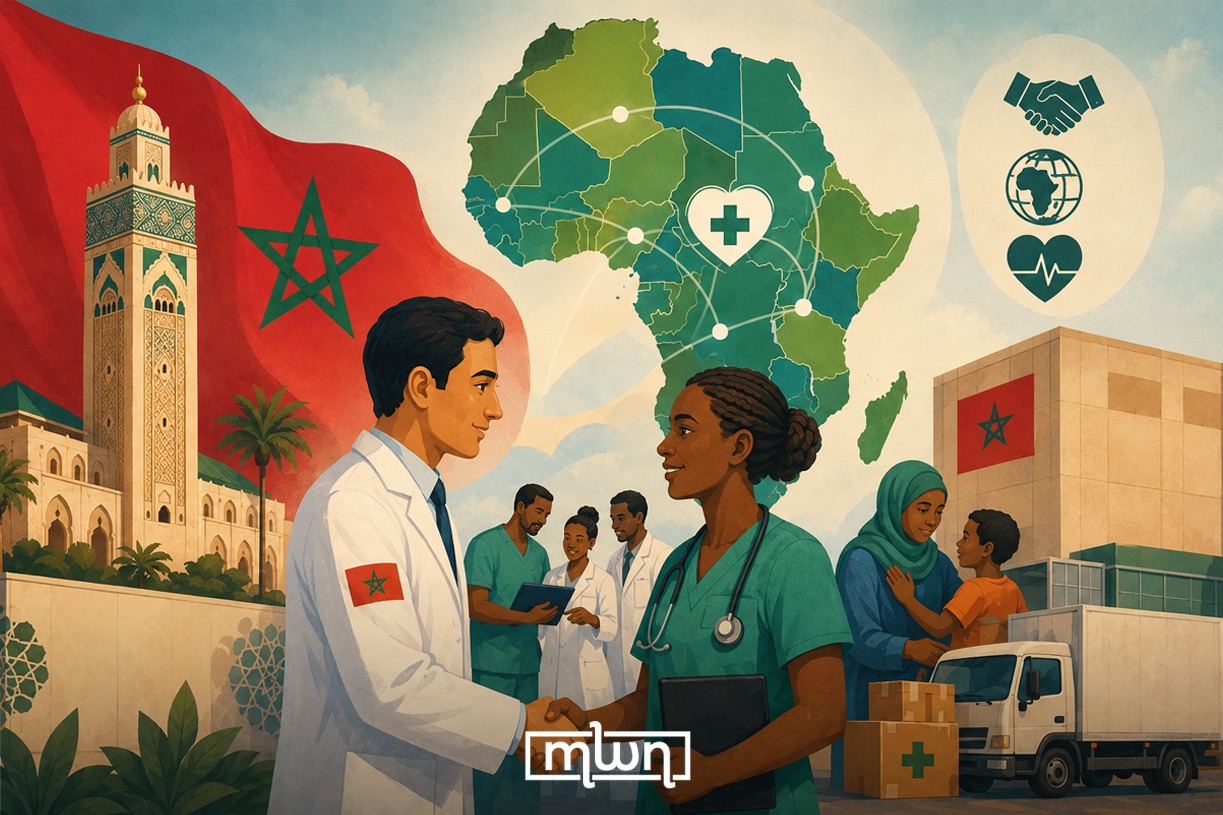
Health has become an increasingly strategic component of international relations. Pandemic preparedness, access to medicines, pharmaceutical supply chains, health data, biotechnology and medical expertise now intersect with questions traditionally associated with sovereignty, economic security and foreign policy. This transformation is particularly consequential in Africa, where health systems remain highly heterogeneous and dependence on imported medical products persists.
Against this background, Morocco is gradually accumulating assets that could support a distinctive form of health diplomacy. Its domestic health reforms, pharmaceutical industry, emerging vaccine capabilities, medical cooperation and growing investment in digital health offer instruments through which health policy may acquire an external strategic dimension. Yet the relevant question is not whether Morocco can proclaim itself an African health leader. The more rigorous question is whether it can convert these capacities into sustained influence, institutional cooperation, and measurable value for African partners.
Health diplomacy is becoming health statecraft
This conceptual shift is important. Health diplomacy should not be reduced to humanitarian assistance or medical missions abroad. Health is increasingly understood as an integral component of diplomacy, foreign policy, regional cooperation, crisis communication, data sharing, and global health governance. Its central premise is that recurrent health risks require African states to incorporate health more systematically into interstate relations and regional institutions. This interpretation is particularly relevant after COVID-19.
The pandemic demonstrated that access to vaccines, diagnostic technologies and medical inputs depends not only on clinical capacity but also on industrial location, purchasing power, regulatory institutions, logistics and diplomatic relationships. Consequently, health capabilities can generate strategic value beyond the health sector itself.
For Morocco, this creates both an opportunity and an analytical constraint. Soft power cannot simply be inferred from the existence of hospitals, pharmaceutical factories or international medical initiatives. Influence emerges when external actors consider cooperation with a country valuable, credible and sufficiently durable to shape future preferences and partnerships. Health diplomacy therefore begins with domestic credibility.
Domestic reform is necessary but not sufficient
Morocco has undertaken one of the most consequential restructurings of its social protection and health architecture in recent years. In March 2025, the World Bank approved a further US$600 million operation supporting human-capital reforms, including the expansion of mandatory health insurance and restructuring of health-service delivery. At that stage, the Bank estimated that approximately 75% of the population was effectively covered, while highlighting remaining difficulties, particularly among non-salaried workers. The supply side has also begun to change.
World Bank-supported programs contributed to the rehabilitation of 200 primary healthcare facilities between January 2024 and December 2025 and facilitated the training of an additional 10,500 nurses and health technicians. A community-based program had also delivered at least one health or nutrition service to more than 511,000 new beneficiaries in targeted rural areas by June 2025. These developments matter because diplomatic credibility cannot be detached indefinitely from domestic performance.
Yet insurance coverage and healthcare delivery should not be treated as interchangeable indicators. Expanding entitlement to insurance does not automatically guarantee sufficient medical personnel, geographic accessibility, quality of treatment or financial protection. The latest comparable health-expenditure data similarly counsel against excessive triumphalism.
Morocco devoted 6.06% of GDP to current health expenditure in 2023, according to WHO data disseminated through the World Bank. Meanwhile, the 2026 Numbeo Health Care Index places Morocco at 46.8, behind South Africa at 64.0, Kenya at 62.2, Ghana at 57.0, Tunisia at 56.6 and Algeria at 54.5 among the African countries included.
The latter indicator requires methodological caution. Numbeo is based on user perceptions concerning healthcare professionals, equipment, responsiveness, costs and related dimensions; it is not an epidemiological ranking or an official measure of national health-system performance. Nevertheless, precisely because soft power involves perceptions as well as capabilities, such results should not be dismissed entirely.
They suggest that Morocco’s international health ambitions must remain accompanied by visible improvements in the experience of healthcare at home. This leads to an important strategic conclusion: the strongest foundation for Moroccan health diplomacy is not communication about reform, but demonstrable reform outcomes.
Pharmaceutical sovereignty as geoeconomic leverage
Morocco’s potentially more distinctive advantage lies at the intersection of health policy and industrial strategy.
The Ministry of Industry and Trade describes a pharmaceutical sector with decades of manufacturing experience and reports production capacity of approximately 350 million units per eight-hour shift, involving domestic manufacturers, multinational subsidiaries and generic-drug producers. The industrial ecosystem encompasses activities extending from clinical trials and manufacturing to biosimilars, medical devices and export production.
This industrial base has acquired new strategic significance because Africa is attempting to reduce its dependence on external medical supply chains. The African Union and Africa CDC have established an objective of meeting 60% of African vaccine demand through local production by 2040, thereby linking health security directly to industrial policy and continental sovereignty.
Morocco has sought to position itself within this transition. The Benslimane vaccine project was designed around three industrial lines, with an announced combined target capacity of 116 million units and a broader ambition to develop a biopharmaceutical platform serving both Moroccan and African markets. In 2025, the WHO Regional Director for the Eastern Mediterranean also publicly highlighted Morocco’s move towards local vaccine manufacturing through a public-private partnership.
However, announced capacity is not equivalent to realized output. Production volume, WHO prequalification, regulatory maturity, competitive pricing, technology ownership, and sustained access to African procurement markets ultimately determine whether an industrial project becomes a diplomatic asset.
The strategic objective should therefore extend beyond producing vaccines in Morocco. The country would derive considerably greater diplomatic leverage if its pharmaceutical capacity became integrated into Africa’s emerging mechanisms for regulatory harmonisation, pooled purchasing and intra-African supply.
This point is increasingly important. Continental initiatives are moving towards demand aggregation because fragmented national markets can undermine the commercial viability of African manufacturing. The United Nations Economic Commission for Africa has already developed frameworks linking pooled pharmaceutical procurement to local production and the African Continental Free Trade Area.
In other words, the future value of Moroccan pharmaceutical capacity will depend as much on African institutional integration as on factory capacity.
From assistance to reciprocal networks
Morocco already possesses another instrument that is less industrial but potentially equally influential: medical cooperation.
The November 2025 cochlear-implant initiative in Kenya provides an illustrative case. Over four days, 70 Kenyan children received cochlear implants, while eight Moroccan surgeons worked alongside Kenyan colleagues. More significantly from a diplomatic perspective, the mission explicitly incorporated skills transfer and culminated in a memorandum of understanding between Morocco’s Lalla Asmaa Foundation and its Kenyan partner.
Such initiatives reveal an important distinction between humanitarian assistance and strategic health cooperation.
A donation produces an immediate benefit. A professional network can produce repeated interaction.
This distinction is consequential. In a one-shot relationship, the incentives of each participant are essentially transactional. When cooperation is sustained over time, the structure of incentives changes: training, research collaboration, professional mobility and institutional partnerships generate accumulated benefits and raise the cost of disengagement.
Morocco’s comparative advantage may therefore lie less in competing with larger African health economies on absolute expenditure or infrastructure than in becoming a network builder between health institutions.
This would entail moving systematically from isolated interventions towards university-to-university partnerships, hospital twinning, specialist training, joint clinical research, epidemiological cooperation, and professional exchanges. The diplomatic asset is not the medical act alone; it is the institutional relationship created around it.
Digital health: a new field of diplomatic competition
Digital transformation offers further opportunity to enlarge the scope of health diplomacy beyond medicines and conventional healthcare infrastructure.
The first GITEX Future Health Africa Morocco, held in Casablanca in May 2026, produced agreements covering a national digital-health laboratory, the modernisation of emergency medical assistance, clinical evaluation of artificial intelligence for prenatal ultrasound, telemedicine and expanded clinical research cooperation. The event was explicitly framed around digitalizing healthcare in Africa and bringing together policymakers, investors, manufacturers and technology companies.
The strategic significance of these initiatives will depend on whether they evolve beyond domestic technological modernization.
Africa’s future health architecture will increasingly require interoperable information systems, telemedicine, epidemiological surveillance, data-governance frameworks, AI evaluation capacity and secure cross-border data exchange. The African health-diplomacy literature already treats health-data sharing and digital transformation as components of public-health resilience and foreign policy.
Morocco could consequently develop a second layer of health diplomacy alongside pharmaceutical manufacturing: digital-health diplomacy.
Rather than exporting proprietary technological solutions, however, the stronger approach would be to participate in co-developed African platforms, common regulatory standards, shared clinical research and capacity building. Technological dependence merely reproduces old vulnerabilities in digital form; genuine health diplomacy should increase partners capabilities rather than substitute for them.
What would make Moroccan health diplomacy credible?
Three conditions appear decisive.
First, domestic performance must remain the primary source of legitimacy. The expansion of health insurance needs to be matched by tangible improvements in access to care, reduced geographic and financial barriers, stronger human resources, and more balanced regional coverage. Without these concrete outcomes, any external projection of health influence would remain structurally fragile.
Second, Morocco should integrate its industrial capacities more strategically into African institutional and market frameworks. The value of pharmaceutical and vaccine diplomacy increases significantly when Moroccan actors are embedded in continental procurement systems, regulatory convergence processes, and regional supply chains, rather than relying mainly on fragmented bilateral engagements.
Third, cooperation should be grounded in reciprocity rather than hierarchy. Rather than promoting a standardized Moroccan model, engagement should acknowledge the diversity of African health systems in terms of epidemiology, financing structures, institutional maturity, and technological readiness. Morocco’s comparative advantage would be dictated by its success in positioning itself as a connector within a broader ecosystem of complementary African capabilities.
This is ultimately where health diplomacy converges with soft power. Influence is not the result of self-assertion, but of relevance within interdependent networks. A state becomes influential when its contribution is valued to the point that its absence would weaken the system as a whole.
An emerging power, not an accomplished one
Morocco is not yet in a position to claim undisputed African leadership in health, nor would such a claim strengthen its diplomatic credibility. The available indicators reveal a more complex reality: substantial institutional reform and growing industrial capacity coexist with persistent domestic constraints and stronger performance in several comparator countries.
Yet this ambiguity is precisely what makes the Moroccan case strategically interesting. The country possesses an unusual combination of assets: proximity to Europe, deepening African diplomatic engagement, established pharmaceutical manufacturing, emerging biotechnology capacity, medical training and expertise, increasingly ambitious digital-health initiatives, and an ongoing restructuring of domestic social protection.
Individually, none constitutes capital to count as notable health soft power. Yet they could, if combined through a coherent foreign-policy framework.
In a sense, though, Morocco’s strategic opportunity is not to become Africa’s self-designated health leader. It is to become increasingly indispensable to selected functions of the continent’s health architecture. These would include manufacturing certain products, transferring expertise, connecting institutions, training professionals, developing technologies and participating in collective preparedness.
Because while prestige can be proclaimed, influence has to be produced. For Moroccan health diplomacy, the next phase should therefore be judged not by the number of initiatives announced abroad, but by the depth, reciprocity, and durability of the health networks that Morocco helps Africa to build.
Credit: Source link