

Senegal – Mauritania, Morocco: clarifications following the misunderstanding between the Mauritanian ambassador and a former Senegalese diplomat
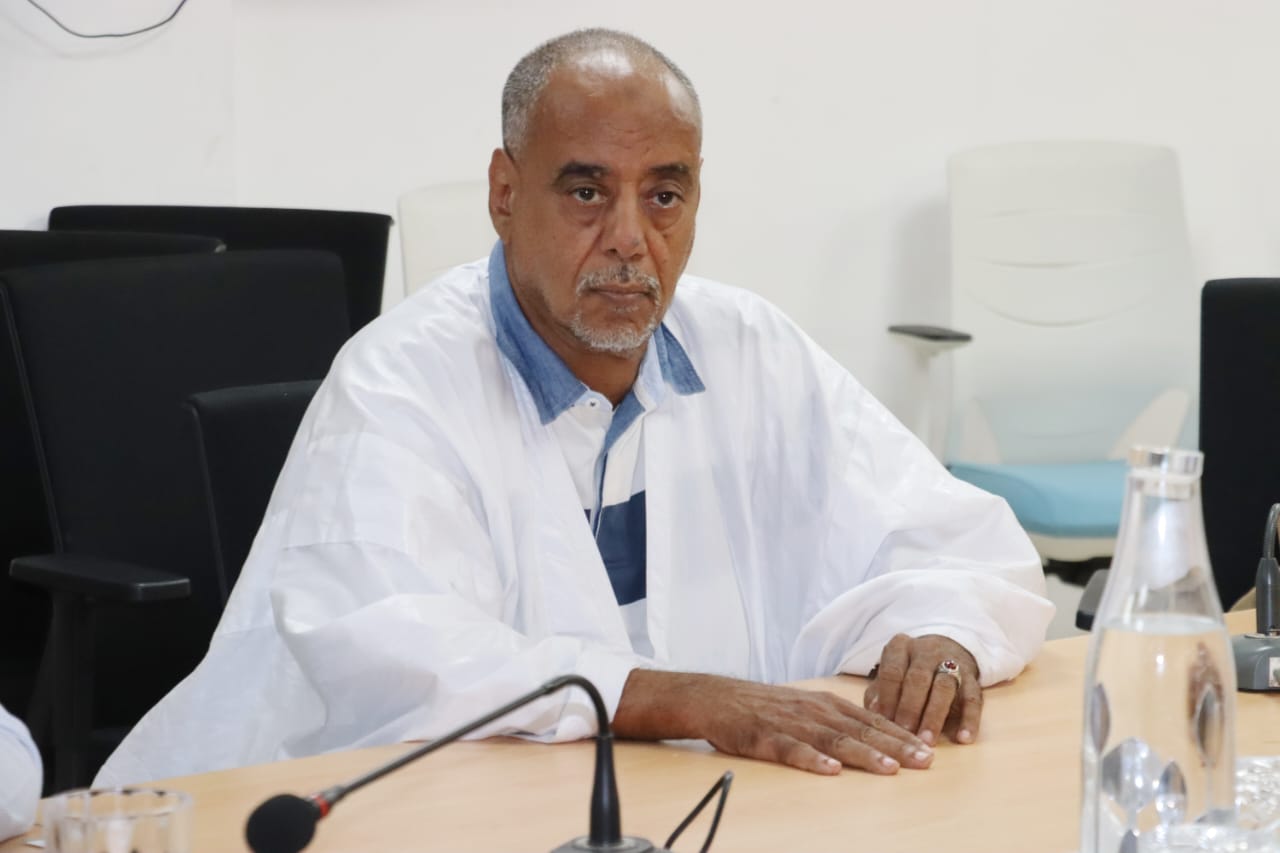
By Mohamed Souleymane, former Secretary General of the Association of Mayors of Northern Mauritania.
The incident that occurred in Dakar during the presentation of the book “Moroccan Sahara: Geopolitical Stakes of a Major Issue for Morocco” was not just a controversy between diplomats. It revealed a difficulty: that of distinguishing the memory of civilizations from the sovereignty of states.
Cheikh Tidiane Gadio is an experienced diplomat, a talented speaker, and a man with longstanding ties to Mauritania. His esteem for the maraboutic family of Ahmed ben Mohamed Al-Aqil, his role in Mauritanian mediations, and his knowledge of regional balances are beyond dispute. However, in Dakar, the political emotion of the advocate for the historical alliance between Senegal and Morocco momentarily overshadowed the rigor of the diplomat.
By stating that, in the “Senegalese imaginary,” Morocco was “a few kilometers from Senegal,” and then invoking the Tekrour and the Almoravids, Gadio was not defending a territorial continuity between the two states. He was referring to a trans-Saharan civilization space, shaped by caravans, scholarly networks, brotherhoods, and the spread of Islam. But this image requires an essential clarification. The kingdom of Tekrour was an autonomous political power in the Senegal River valley. As for the Almoravid movement, it only appears in the 11th century around Abdallah Ibn Yassine, with the Sanhajian tribes – Lemtouna, Guddala, and Massoufa – whose cradle was in the Saharan-Mauritanian space before the construction of Marrakech. The relations between Tekrour and the Almoravids were based on a religious and commercial community, not on a unity of sovereignty. The Almoravid empire was a Saharan-Maghrebian empire, not an extension of the contemporary Moroccan state.
It is precisely this nuance that the Mauritanian ambassador wanted to emphasize. His response was a reminder of the requirements of diplomacy. By mentioning the resistance of the Mauritanians against French colonial expansion to the vicinity of Saint-Louis in the 19th century, and then recalling the current strategic role of Mauritania in the stability of the Sahel, he reintroduced a fundamental principle of international law: contemporary states do not base their borders or foreign policy on medieval imperial legacies, but on their sovereignty and official positions.
This observation also applies to the participation of the Mauritanian ambassador in this ceremony. Nothing, in terms of protocol, prevented him from honoring the invitation of a friendly ambassador. However, the very title of the book – Moroccan Sahara – bore a qualification that did not coincide with the official position of neutrality observed by Mauritania on this issue. In such a situation, diplomatic practice allows for a courteously motivated absence, precisely to avoid any interpretation of a presence as an implicit shift in the state’s position represented.
The final intervention of the Moroccan ambassador, Hassan Naciri, helped to put the debate back into its true dimension. By reminding that the links between Morocco, Mauritania, and Senegal are primarily links of civilization, religion, and neighborliness, while calling for dialogue and African integration, he reaffirmed that history enlightens nations, but only diplomacy allows states to continue living together.
Ultimately, no one was entirely wrong. Gadio was speaking of the geography of memory; the Mauritanian ambassador was recalling the geography of law. However, between the memory of empires and the sovereignty of modern states, there is a boundary that only seasoned diplomats know never to cross……..
Credit: Source link