

Save Nigeria’s riverine poor – Daily Trust
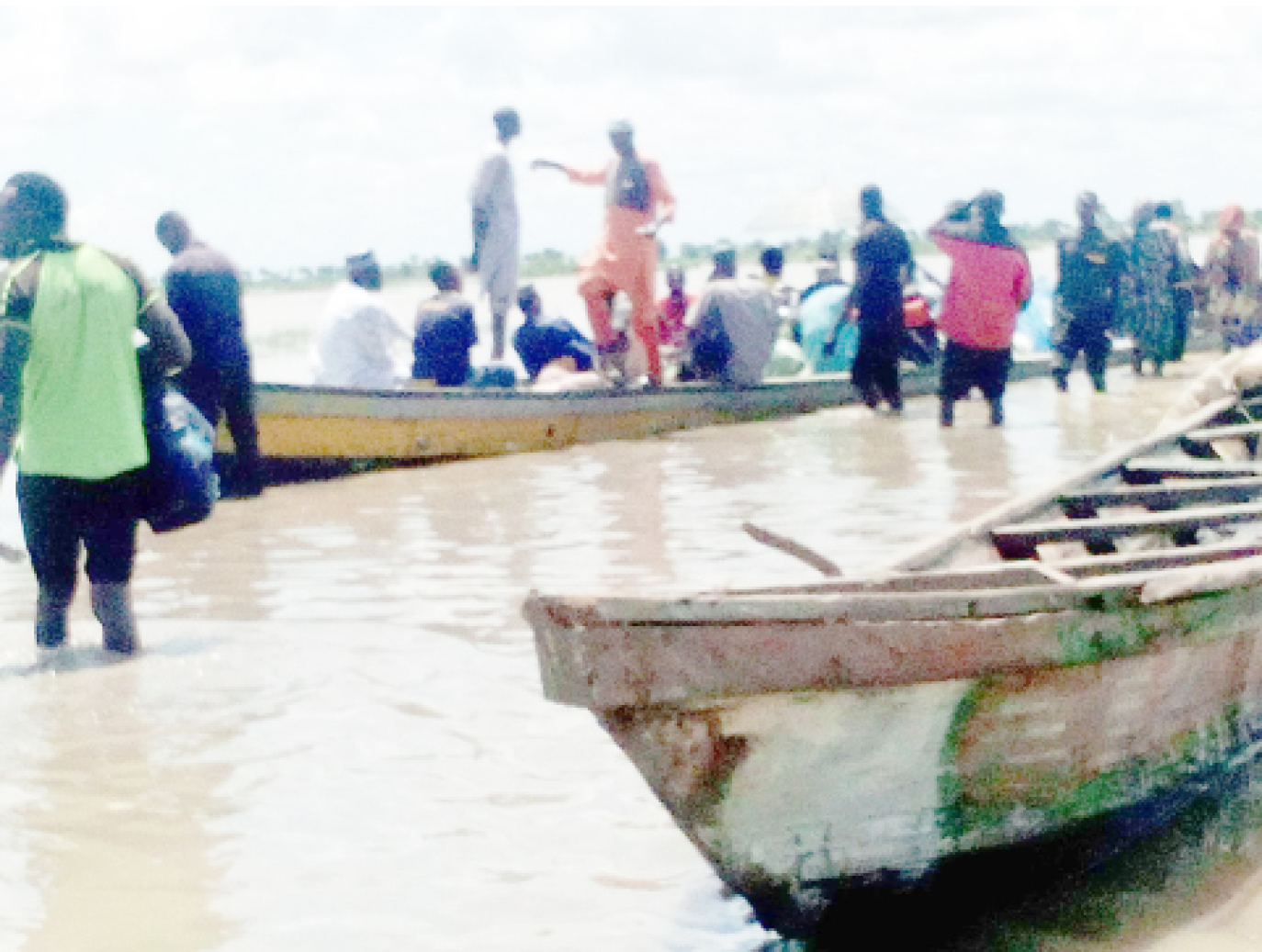
There are tragedies that come without warning, and there are tragedies that recur so frequently that calling them accidents begins to sound like an excuse. Nigeria’s repeated boat disasters increasingly belong to the latter category, as poor citizens across the country continue to die while carrying out ordinary activities of life. They are travelling to farms, markets and schools or returning home, yet for many crossing water is not a choice but an unavoidable part of survival.
In such communities, the river is the road, while the canoe serves as the bus, taxi and, in some places, even the ambulance. Yet millions who depend on inland waterways still travel in overcrowded wooden boats, often without life jackets or emergency support. Thomas Hobbes famously described life in the state of nature as “solitary, poor, nasty, brutish, and short.” For some of Nigeria’s poorest riverine communities, that bleak comparison is becoming uncomfortably familiar.
Daily Trust, in its Friday, August 21, 2026 edition, published on page 6 a timeline of major boat accidents in Sokoto under the caption, “Timelines of Major Boat Accidents in Sokoto.” That report should not be read merely as a catalogue of unfortunate events but as evidence of a system that has repeatedly witnessed danger, recorded deaths, expressed condolences and moved on until the next disaster. When the same tragedy occurs repeatedly, it ceases to be an isolated accident and becomes a governance problem.
Many of these deaths are preventable. A life jacket is not sophisticated technology, and a properly designed commercial boat is not beyond the reach of government. Passenger limits, routine inspections, trained operators and basic rescue facilities are equally achievable. A simple life vest could make the difference between an accident and a mass funeral.
The Federal Ministry of Marine and Blue Economy and the National Inland Waterways Authority have made efforts to improve safety through life-jacket distribution and campaigns against overloading. Such initiatives are important, but the true measure of success is whether they reach the remote communities where they are needed most. The test is whether a farmer, trader, schoolchild or fisherman in a riverine settlement can travel without unnecessary exposure to death.
State and local governments carry responsibility. Riverine states should map dangerous crossing points, register and inspect passenger boats, train operators, enforce passenger limits and ensure that every commercial boat carries enough life jackets for all on board. Where state and local governments are unable or unwilling to safeguard the lives of the poorest of the poor, the federal government should not stand aside. The Federal Ministry of Marine and Blue Economy and its agencies should intervene by supplying certified life jackets, supporting safer jetties and facilitating modern commercial boats for vulnerable communities.
Regional development commissions have an important role. Agencies serving the North-East, North-West, North-Central and Niger Delta should regard safe water transportation as part of their development responsibilities and provide modern boats and life jackets where the need is obvious. Such assistance need not be entirely free; boats could be provided through affordable loans, cooperatives or lease-to-own programmes that allow operators to repay gradually while providing safe transport. Government should support Nigerian marine engineers and boat builders to manufacture standardised vessels suited to local waterways.
Emergency response and accountability deserve equal attention. Strategic crossings should have trained community rescue teams, flotation devices, communication equipment and rescue boats, while experienced local fishermen can be incorporated into emergency-response structures. Operators who overload vessels should face sanctions, unsafe boats should not be allowed to operate, and officials who ignore violations should be held responsible. Safety regulations have little meaning if breaches carry no consequences.
Nigeria’s problem with preventable death is not confined to the waterways, because the same pattern is visible on the highways. The recent Lagos–Ibadan Expressway crash is another reminder that citizens continue to lose their lives in circumstances that stronger regulation and enforcement could help prevent. Speeding remains a danger on Nigerian roads, and stricter enforcement through speed cameras, average-speed monitoring and tighter speed-governor enforcement could reduce fatalities. A speed-limit sign that nobody obeys and nobody enforces is little more than roadside decoration.
Whether a Nigerian dies because an overloaded boat capsizes or because a speeding vehicle loses control on an expressway, the essential question remains the same: could that death have been prevented? If the answer is yes, government has a responsibility to act before another family is thrown into mourning. Nigeria cannot continue with a cycle in which lives are lost, officials visit grieving families, condolences are issued and public attention disappears until another tragedy occurs.
The National Assembly and state houses of assembly should devote more attention to waterway and highway safety, while legislators representing affected communities should ask questions about safety budgets, enforcement, boat standards, rescue capacity, accident investigations and speed regulation. Poor rural Nigerians are entitled to the same value placed on the lives of citizens who travel through airports or live in cities.
Development should not be measured only by flyovers, airports, government buildings and city centres; it should be measured by whether a farmer can cross a river safely, whether a schoolchild can reach class without risking drowning and whether a family can travel on a federal highway without unnecessary exposure to reckless speed. Nigeria already possesses much of what is required to reduce these deaths; what has too often been missing is sustained enforcement and political attention.
Our riverine communities should not resemble Hobbes’s state of nature, where life is “nasty, brutish, and short,” and neither should our highways become corridors where weak regulation and reckless driving cut short the lives of citizens. A life jacket, a safer passenger boat or a speed camera may appear insignificant beside prestige infrastructure, but to the life each saves, it is priceless. The most meaningful tribute government can pay to victims is not another condolence message, but a determined effort to ensure that fewer Nigerian families ever have cause to receive one.
Adam, Ph.D wrote from Maiduguri
UPDATE NEWS:
Nigerians can now invest ₦2.5 million on premium domains and profit about ₦17-₦25 million. All earnings paid in US Dollars. Rather than wonder,
click here to find out how it works.
Credit: Source link