

Russia’s Online Sellers Seek New Workarounds as Moscow Tightens Import Controls
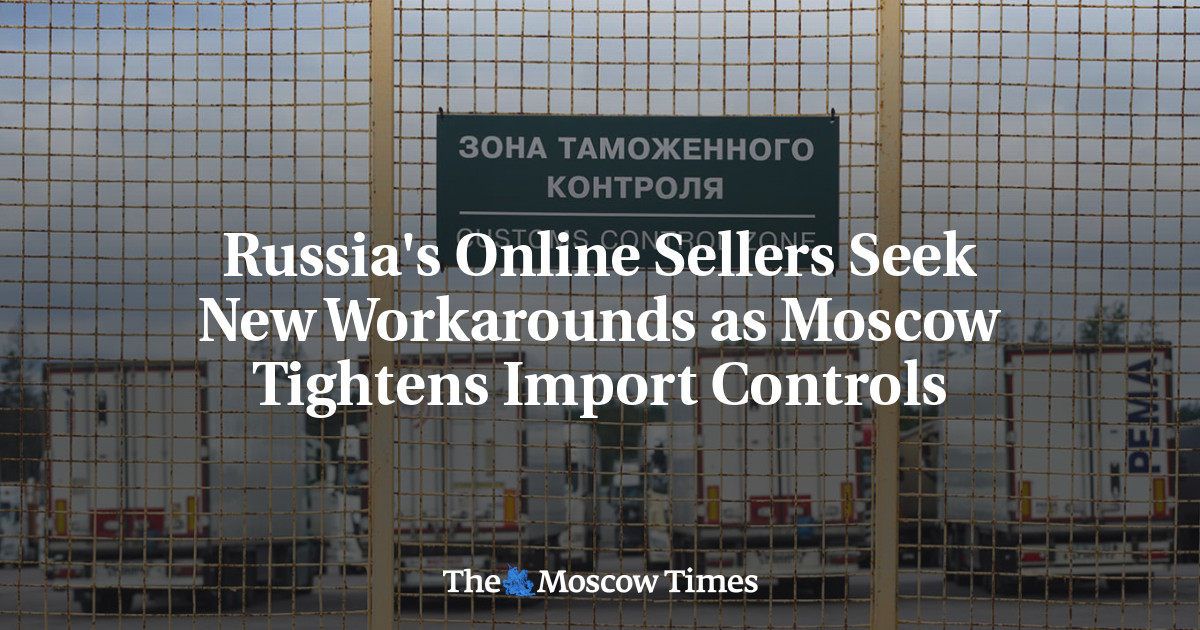
Russia’s online merchants are preparing new ways to circumvent tighter product certification rules that the government says are aimed at curbing grey imports and boosting budget revenues, even as sellers warn the measures will drive up prices.
Beginning Sept. 1, online marketplaces and e-commerce stores must include links in product listings to official Russian or Eurasian certification registries showing whether goods comply with mandatory safety requirements, according to amendments to Russia’s consumer protection law.
The new rules are part of a broader government effort to tighten oversight of imports as Moscow seeks to curb tax evasion and customs violations and shore up state finances strained by the war in Ukraine.
The push comes as Russia looks for additional revenue to help plug a federal budget deficit that reached 5.7 trillion rubles ($73.53 billion) in the first half of the year.
“It’s all about economics. We’re not habitual lawbreakers. We simply understand that if we followed every rule, we wouldn’t be able to import and sell inexpensive goods here,” one importer said on condition of anonymity.
The Sept. 1 changes require sellers to provide links in online product descriptions to official Russian or Eurasian registries listing certificate or declaration numbers, their validity period and the issuing organization, Oraz Durdyev, president of the Association of Digital Platforms, told the state news agency RIA Novosti.
The requirement applies to a broad range of products requiring mandatory certification or declarations of conformity, including children’s goods, some clothing, tableware, medical devices, electronics and cosmetics.
If a product does not require certification, sellers must disclose that to buyers, Durdyev said. The rules do not apply to goods resold by private individuals or to purchases made in brick-and-mortar stores.
The measures precede the full implementation of Russia’s new platform economy law on Oct. 1, when marketplaces themselves will begin verifying the authenticity of certification documents attached to product listings, Durdyev said.
Russian authorities have stepped up efforts to combat grey imports and smuggling, arguing that goods entering the country without customs duties, taxes and other fees deprive the budget of billions of rubles. President Vladimir Putin has publicly criticized those losses.
Marketplace consultants and sellers say the new rules are unlikely to eliminate longstanding workarounds.
“It’s nothing new for sellers,” one consultant specializing in marketplace imports said, noting that Russia’s largest platforms have long required sellers to submit certificates and declarations.
According to the consultant, most buyers rarely verify whether a certificate actually belongs to the seller using it. That has enabled a common practice of attaching another company’s certification documents to a product listing.
In 2025, DNS co-owner Dmitry Alekseyev said he found an iPhone listed on a marketplace at a price 10-15% below those offered by major electronics retailers using DNS’s own certification documents without the company’s authorization.
Three sellers on Wildberries and Ozon confirmed that the practice had been widespread, though they said it has become increasingly difficult because marketplaces have started checking whether certificates actually belong to the seller.
Other tactics, such as submitting forged certificates or digitally altered documents, are now used only by the most desperate sellers because official registries make such documents easy to verify, one merchant said.
Beginning Oct. 1, marketplaces will block not only individual product listings but entire seller accounts for fraudulent documentation, another seller said.
Instead, sellers are shifting to other strategies, industry participants said.
Some are trying to classify products under categories that do not require certification. For example, children’s clothing may be listed as carnival costumes or photography props, one marketplace consultant said.
Others attempt to sell goods through sections intended for private resales, a method the consultant said has even been used by some Chinese sellers.
Another approach is to change a product’s customs classification before it enters Russia. For example, plastic food storage trays that would normally require a declaration of conformity if classified as food packaging can instead be declared under a broader plastics category that does not require certification, the consultant said.
Some importers also ask foreign manufacturers, particularly in China, to issue so-called exemption letters stating that products are not subject to Russian certification requirements.
Industry participants expect many of the small merchants that dominate Russia’s online marketplaces to continue searching for ways around the new compliance system.
Sellers say the workarounds do not necessarily reflect a willingness to sell unsafe products.
One merchant said obtaining certification is often impossible because many small Chinese manufacturers do not obtain Russian certificates or export permits.
Another said small importers also struggle to certify products made by well-known international brands that have stopped officially operating in Russia.
Certification itself also adds costs and delays.
“Following all the rules will inevitably lead to higher prices again. First, marketplaces will pass their higher compliance costs on through increased commissions. Second, if sellers can offer only fully certified products, prices will rise,” one marketplace consultant said.
Read this article in Russian at The Moscow Times’ Russian service.
A Message from The Moscow Times:
Dear readers,
We are facing unprecedented challenges. Russia’s Prosecutor General’s Office has designated The Moscow Times as an “undesirable” organization, criminalizing our work and putting our staff at risk of prosecution. This follows our earlier unjust labeling as a “foreign agent.”
These actions are direct attempts to silence independent journalism in Russia. The authorities claim our work “discredits the decisions of the Russian leadership.” We see things differently: we strive to provide accurate, unbiased reporting on Russia.
We, the journalists of The Moscow Times, refuse to be silenced. But to continue our work, we need your help.
Your support, no matter how small, makes a world of difference. If you can, please support us monthly starting from just $2. It’s quick to set up, and every contribution makes a significant impact.
By supporting The Moscow Times, you’re defending open, independent journalism in the face of repression. Thank you for standing with us.
Continue
Not ready to support today?
Remind me later.
×
Remind me next month
Thank you! Your reminder is set.