

Russia’s Attacks on Ukraine increase exponentially
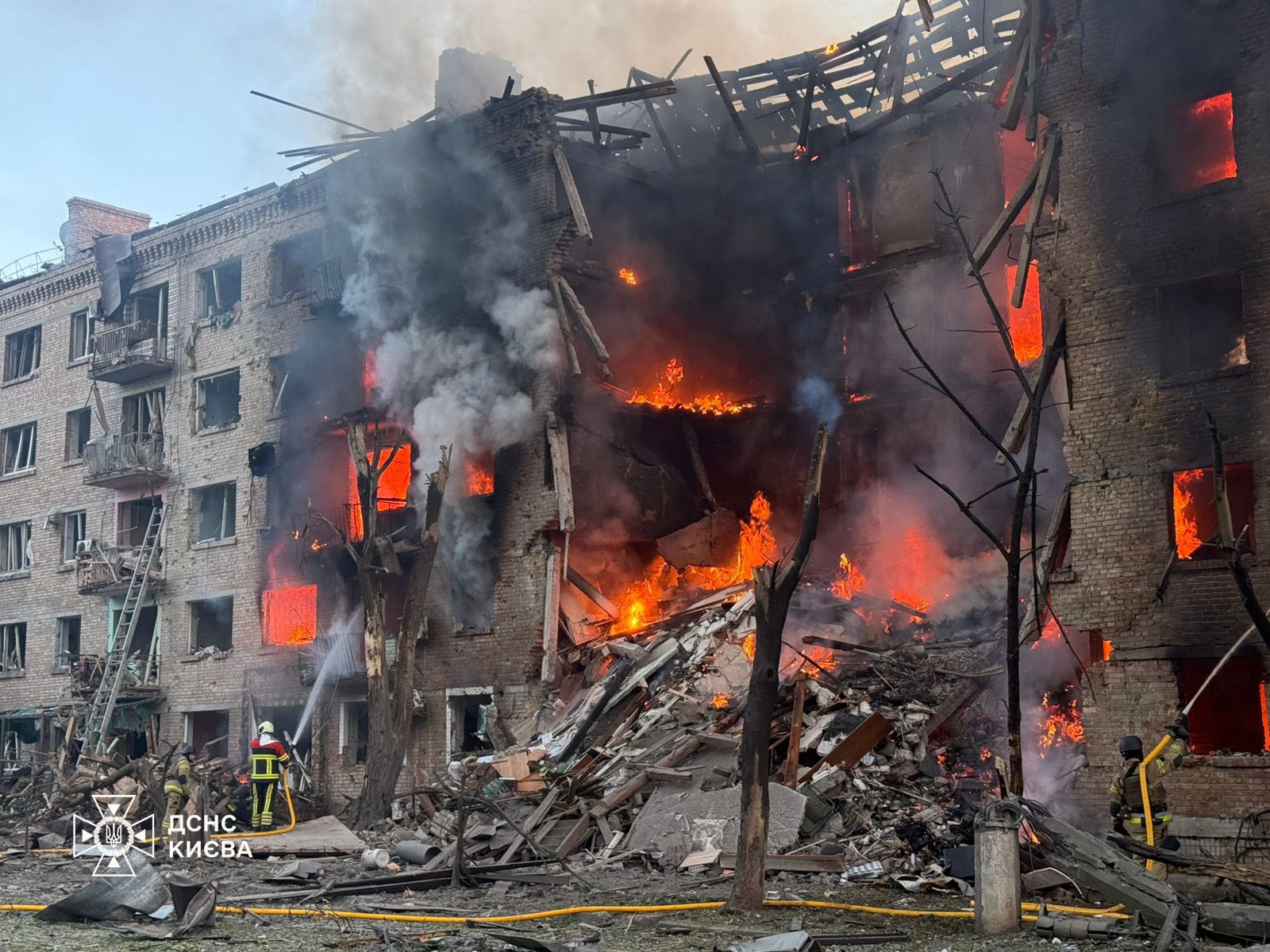
The following report is by our new Ukraine Research Officer, based in Ukraine, Ms Anastasiia Zadiraka, and is slightly edited by the NCF Secretary General. It reresents an Ukrainian perspective and as such is of particular interest. Our forthcoming conference of course has a session on Ukraine. There are many unanswered questions regarding Ukraine´s attack which hit a student dormitory in response to which we have seen a massive increase in attacks on Ukraine by Russia. Was the dormitory being used as a human shield for a drone control centre? Or was Ukraine deliberatley misled into attacking the dormitory by a double agent feeding false information to Ukraine in order to justify a more severe response from Russia (this strategy has been used before repeatedly by the KGB: Remember the 1999 Russian apartment bombings blamed on Chechen extremists). Of course it is equally possible that this was an error as a result of incompetence on the part of Ukrainian drone operators. That the attack took place is indesputable.
Russia’s Attacks on Ukraine: Civilian Harm, Infrastructure Damage and Intimidation
Between 23 and 28 May, Russia intensified its campaign against Ukraine, combining large-scale missile and drone strikes. The attacks resulted in civilian deaths and injuries, as well as damage to residential buildings, critical infrastructure and humanitarian facilities. Russian officials have warned of further attacks on Kyiv in response to an Ukaraine attack which hit a student dormitory in an occupied part of eastern Ukraine. While fighting on the front lines continues and Ukraine carries out strikes on Russian military and logistical targets, security concerns are growing in neighboring European states.
Attacks on civilians and infrastructure
On the night of 23–24 May, Russia launched a massive combined attack against Ukraine, with Kyiv particularly affected. Although Ukrainian air defence intercepted 549 drones and 55 missiles, the remaining strikes killed four people and injured around 100 others. In Kyiv, the attack damaged some 30 residential buildings, as well as schools, markets, commercial facilities, police, administrative and government buildings. At Lukianivska metro station, the blast wave knocked out parts of the escalator structure, sending debris into the station vestibule. A man was injured by the fragments.
Russia also used the medium-range missile Oreshnik in Bila Tserkva, Kyiv Oblast. The missile damaged buildings in a garage cooperative, though no casualties were reported there. The Oreshnik missile is designed to deliver a nuclear warhead over several thousand kilometres. However, this time it was only equipped with a kinetic payload. In this version, the missile remains dangerous because of its high speed, impact force and debris.
The use of this missile did not appear to give Russia a clear military advantage but rather it seemed to serve as a demonstration of force and a means of intimidation against Ukraine.
Russia claimed that the mass attack and the use of the Oreshnik missile were a response to Ukrainian overnight strikes on a dormitory in occupied Starobilsk, Luhansk Oblast, where 21 students were reportedly killed. The dormitory was for students at the Luhansk Pedagogical University. It was hit repeatedly. The Ukrainian Armed Forces stated that they had struck a Russian military special unit, which was involved in drone operations. During an urgent UN Security Council meeting, the UN noted that it does not have access to the area to verify the details but voiced alarm at the reports. There have been many independent news reports on the incident.
The subsequent mass attack on Ukraine and the use of Oreshnik missiles were condemned by French President Emmanuel Macron, EU High Representative for Foreign Affairs and Security Policy Kaja Kallas, and Hungarian Foreign Minister Anita Orban. President Macron stated that this “demonstrates further escalation and the dead end of Russia’s war of aggression”. Kaja Kallas described the attack as a “horrific act of terror aimed at killing as many civilians as possible”. She also described the use of the Oreshnik ballistic missile as a political tactic of intimidation and a reckless manoeuvre. Anita Orban stated: “Civilians should never wake up to missiles, drones, explosions and fear for their lives. Destroyed homes, broken families, killed and injured innocent people — this is unacceptable.”
At the same time, former Russian President Dmitry Medvedev openly supported further strikes. Medvedev took to his Telegram channel to defend the bombardments, arguing that Russia must hit Ukraine “as today and even much harder!” He stated that “ruins and gray ashes in place of their capital symbols demoralize the enemy no weaker than the loss of the battle banner.”
Other cities and civilians also continued to suffer from daily Russian attacks. Between 24 and 28 May, Russian drones and shelling killed at least 18 civilians and injured at least 297 others across Ukraine. The attacks affected Kyiv, Donetsk, Kharkiv, Dnipropetrovsk, Kherson, Sumy, Odesa, Zaporizhzhia, Mykolaiv, Cherkasy and Chernihiv Oblasts, damaging residential buildings, critical infrastructure, vehicles and humanitarian facilities. In Kharkiv Oblast, a Russian drone also injured two energy workers while they were working. In Sumy, the base of Norwegian People’s Aid, a humanitarian demining organisation, was damaged.
Fighting on the frontline continues but Russian advances remain slow and costly. Ukrainian troops are continuing to hold their positions where possible. Where Russian incursions break through the front line, Russia has not been sufficiently strong to consolidate and sustain the breakthroughs and has generally had to fall back again. There has been little change in the front line in this war of attrition for more than a year now. Ukraine has also struck Russian logistics and fuel infrastructure, including fuel convoys, military equipment, logistics hubs, key routes to Crimea, oil refineries and factories linked to weapons production. These attacks have created supply problems for Russian forces. Russian authorities also reported civilian casualties from Ukrainian strikes during this period.
Political and security developments
The Russian Ministry of Foreign Affairs announced systematic strikes against enterprises of Ukraine’s military-industrial complex in Kyiv and “decision-making centres”. The Russian Foreign Ministry also called on foreign citizens and diplomatic mission staff to leave the city as soon as possible. Ukrainian and European representatives interpreted these statements as an attempt to intimidate Kyiv and its international partners. EU Ambassador to Ukraine Katarína Mathernová stated that Russia was trying to provoke panic and isolate Ukraine, but that the EU remains in Kyiv and stands with Ukraine. Lithuania and Latvia also condemned Russia’s threats, calling them a violation of the UN Charter.
Against the background of Russian threats of systematic strikes, Ukraine is trying to secure stronger international support. President Volodymyr Zelensky sent a letter to US President Donald Trump regarding the critical shortage of air defence systems and missiles for those systems. Meanwhile, the European Union is expected to provide €9.1 billion in financial assistance to Ukraine as early as June. Of this amount, €5.9 billion is expected to go to defence needs, while €3.2 billion would support Ukraine’s budget.
The consequences of war are also being felt in the Baltic region. Several drone and airspace incidents have raised security concerns. In response, Latvia plans to deploy interceptor drone units, including remotely operated systems. Romanian authorities also reported that during Russia’s overnight attack on Ukraine on 29 May, a Russian drone struck the roof of an apartment block in the southeastern Romanian city of Galați, injuring two people
Peace negotiations remain stalled, raising the question of how they can continue meaningfully while civilians, humanitarian workers and critical infrastructure remain under daily attack.
Featured photo above shows destruction to an apartment building in Kyiv following Russia’s mass attack on the city on the night of 24 May 2026. Photo: State Emergency Service of Ukraine / Wikimedia Commons, licensed under CC BY 4.0.