

Russia, South Sudan Bilateral Relations & Trade: August 2026 Update
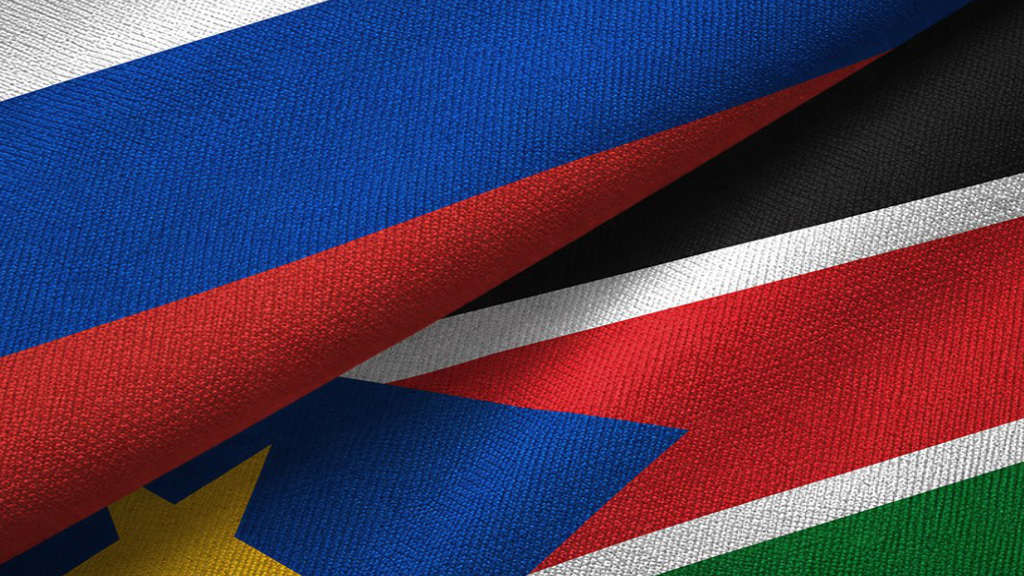
The Russian Foreign Minister, Sergey Lavrov, has met with James Pitia Morgan, the Foreign Minister of South Sudan, in Moscow, marking the 15th anniversary of the establishment of diplomatic relations between the two countries.
They noted the traditionally friendly nature of Russia-South Sudan relations, which are based on the principles of mutual respect and consideration for each other’s interests. They reaffirmed Moscow’s and Juba’s commitment to further deepening political dialogue and expanding cooperation across various sectors.
15 years of diplomatic relations have laid the foundation for sustained political dialogue. Russia was among the first states to recognize South Sudan’s independence, while the opening of the Russian Embassy in Juba in December 2025 brought bilateral relations to a new level.
Political contacts are steadily expanding. President Salva Kiir took part in the Russia–Africa summits in 2019 and 2023 and is expected to attend the third Russia–Africa Summit in Moscow on 28–29 October 2026.
Economic cooperation is taking on a practical dimension. Russia and South Sudan intend to establish an intergovernmental commission and develop cooperation in energy, oil and gas, geological exploration, mining, and other sectors. In May 2026, a Russian delegation led by Roman Marshavin, the deputy minister of energy, visited South Sudan, giving impetus to the development of a bilateral partnership.
Particular attention was also paid to agriculture and food security. Russian technologies are in high demand in the development of wheat and rice production, the flour-milling industry, tea leaf processing, and the creation of South Sudan’s agricultural infrastructure.
Cultural and humanitarian cooperation are also among the priority areas. Russia is developing educational ties, promoting the Russian language and culture on the basis of local higher education institutions. In April of this year, the South Sudanese Association of Graduates of Russian Universities was established.
Russia contributes to strengthening state institutions in South Sudan. In May this year, representatives of the National Election Commission of South Sudan underwent training at the Russian Central Election Commission. The parties are also developing cooperation with the United Nations, the African Union and the Intergovernmental Authority on Development (IGAD), an eight-country trade bloc and regional economic community in Africa focused on development, drought mitigation, and peacebuilding.
The main emphasis of the meetings is the transition to broader practical partnership. Moscow views South Sudan as a promising partner in Africa and intends to expand cooperation in the political, economic, humanitarian, and educational spheres.
South Sudan’s economy is largely dependent on its oil and gas industry, with crude petroleum accounting for about 90% of the country’s foreign exchange earnings. However, the sector has faced significant challenges, including geopolitical issues and infrastructure constraints. The government is working to repair and resume oil pipeline operations, which are essential to the nation’s economic stability. Agriculture also plays an important role, employing a large portion of the population and contributing significantly to GDP. Key agricultural products include cotton, peanuts, gum arabic (South Sudan is one of the world’s largest producers, accounting for 75-80% of global supply), sesame seeds, and livestock. Additionally, South Sudan is rich in mineral resources, especially gold, and is the third-largest producer of gold in Africa, with annual production nearing 30 tons. The country’s manufacturing sector includes oil refining, cement production, and the production of goods like shoes and chemical fertilizers, although many factories are underutilized.
South Sudan is a member of several regional and continental free trade agreements. These include the Greater Arab Free Trade Area (GAFTA), Tripartite Free Trade Area (TFTA), and the African Continental Free Trade Area (AfCFTA), aimed at enhancing trade across Africa. The country is also part of COMESA (Common Market for Eastern and Southern Africa), the League of Arab States (LAS), the East African Community, and the Intergovernmental Authority on Development (IGAD). South Sudan has bilateral trade agreements with neighboring countries, such as Egypt, Ethiopia, and Sudan, covering agriculture, oil, and livestock. Additionally, the country has strong economic ties with China, particularly in energy and infrastructure projects.
South Sudan is landlocked and one of the least developed countries in the world, ranking second to last in the Human Development Index, and it is also one of the poorest countries by GDP per capita.
The oilfields in South Sudan have been significant to the economy since the latter part of the 20th century. In 2023, oil constitutes more than 90% of state revenues, with the third-largest oil reserves in Sub-Saharan Africa. However, after South Sudan became an independent nation in July 2011, southern and northern negotiators have not been able to reach an agreement on how to split the revenue from these oilfields. However, with Sudan also being close to Russia, agreements may be revived, and with this, oil production increases. South Sudan also contains many natural resources such as petroleum, iron ore, copper, chromium ore, zinc, tungsten, mica, silver, gold, diamonds, hardwoods, limestone, and hydropower. The country’s economy, as in many other developing countries, is heavily dependent on agriculture.
The country’s population is approximately 12 million people. According to the IMF, its GDP in PPP terms is US$19.16 billion, and GDP per capita is US$1,540. The forecast for real GDP growth in 2026 is 4.1 %.
Economic ties between Russia and South Sudan remain limited so far. According to the Russian Federal Customs Service in 2024, the volume of bilateral trade was estimated at about US$8 million. In 2025, supplies of Russian wheat to South Sudan were recorded. Estimates of Russia–South Sudan trade vary significantly across different international statistical databases, meaning a reliable final figure for 2025 hard to assess. It is unlikely to be over US$20 million. Moscow will be looking to become involved in South Sudan’s energy and minerals sectors but will need to invest. Bilateral trade growth, while small, can be expected to show cautious promise.
Continue Reading
Credit: Source link