
Rising seas erase Nigerian village founded on communal ideals
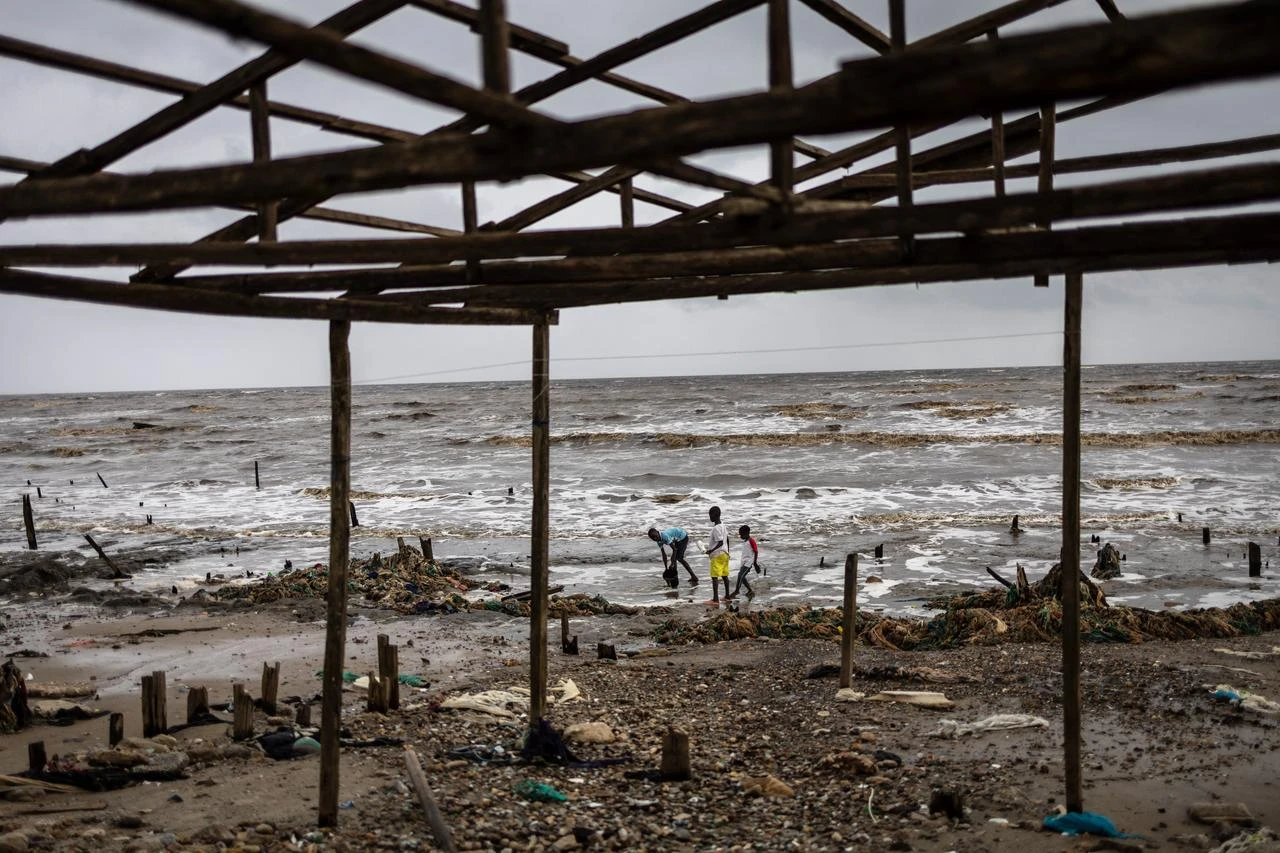
The beach shrinks every year in Ayetoro, in southern Nigeria, where what remains of the shoreline is scattered with the remnants of homes lost to the ocean, some destroyed years ago and others just months earlier.
“We are walking on people’s houses,” said 35-year-old Thompson Akingboye, moving along a narrow strip of sand only accessible by boat.
Nicknamed “The Happy Place,” Ayetoro, home to around 10,000 people, was founded in 1947 by a group of communist-inspired Christians seeking to create a society based on the communal sharing of assets.
But its days seem numbered, as the community becomes one of Nigeria’s most visible victims of coastal erosion. Families whose homes are destroyed are constantly rebuilding further inland, only for the water to strike them again.
Coastal erosion in Ayetoro has steadily increased since the early 2000s, a pattern also seen in 19 other communities in Ilaje district as the Atlantic Ocean, aided by climate change, sweeps away everything in its path.
The town’s coastline receded by an average of 15 meters (50 feet) every year between 1987 and 2022, according to a study by spatial planning specialist Barnabas Ogirima James.
A 2024 study in the journal Scientific Reports estimated that sea levels along West Africa’s Gulf of Guinea are rising by about 3.9 millimeters per year, roughly 10.5% faster than the global average.
“My palace once had 100 rooms. Only about a dozen remain,” said Oluwambe Ojagbohunmi, the traditional king of Ayetoro, whose bedroom is now in the part of the building closest to the ocean, where the sound of waves disturbs his sleep at night. “This is our land. Where can we go? It’s complicated,” he said.

A resident looks on as she carries a bucket on her head past the remains of a building damaged by coastal erosion in Ayetoro, Ondo State, on August 6, 2026. (AFP Photo)
Displaced from their own homes, again and again
In April, a storm caused sea levels to swell, trapping the palace’s occupants indoors for a week.
“I’ve become a refugee in my own community. Since losing my father’s house in 2019, swallowed and destroyed by the ocean, the only thing I managed to save was my university degree certificate,” said Akingboye Thompson, a fisherman and personal assistant to the king, adding that some families have moved more than three times.
According to Oluwasegun Babatunde Esan, a landscape architecture researcher at the University of Lagos who collaborates with Harvard University, part of the problem lies in what happens on land. In rapidly urbanizing Nigeria, floodplains, swamps, and coastal areas that absorb ocean surges or floodwater are often cleared for human settlement, worsening erosion along the 850-kilometer (525-mile) coastline.
“There is growing demand for land, whether for housing or industrial activities,” Esan said, adding that it needs to be strictly regulated. He also recommended planting mangroves and coconut palms as natural barriers.
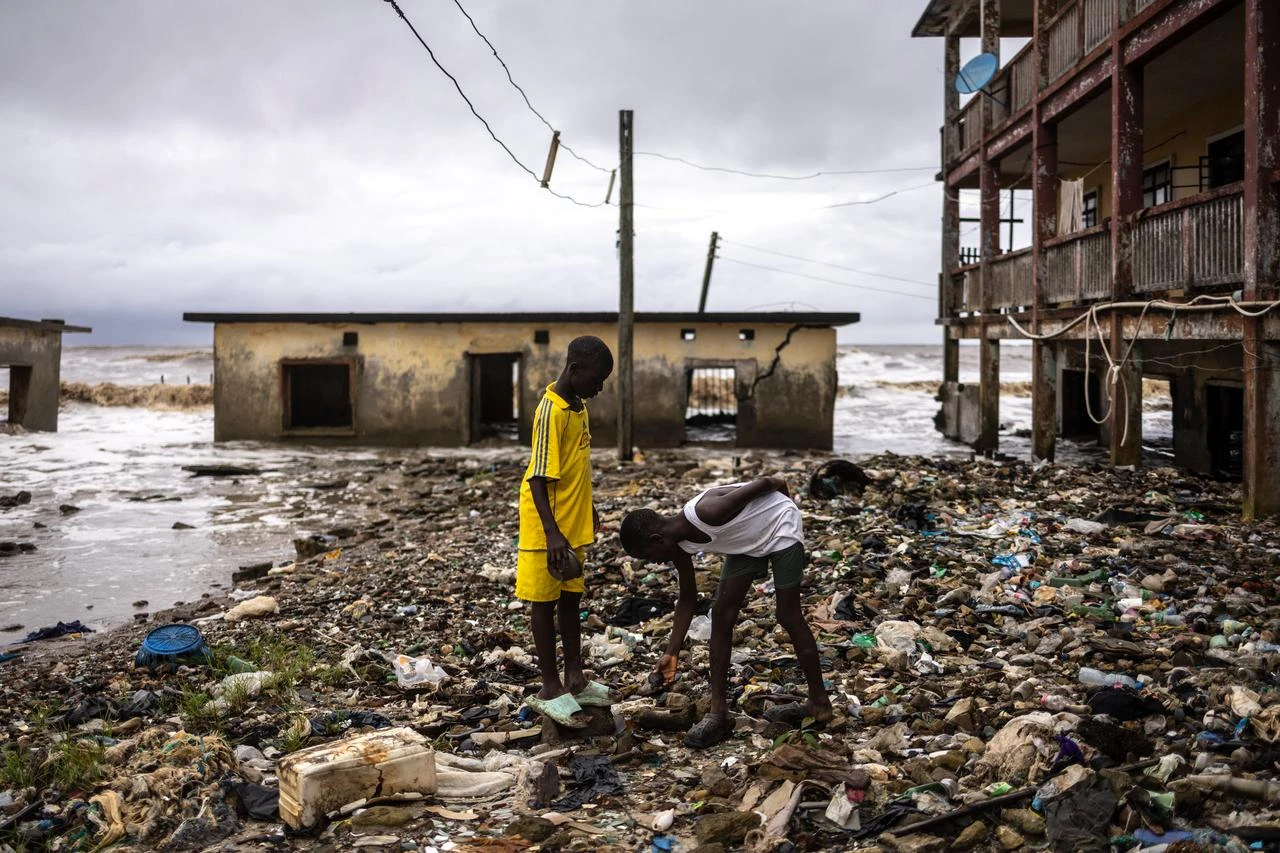
Children inspect debris washed ashore by the sea at the King’s Palace, damaged by coastal erosion in Ayetoro, Ondo State, on August 7, 2026. (AFP Photo)
A community stretched thin on health and schooling
Ayetoro occasionally receives relief materials from government agencies and NGOs, though the community considers it insufficient. Its sole health center has been lost to the waves.
“Sometimes the water reaches window level, yet we have to keep working. We help women give birth under these conditions. We have no choice,” said Omomiye Oluwaseun, a 26-year-old healthcare worker, adding that residents suffer from high blood pressure and waterborne diseases like typhoid and diarrhea from using contaminated water for cooking, since it is the only water available to them.
The ocean has also disrupted schooling, said teacher Sunday Akinjoye, 45. “Schools have been relocated several times, just like their homes. It takes a psychological toll on them. Their ability to concentrate on their studies drops drastically,” he said.
No matter what they do, the mighty Atlantic continues to gain ground.

August 18, 2026 03:12 AM GMT+03:00
Credit: Source link