

Morocco Approves Changes to Social Aid Program, Removes 12-Month Waiting Rule
Rabat – Morocco’s government has approved new changes to the country’s Direct Social Support Program, including setting a maximum duration for the exceptional allowance and removing the 12-month waiting period previously required for some beneficiaries to regain financial assistance after losing their jobs.
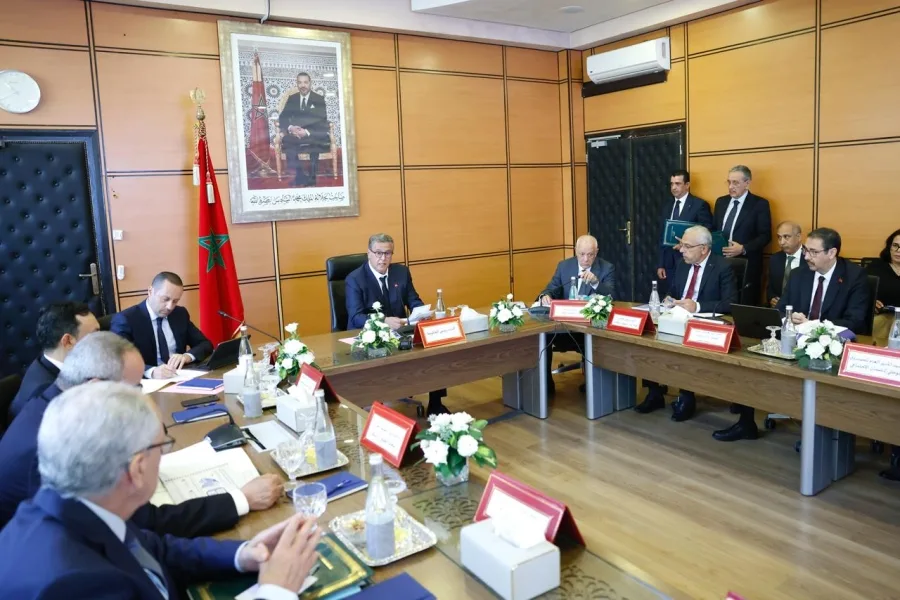
The measures were approved on Wednesday during a Government Council meeting chaired by Head of Government Aziz Akhannouch. The amendments are part of a draft decree updating the implementation of Law 58.23 on the Direct Social Support Program.
Under the new rules, the exceptional allowance introduced under Article 16 of Law 58.23 will be available for a maximum of 12 months. Beneficiaries will be able to receive the allowance over 12 consecutive or non-consecutive months, depending on their situation.
The amendments also remove the requirement for beneficiaries who lose their jobs to wait 12 months before becoming eligible again for direct social support. The change is intended to allow affected households to regain access to financial assistance more quickly after a loss of income.
The new measures will enter into force after the decree is published in the Official Gazette.
The amendments were among several measures approved during Wednesday’s Government Council meeting, which also covered healthcare, higher education, investment, and youth policies. During the meeting, the government also approved a separate decree aimed at reducing medicine prices to improve access to treatment and ease costs for patients.
Expanding coverage
The amendments come as Morocco continues to expand its Direct Social Support Program, one of the government’s flagship social protection reforms aimed at improving support for vulnerable households.
Launched in December 2023, the program provides monthly cash transfers to low-income households and eligible families based on their social and economic situation. It targets households with children, vulnerable families without school-age children, and elderly people who meet eligibility criteria.
Payments range from MAD 500 to MAD 1,425 depending on each family’s composition and circumstances. It also includes birth grants, back-to-school support, and assistance for orphaned and abandoned children living in social care institutions.
According to Delegate Budget Minister Fouzi Lekjaa, the program had reached more than 3.9 million families by April 2026, representing around 43% of Moroccan households. Total monthly payments exceeded MAD 2.17 billion in April alone, while cumulative disbursements since the program’s launch surpassed MAD 59 billion.
The government says the initiative targets roughly 60% of the population not already covered by traditional family allowance schemes and aims to improve living conditions while protecting vulnerable groups from risks linked to childhood, old age, disability, and poverty.
Move households beyond financial assistance
Despite the expansion, officials have acknowledged that it is still too early to fully assess the program’s long-term social and economic impact. The government is continuing to roll out complementary social assistance and economic integration initiatives through the National Agency for Social Support, which has begun opening local offices to help beneficiary families access education, healthcare, skills training, and employment opportunities.
Authorities say these efforts are intended to move households beyond financial assistance toward long-term economic inclusion.
The initiative forms part of Morocco’s wider social protection reform, which seeks to expand social security coverage, improve access to healthcare, and strengthen support for low-income families, among other initiatives.
Earlier this month, Lekjaa announced a new mother-and-child support program, featuring a MAD 1,800 grant for first pregnancies and MAD 1,200 for second pregnancies. Additionally, a monthly MAD 100 allowance will be provided for children up to age two to cover vaccination and basic nutrition.
Credit: Source link